 RoofingCalculator.io
Types of Shingles
By RoofingCalculator.io. Updated October 19, 2026. Prices, ratings and code references link to their sources.
Pricing your own roof? Get squares, materials and a 2026 cost range in about two minutes. Free, no sign-up.
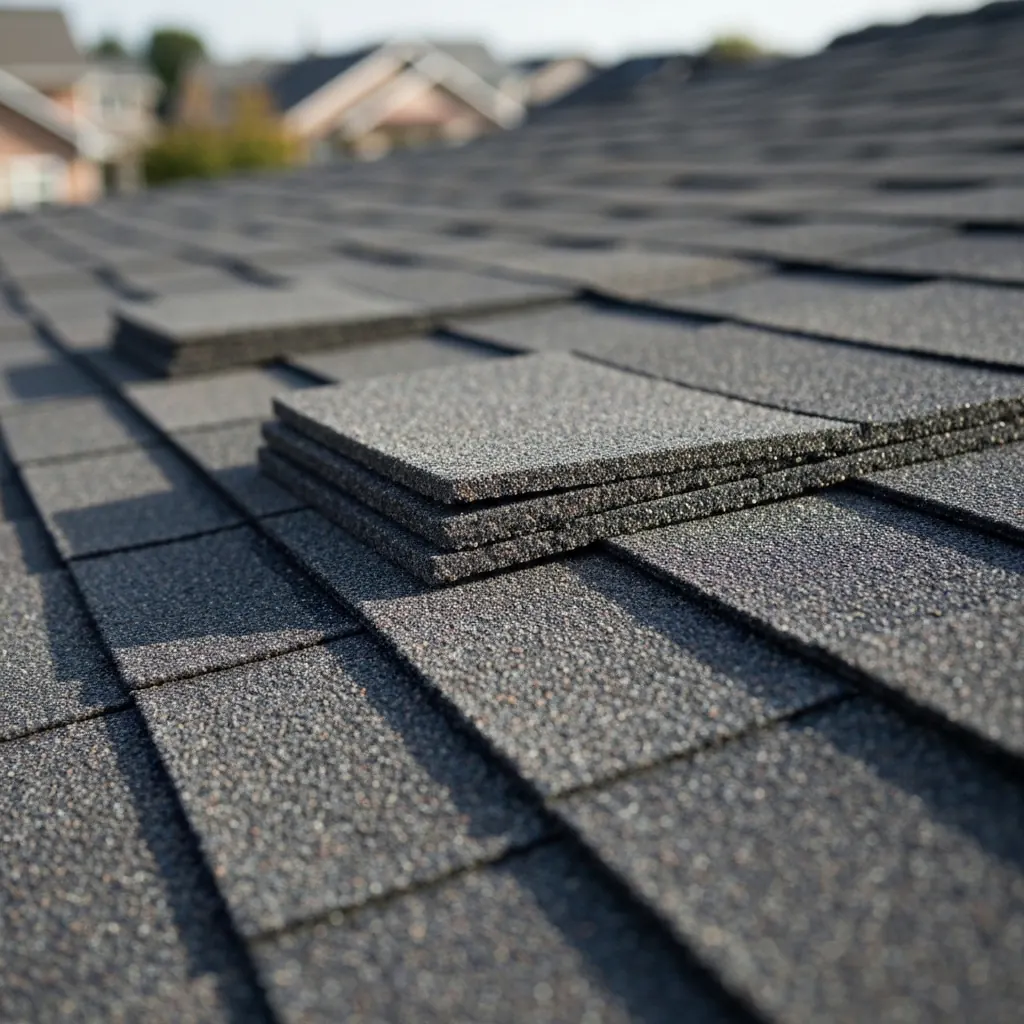
The main types of shingles are asphalt (3-tab, architectural and luxury grades), impact-rated asphalt, metal, wood, natural slate, synthetic, clay and concrete tile, and solar. Most houses get architectural asphalt, which costs about $450 to $750 per square installed and lasts around 30 years. Slate and tile cost several times as much but can last a century.
For most homeowners, the decision comes down to five choices.
- Architectural asphalt suits most homes. It balances cost, a 30-year life and a much better wind rating than 3-tab.
- 3-tab asphalt is the budget option. At $380 to $550 per square and about 20 years of life, it fits rentals, sheds and houses going on the market soon, if you can still find it.
- Class 4 impact-resistant shingles belong in hail country. They pass the top UL 2218 hail rating and may also lower your insurance premium.
- Luxury asphalt and synthetic slate or shake give the look of stone or wood for less. They cost less than the real material and weigh far less, so they suit a lighter budget or a lighter frame.
- Natural slate, clay or concrete tile, and metal last longest. Slate and tile need framing that can carry the weight, so have the structure checked first.
The brand most shoppers choose between is GAF, CertainTeed or Owens Corning, and the two most-read matchups have their own guides: GAF vs CertainTeed and CertainTeed vs Owens Corning.
Shingle cost and lifespan in 2026
Roofers price shingles by the square, a 10-by-10-foot area of 100 square feet. The table shows 2026 US installed prices, with lifespans from InterNACHI where it lists them.
| Shingle type | Installed cost per square | Typical lifespan |
|---|---|---|
| 3-tab asphalt | $380 to $550 | About 20 years |
| Architectural asphalt | $450 to $750 | About 30 years |
| Luxury asphalt | Often well above $750 | 30+ years |
| Wood shingles and shakes | $900 to $1,400 | About 25 years |
| Concrete tile | $900 to $1,600 | 30 to 50 years (tile itself 100+) |
| Standing seam metal (for comparison) | $1,000 to $1,600 | 40 to 80 years |
| Natural slate | Highest on this list | 60 to 150 years |
Lifespans come from InterNACHI's life expectancy chart: 3-tab 20 years, architectural 30, wood 25, metal 40 to 80, clay or concrete tile 100+, and slate 60 to 150. Concrete tile is the one exception. The table shows 30 to 50 years for the roof because the underlayment beneath the tile wears out long before the tile does.
Heat, storms, poor attic ventilation and careless installation can all shorten a roof's life. To price your own house, the shingle roof calculator converts your measurements and pitch into squares and shows each material's cost range side by side.
GAF, CertainTeed and Owens Corning perform about the same
The three brands perform similarly, so choose the one your best local installer is certified for. Their flagship architectural shingles, GAF Timberline HDZ, CertainTeed Landmark and Owens Corning Duration, all cost about $450 to $750 per square installed. All three carry limited lifetime warranties and hold up well when nailed correctly.
GAF Timberline HDZ
- Wide nailing strip, called StrikeZone, that makes missed nails less likely.
- WindProven warranty with no maximum wind speed when you use GAF's starter, ridge cap and leak barrier.
- Material costs about $105 to $125 per square.
CertainTeed Landmark
- One of the heavier standard architectural shingles.
- Softer color blends that suit older or historic neighborhoods.
- Material often runs slightly above GAF, at about $120 to $145 per square.
For weight, algae warranties, and the Golden Pledge versus 5-Star warranty tiers, see GAF vs CertainTeed.
Owens Corning Duration
- SureNail, a strip of woven fabric in the nailing zone that grips the nail head when wind pulls on the shingle. It is popular in tornado country and on the open plains.
- Usually a little cheaper per square than Landmark Pro. The budget Oakridge line costs less still.
- The top Platinum Protection warranty extends the non-prorated period to 50 years when the whole system is Owens Corning.
Hail performance, colors and warranty details are compared in CertainTeed vs Owens Corning.
How the product lines match up
- Everyday tier: GAF Timberline HDZ, CertainTeed Landmark and Owens Corning Duration.
- One step up: GAF Timberline UHDZ and CertainTeed Landmark Pro, which are thicker with deeper shadow lines (Landmark Pro adds Max Def colors). CertainTeed Landmark TL, a triple laminate, sits above both.
- Luxury: GAF Camelot II or Grand Canyon and CertainTeed Grand Manor, one of the heaviest shingles sold. GAF's designer lines cost about $200 to $280 per square for material. CertainTeed Grand Manor or Presidential Shake can reach $350 to $500 per square, shingles only.
Extended system warranties are only available through certified contractors using matching accessories, which is another reason to choose the brand by installer.
Asphalt shingles cover most American homes
Asphalt shingles cover most American homes because they are affordable, perform well, and every roofing crew knows how to install them. The Asphalt Roofing Manufacturers Association says asphalt shingles "can be found atop more than 80 percent of American homes." You may also hear asphalt roofing called composition roofing.
Each shingle has a fiberglass mat core soaked in asphalt. Ceramic-coated mineral granules are pressed into the top surface to block UV light. The guide to what an asphalt shingle roof is explains what is inside one, how a proper install goes, and the signs of wear.
3-tab shingles are the cheapest option
3-tab shingles are the cheapest asphalt option, at $380 to $550 per square installed, and last about 20 years. Each strip is a single layer of asphalt-soaked fiberglass mat, cut into three equal tabs, which gives the roof a flat, uniform look.
- Lifespan: about 20 years, and less in the South, where the single layer dries out and cracks sooner.
- Wind rating: the IBHS Roof 101 guide lists the basic ASTM D3161 Class A rating as tested to 60 mph. A single tab can catch a gust and fold back.
- Best for: rentals, sheds, and houses going on the market soon.
Architectural shingles last close to 30 years
Architectural shingles cost about $450 to $750 per square installed and last close to 30 years with good attic ventilation. They are also called dimensional or laminated shingles. Two or more layers are bonded with staggered edges, which creates shadow lines similar to wood shake and hides small dips in the roof deck.
- Wind rating: most carry Class F, which IBHS lists as tested to 110 mph. Many come with 130 mph warranties when the crew uses six nails per shingle.
- Extra cost over 3-tab: about $70 to $200 more per square, or roughly $1,750 to $5,000 more on a 25-square roof.
- Payback: about ten more years before the next tear-off, and far fewer shingles blown off in windstorms.
Most homeowners who plan to stay come out ahead with architectural. The 3-tab vs architectural shingles comparison works through the full cost-per-year math.
Luxury shingles mimic slate and shake
Luxury shingles cost noticeably more than architectural and are built in extra layers so they resemble slate or hand-split shake from the street. They can weigh 400 pounds or more per square. GAF Grand Canyon and CertainTeed Grand Manor are two common lines on bids, and many luxury lines carry a Class 4 impact rating.
Are impact-resistant shingles worth it?
If you live in hail country, price impact-resistant shingles first. These shingles pass UL 2218 Class 4, the top rating, in which a 2-inch steel ball strikes the same spot twice without cracking the shingle. Most use rubbery SBS-modified asphalt that flexes and recovers.
- Common products: GAF Timberline AS II, CertainTeed NorthGate and ClimateFlex, and Owens Corning Duration FLEX.
- Cost: material runs roughly 15 to 25 percent more than standard architectural. Labor barely changes, so installed prices fall toward the top of the $450 to $750 range.
- Insurance: many insurers in hail-prone states discount premiums for a Class 4 roof. Get the discount in writing and send your insurer the certificate.
Class 4 and Class H are different ratings. Class 4 measures hail resistance, while Class H is the top wind rating under ASTM D7158, and a shingle can have one without the other. The impact-resistant shingles guide covers the test, the newer IBHS hail ratings, and whether the upgrade pays off where you live.
Other shingle types
Beyond asphalt, the main shingle materials are metal, wood, natural slate, synthetic slate and shake, clay and concrete tile, and solar.
Metal shingles
Metal shingles are individual interlocking pieces of steel, aluminum or copper, pressed to look like slate, tile or shake. They are different from standing seam, which uses long vertical panels with raised ribs. Many have a stone-granule coating or PVDF paint.
Metal shingles are light, so the framing rarely needs reinforcement, and InterNACHI puts metal roofing at 40 to 80 years. When metal roofs fail, the cause is usually installation: wrong fasteners, contact between dissimilar metals, or poor flashing. The metal roofing guide covers panels, finishes and costs.
Wood shingles and shakes
Wood shingles and shakes cost about $900 to $1,400 per square installed and last about 25 years, according to InterNACHI. Shingles are sawn on both faces, so they are smooth and even. Shakes are split from the block, so they are rough and textured. Most are western red cedar.
Wood needs more maintenance than any other material here, including washing, moss control and periodic treatment. Some wildfire-prone towns allow wood only if it is treated to a Class A fire rating. Learn more in what is a cedar shake roof.
Natural slate lasts the longest
Natural slate is the longest-lasting roofing material and often outlives the house. It is quarried stone, split thin and nailed up piece by piece, and it will not burn or rot. Slate weighs several times as much as asphalt, so many homes need an engineer's approval before installation.
Most slate roofs fail at the flashing or the nails while the stone is still sound, which is why copper or stainless steel nails matter. See what is a slate roof.
Synthetic slate and shake
Synthetic slate and shake are molded polymer products, often made with recycled rubber or plastic. They are far lighter than natural slate and resist cracking, and many carry Class 4 impact and Class A fire ratings. Some early products faded in sunlight, so choose a manufacturer that publishes its test results. The trade-offs are covered in synthetic slate vs natural slate.
Clay and concrete tile
Clay and concrete tile are common in the Southwest, Florida and California. Clay is fired like pottery. Concrete tile is made of cement, sand and pigment, and it costs less, at about $900 to $1,600 per square installed.
The tile can last a hundred years, but the underlayment beneath it will not. Older tile roofs get a lift-and-relay, in which the tiles come off, new underlayment goes down, and the same tiles go back on. Tile is heavy and cracks if people walk on it carelessly. See what is a clay tile roof.
Solar shingles
Solar shingles are glass or polymer shingles that generate electricity and sit flush with the surrounding roofing. They are among the most expensive options per square, and the installer needs both roofing and electrical expertise. They are worth pricing when the roof is due for replacement and has a large unshaded face. Compare the price against a standard new roof plus conventional panels before you sign.
What color shingles should you choose?
Choose lighter shingles in a hot climate. In a cold climate, darker shingles are fine, and beyond that the choice comes down to what suits your brick or siding. ENERGY STAR cites research showing a clean white roof running about 50°F cooler than a gray one on a summer afternoon. Within the same asphalt line, color almost never changes the price.
Dark shingles also age a little faster in hot climates, especially over a poorly ventilated attic. On a shady, damp lot, ask for copper-containing algae-resistant granules to prevent black streaks. GAF calls these StainGuard, CertainTeed calls them StreakFighter, and Owens Corning calls them StreakGuard. The roof colors guide covers picks by climate zone, HOA rules and matching trim.
How many bundles of shingles are in a square?
Three bundles of standard shingles cover one square. Each bundle covers roughly 33.3 square feet.
- 3-tab: about 26 shingles per bundle.
- Architectural: usually 20 to 22 shingles per bundle.
- Luxury: thicker shingles that can take four or five bundles per square.
To estimate, divide the roof area by 100 to get net squares. Then add about 10 percent waste for a simple gable roof, or 15 to 20 percent for a roof with many hips and valleys. A 2,500-square-foot roof with several valleys comes to about 28.75 squares at 15 percent waste.
Architectural bundles cost about $35 to $55 at big-box stores, so field shingles alone for 25 squares run $2,625 to $4,125. The bundle and square calculator gives both numbers with waste included. Starter strips and ridge cap are ordered separately by the linear foot, as explained in how many shingles in a bundle.
Roof pitch is the first limit on shingle choice
Roof pitch is the first limit on which shingles you can use. The International Residential Code allows asphalt shingles only on slopes of 2 units vertical in 12 or steeper.
- Asphalt: 2/12 minimum, with a double layer of underlayment between 2/12 and 4/12.
- Slate: 4/12 or steeper.
- Clay and concrete tile: 2.5/12 or steeper.
- Below 2/12: no shingles. Use a low-slope membrane or standing seam metal.
Weight is the second limit. Asphalt, metal and synthetic shingles work on almost any roof framed for shingles. Slate and tile can add many pounds per square foot of dead load, so have the structure checked before switching from asphalt to stone or tile.
Wind is the third. On a hurricane coast, look for Class F under ASTM D3161 or Class H under ASTM D7158, and make sure the crew follows the manufacturer's high-wind nailing pattern, usually six nails per shingle. A Class F shingle nailed with four nails, or nailed too high, will fall well short of its rating.
Can you put new shingles over old ones?
In most of the US, you can install one new layer over an existing layer. The IRC limits a roof to two layers, so if there are already two, everything must come off. A layover saves the tear-off charge of about $100 to $150 per square, or roughly $2,000 to $3,000 on a 2,000-square-foot roof.
Layovers have real drawbacks:
- The second layer runs hotter and tends to fail years early.
- The crew never sees the deck, so any rot keeps spreading.
- Uneven old shingles show through the new ones.
- Some enhanced warranties require a full tear-off.
- The eventual double tear-off costs more.
On a per-year basis, a $14,000 tear-off that lasts 25 years beats an $11,000 layover that lasts 15. The full rules are in can you shingle over shingles.
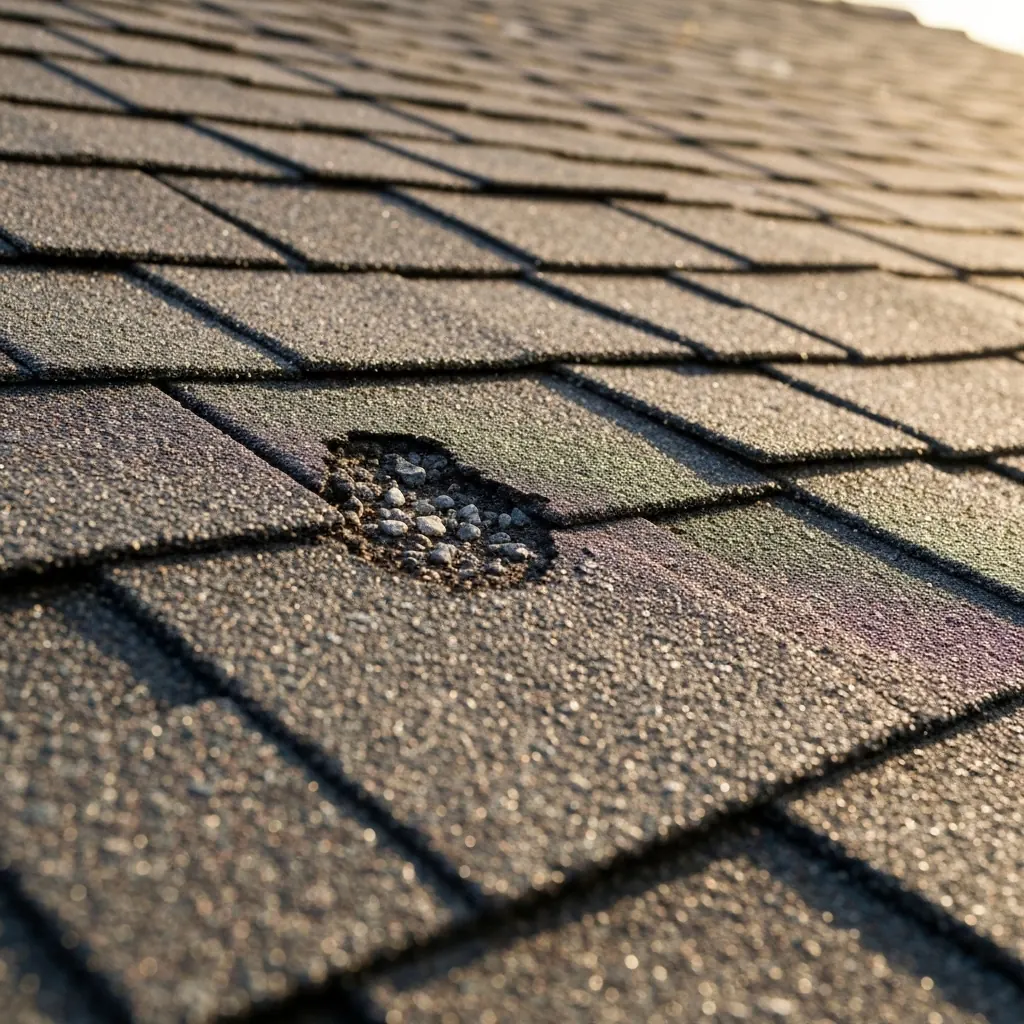
Granule loss is the first sign of aging shingles
Granule loss is usually the first sign of an aging asphalt roof. A few granules in the gutters during the first year are normal. Handfuls years later mean the asphalt is drying out and becoming brittle.
- Cracking: hairline cracks from hot and cold cycles appear on older shingles of every brand.
- Blow-offs: high nailing, with nails driven above the marked zone, causes a large share of storm blow-offs.
- Blistering: small bumps on sunny slopes in summer, caused by trapped moisture or gas that swells in the heat and pops, leaving bare asphalt.
Blisters almost always come from a factory defect or an overheated attic. A small patch costs about $300 to $800, but if poor ventilation is the cause, patching only buys time. Blistering shingles explains how to tell blisters from hail damage and what to fix first.
Installation matters more than the shingle
A well-installed architectural roof will outlast a poorly installed luxury roof. A hot attic ages asphalt from underneath, high nails let shingles slide or peel in wind, and flashing mistakes cause far more leaks than shingle defects.
Read the proposal line by line and confirm it includes:
- The specific shingle line.
- The underlayment, starter and ridge cap products.
- Drip edge.
- Ice barrier wherever code requires it.
- Removal of the old roof down to the deck.
More shingles guides
Types of shingles questions
What are the most common types of shingles?
Asphalt is by far the most common shingle on North American houses. It comes in three grades: 3-tab, architectural and luxury. After asphalt, you will mostly see metal shingles, wood shingles and shakes, synthetic slate or shake, natural slate, and clay or concrete tile.
What type of shingle lasts the longest?
Natural slate lasts longest, with InterNACHI listing 60 to 150 years. Tile and metal also outlast asphalt by decades. Among asphalt shingles, architectural lasts about 30 years and 3-tab about 20.
Which shingle brand is best?
No single brand is clearly best. GAF, CertainTeed and Owens Corning all make solid architectural shingles at similar prices. GAF emphasizes install features and its wind warranty, CertainTeed emphasizes weight and color blends, and Owens Corning emphasizes its SureNail strip. The installer usually matters more than the brand, so choose the brand your best local crew is certified to install.
What is the difference between shingles and shakes?
Wood shingles are sawn on both faces, so they are thin, smooth and uniform. Shakes are split from the log, so they are thicker and rougher. Synthetic and metal products use the same two words to describe which look they imitate.
Are architectural shingles worth the extra cost over 3-tab?
For most homeowners, yes. Architectural shingles cost roughly $70 to $200 more per square installed, but they last about 10 years longer and carry much better wind ratings. Spread over the life of the roof, architectural often costs less per year than 3-tab.
Prices are 2026 US national averages and building codes vary by town. Materials, warranties and code adoptions change, so confirm prices with local contractors and code rules with your building department before you sign anything.
Estimate Your Roof Cost
Use our free roofing calculator. No sign-up required.