 RoofingCalculator.io
What Is a Cedar Shake Roof?
By RoofingCalculator.io. Updated October 19, 2026. Prices, ratings and code references link to their sources.
Pricing your own roof? Get squares, materials and a 2026 cost range in about two minutes. Free, no sign-up.
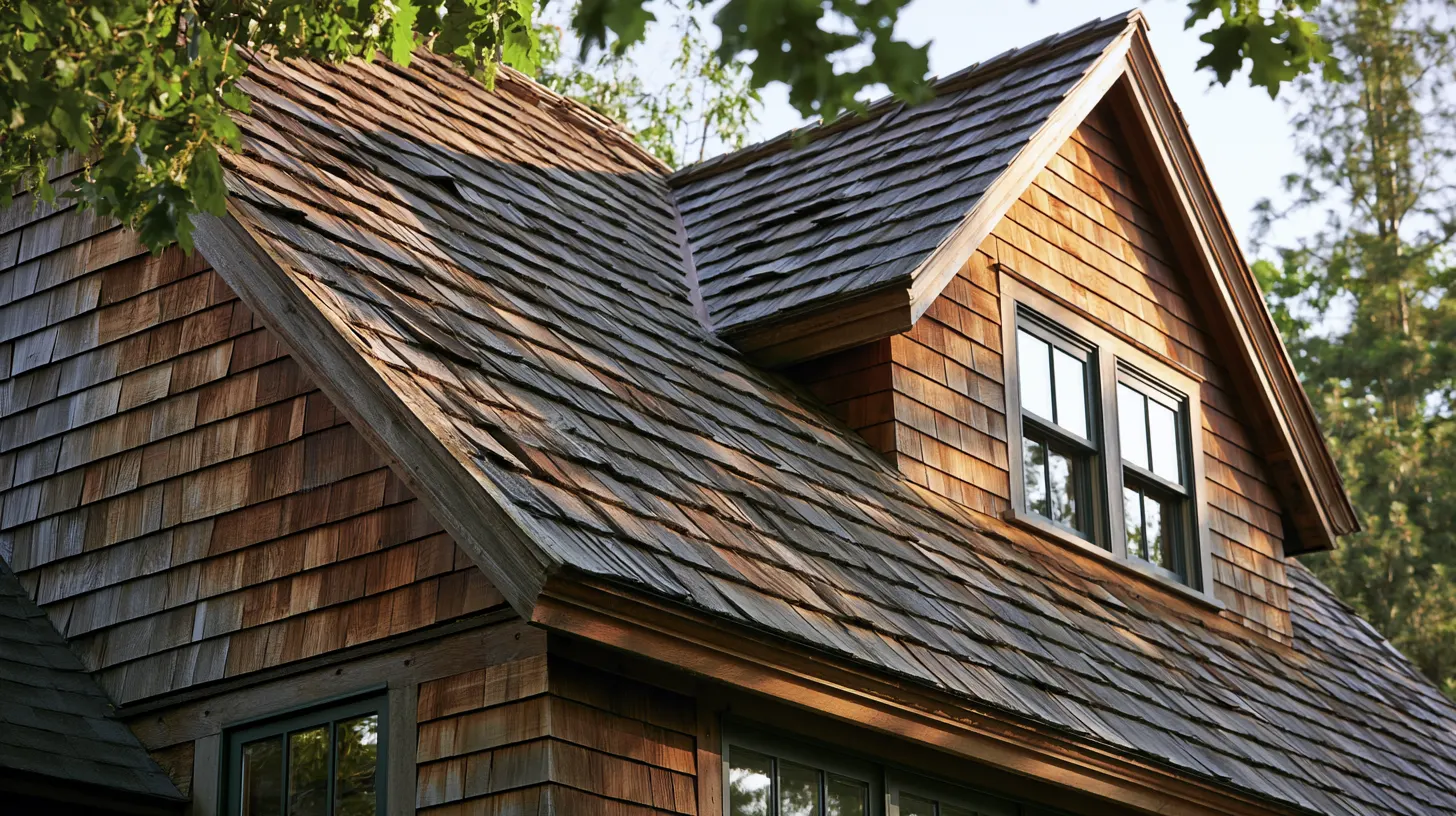
A cedar shake roof is covered in thick wedges of wood split from a log rather than sawn, usually Western Red Cedar from the Pacific Northwest or British Columbia. The rough, ridged faces create a deep, irregular shadow line that asphalt shingles cannot match. Installed, cedar shakes cost about $900 to $1,400 per square (100 square feet) in 2026, roughly double the price of architectural shingles.
Before choosing cedar, weigh four points.
- It lasts about 20 to 30 years. Sun, drainage and upkeep decide where a roof falls in that range.
- Untreated cedar burns. Many western towns restrict it, and fire-retardant-treated shakes are needed to reach Class B or Class A.
- Code sets strict install rules. Shakes need Grade 1 wood, a slope of at least 3:12 and felt between every course.
- It needs regular care. The roof must be kept clear of debris and moss, and it should never be sealed or pressure washed.
Shakes are split and shingles are sawn
The difference between cedar shakes and shingles is the cut. Shingles are sawn on both faces, so they are thin, smooth and evenly tapered. Shakes are split along the grain on at least one face, which makes them thicker and rougher. A heavy shake is about 3/4 inch thick at the butt (the thick bottom end visible from the street), and a medium is about half an inch.
Roofers use three shake styles.
- Hand-split and resawn shakes have a split face and a sawn back. This is the classic rough-faced shake.
- Tapersawn shakes are sawn on both faces. They are cut to shake thickness, so they look crisper than hand-split but still cast a good shadow.
- Straight-split shakes are split on both faces. They are the roughest and most rustic option.
Cedar heartwood is rich in natural oils and tannins that resist rot and insects. The wood is light for its strength and stays fairly stable through repeated wetting and drying. Those oils also give new shakes their reddish-brown color, which weathers to silver gray within a few summers.
Cedar shakes cost $900 to $1,400 per square installed
Cedar shakes cost about $900 to $1,400 per square installed. A 2,000-square-foot roof is 20 squares, so the total runs about $18,000 to $28,000 before tear-off, which adds about $100 to $150 per square for each old layer. Architectural asphalt, for comparison, costs about $450 to $750 per square.
Most of the cost is labor. Installers lay random-width shakes one at a time, choosing each piece so its joints do not line up with the joints in the course below, keeping the gaps even and placing felt between courses. The work is slow and cannot be rushed the way 3-tab shingles can.
Roof shape also changes the price. Dormers, valleys and chimneys mean more cuts and more scrap, and a steep pitch slows the crew, so contractors often order 15 to 20 percent extra on a complex roof. Heavy shakes cost more than mediums, fire treatment adds more, and copper flashing costs more than painted steel. Cedar bids are priced per square, so get your square count from the roofing calculator before the first bid arrives and check whether the waste allowance looks reasonable.
Edge-grain cedar resists cupping and splitting
Cedar is graded first by grain. Edge grain is cut across the growth rings, stays flattest and is least likely to cup, warp or split. Flat grain runs along the rings and tends to curl with age. Premium bundles are 100 percent edge grain and priced accordingly.
Grades come from the Cedar Shake and Shingle Bureau (CSSB), and Number 1 is the top shake grade. The International Residential Code requires Grade 1 under CSSB grading rules for naturally durable shakes on a roof. Check the bundles when they arrive: each should carry a Certi-Split or Certi-Sawn label. Unlabeled shakes are cheaper for a reason and often fail early.
Thickness matters too. A heavy 3/4-inch shake has more wood to lose to weathering, so it lasts longer and casts a deeper shadow. Medium shakes cost less but give up some of both.
A cedar shake roof lasts 20 to 30 years
A well-built cedar shake roof usually lasts 20 to 30 years. Heavy edge-grain shakes on a steep, sunny roof in a dry climate can last longer, while the same roof in a damp, shady spot under needles and moss may not reach 20.
Sun wears shakes slowly. UV breaks down lignin, the compound that binds wood fibers together, so the surface turns gray and wears slightly thinner each year. The graying is harmless, but decades of thinning eventually leave the shakes brittle.
Water does damage faster. A shake that never dries after rain grows moss, algae and fungus, which hold moisture against the wood and rot it. Two houses with identical shakes can age very differently: a roof in the open will outlast one shaded by a large maple with leaf-filled valleys every October by about two to one. Trimming back branches and keeping the surface clear is the cheapest way to add years.
Shakes need airflow behind them
Shakes go over solid sheathing or spaced sheathing, which is 1x4 or 1x6 boards with gaps between them. The gaps let air reach the back of each shake so it dries from both sides. On a solid deck, many installers add a ventilation mat that holds the shakes slightly off the wood for the same reason.
The IRC allows wood shakes only on slopes of 3 in 12 or steeper, and many installers prefer 4:12 or more so water and snow clear faster. If one section of the house is too shallow, a common solution is metal on that section and cedar on the steeper planes. The explainer on roof pitch shows how to read your slope.
Every course gets felt. Code requires 18-inch-wide strips of No. 30 felt or heavier between courses, hidden from view. Water that gets through the gaps between shakes hits the felt and is directed back out onto the course below.
Code also sets spacing and fasteners:
- Side lap must be at least 1 1/2 inches. Joints in neighboring courses cannot line up.
- Shakes are spaced 3/8 to 5/8 inch apart. The gap gives them room to swell when wet.
- Untreated shakes take two nails each. The nails can be Type 304 or 316 stainless steel or heavily hot-dipped galvanized.
- Treated shakes and coastal roofs need Type 316 stainless. That applies within 15 miles of saltwater and to any fire-retardant or preservative-treated shake.
Most cedar specialists use stainless steel everywhere, because the wood's tannins corrode cheaper coatings and leave black streaks down the roof.
Untreated cedar is a fire risk
Untreated cedar burns, which is the biggest drawback of wood roofs. In wildfire country, wind carries embers well ahead of the flames, so a dry shake roof can ignite before the fire arrives. Many western towns restrict untreated wood roofs, and some insurers will not cover them.
Fire-retardant-treated shakes are pressure-impregnated with chemicals that slow ignition and flame spread. On their own they can earn a Class B rating, and installed as a tested assembly over a specific fire-resistant underlayment or cap sheet they can reach Class A. Keep the manufacturer's paperwork, because without it an inspector or insurer will assume the roof is untreated.
Preservative treatment is different: it protects against rot, not fire. It is worth the cost in the Pacific Northwest, along the Gulf Coast and anywhere shakes stay damp for weeks at a time.
Overdriven nails cause most failures
Overdriven nails are the most common failure. When a nail gun is set too high, the head sinks into the shake and leaves a small cup that holds water at the nail. The surrounding wood rots, and eventually the shake slides loose.
Splits are the second. All shakes crack with age, but trouble starts when a crack lines up with a joint in the course below, giving water a direct path to the felt. Roofers call this split on split, and it is why correct side lap matters so much during installation.
Clogged valleys are the third. Leaves and needles slow the water and push it sideways under the shakes. On a wood roof, open metal valleys flush debris better than closed valleys, provided someone clears them every spring and fall.
Curling is the fourth. Flat-grain shakes, or shakes that dried unevenly, lift at the butt and let wind-driven rain underneath. Curling across the whole roof means it is near the end of its life.
How often should a cedar shake roof be inspected?
Have a shake roof inspected every couple of years and after any major storm. Damaged shakes are replaced one at a time: a roofer slides a slate ripper under the shake, cuts the old nails and slips in a new one.
Keep the roof clean and dry. Blow off needles and leaves, clear the valleys and gutters, and treat moss early (the guide to roof moss removal covers safe methods). Do not pressure wash cedar, because it tears up the soft fibers and leaves the shakes thin and fuzzy like an old deck. Professional cedar cleaners use low pressure and mildewcides.
Coatings need care. The Cedar Shake and Shingle Bureau states plainly: "Never seal your cedar roof." A film-forming sealer traps moisture the wood needs to release. If you want to treat the roof, use a breathable product such as a water repellent, a UV inhibitor or a registered wood preservative, and plan to reapply it every few years.
What are the alternatives to cedar shake?
Synthetic shakes, made of polymer or rubber, copy the cedar shape without the upkeep. Many are Class A without chemical treatment, and rot and insects cannot damage them. Good ones look convincing from the sidewalk, though up close the pieces look more uniform than wood, and the price is often close to cedar.
Shake-pattern architectural asphalt is the budget option, at about $450 to $750 per square installed. It is easy to repair and needs little upkeep, but it looks flatter, and no asphalt shingle casts the shadow of a 3/4-inch heavy shake.
Slate sits at the other end of the range. It outlasts cedar by decades and does not burn, but it costs much more and weighs several times as much, often enough that the house needs a structural check first. Cedar falls between them: a natural, high-end material of medium weight that needs regular care.
Hire a roofer whose shake roofs have lasted ten years
Many crews install only asphalt, so ask how many shake roofs a contractor has installed and whether you can see one that is at least ten years old. A roof that has weathered a decade shows more about the crew's work than any brochure.
Then ask about the details. Every answer should match the code rules above, and if one does not, ask why.
- What grade and thickness are the shakes, and whose label is on the bundles?
- Which nails will you use, and are they stainless?
- How will you handle side lap and the gap between shakes?
- Will there be No. 30 felt in every course?
- Will the valleys be open metal, and what flashing material will you use?
Ridge caps, venting and gutters come last. Factory-made cedar hip and ridge units look and seal better than caps cut on the roof. Attic vents must work with a thick shake roof, and the gutters must sit where they catch water from the deeper roof edge. On a roof this expensive, expect clear answers on every point.
Cedar shake roof questions
How long does a cedar shake roof last?
Usually 20 to 30 years. Heavy edge-grain shakes on a steep, sunny roof that stays fairly dry can last longer. Shade, moss, clogged valleys and a deck with no airflow behind the shakes all shorten that life, so keep the roof clean and replace split shakes promptly.
How much does a cedar shake roof cost?
Roughly $900 to $1,400 per square installed in 2026, where a square is 100 square feet. A 2,000-square-foot roof comes to around $18,000 to $28,000, and tearing off the old roof adds about $100 to $150 per square per layer. Fire treatment, heavy shakes and a complex roofline all raise the price.
What is the difference between cedar shakes and cedar shingles?
Shakes are split from the log on at least one face, while shingles are sawn on both faces. That makes shakes thicker and rougher, with deeper shadows. Shingles are thinner and neater, so they give a more tailored look.
Are cedar shake roofs a fire hazard?
Untreated cedar shakes are. Wood burns, and in wildfire country the main danger is embers landing on dry shakes. Treated shakes can reach Class B on their own, or Class A as a tested assembly with the right underlayment, and many western towns restrict or ban untreated wood roofs, so check with your building department first.
Is a cedar shake roof worth it?
It is worth it if you love the look and plan to stay. Expect to pay about twice as much as architectural asphalt and to spend more time on upkeep. In a wildfire zone or on a heavily shaded lot, metal or synthetic shake usually makes more sense.
Prices are 2026 US national averages and building codes vary by town. Materials, warranties and code adoptions change, so confirm prices with local contractors and code rules with your building department before you sign anything.
Estimate Your Roof Cost
Use our free roofing calculator. No sign-up required.