 RoofingCalculator.io
Roof Moss and Algae Removal
By RoofingCalculator.io. Updated October 14, 2026. Prices, ratings and code references link to their sources.
Pricing your own roof? Get squares, materials and a 2026 cost range in about two minutes. Free, no sign-up.
Roof moss removal means killing the growth with a low-pressure spray, waiting a few weeks, then gently rinsing or brushing off what remains. A soft wash crew charges about 30 to 90 cents per square foot, with light algae at the low end and thick moss at the high end. A strip of zinc or copper installed near the ridge afterward usually keeps the roof clean for years.
The job comes down to four steps.
- Identify the growth. Black streaks are algae, green cushions are moss, and each needs a different level of treatment.
- Never pressure wash. High pressure strips the granules that protect asphalt shingles and drives water under the tabs.
- Soft wash with the right mix. Diluted bleach, oxygen bleach or a leave-on product kills the growth, and rain carries it off over the following weeks.
- Prevent regrowth. Zinc or copper strips, algae-resistant shingles, trimmed trees and clean gutters keep it from returning.
Dark streaks are algae, and green cushions are moss
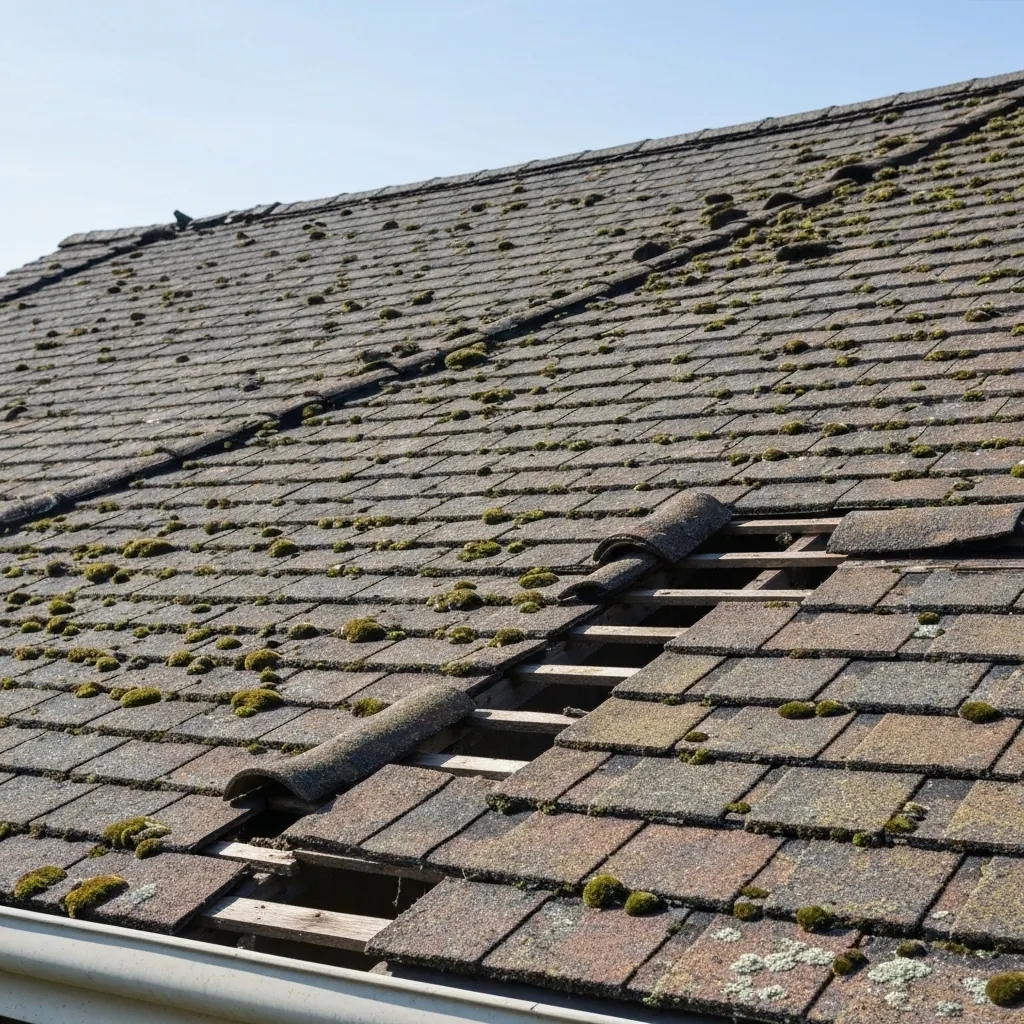
Dark streaks running down from the ridge are algae. The Asphalt Roofing Manufacturers Association says "Gloeocapsa magma is probably the most prevalent of several algae species" behind those stains. It is technically a blue-green cyanobacterium that grows a dark outer coating to block the sun, and that coating is the black you see. North slopes and areas shaded by large trees usually show it first.
Algae is mostly cosmetic. Owens Corning says algae does not change how its shingles perform. It still makes a house look worn, and the roof surface stays wet a little longer after each rain.
Moss is a bigger problem. Those thick green cushions are small plants that anchor with hairlike rhizoids, which hook around asphalt granules or grow into the grain of wood shakes. That grip is why one pass with a sprayer will not remove it, and why moss left alone slowly pulls a roof apart.
Mold on the sunny outer surface of a shingle is rare, and when it appears it is usually growing on a wet pile of leaves and needles. Mold under the deck or in the attic points to a leak or poor roof ventilation. A roof wash will not fix it; the space has to be dried out and properly cleaned.
Moss holds water and rots the roof deck
Moss holds water like a sponge and keeps the shingles wet for hours after the rest of the roof has dried, which slowly rots the deck underneath. It also grows between courses and lifts the bottom edges until the sealant strip lets go. Wind-driven rain can then get under a tab and tear it off.
Winter makes the damage worse. Water in the mat freezes and expands night after night, prying granules and shingle edges loose until the bare asphalt bakes in the sun, turns brittle and cracks. Wood roofs suffer most. The Cedar Shake and Shingle Bureau warns that "heavy moss can cause water to back up the roof enough to run over the top of the shingles."
Once water reaches a nail, it follows the shank into the sheathing. After a few seasons the decking turns soft and has to be cut out before new shingles go on.
Moss grows where the roof stays shaded and damp
Moss grows where the roof stays shaded and damp. Spores need a surface that stays wet long after rain or dew, and a north slope gets little sun, which is why streaks often stop at the ridge with one side dark and the other clean. Large trees add shade, block the breeze and drop needles and leaves that hold water.
Roof shape matters as well. Low-slope sections drain slowly, and valleys and the ledge behind a dormer collect debris that never fully dries, so moss often starts there. A poorly ventilated attic can also wet the deck from below, which usually explains moss on a sunny slope.
Material is the third factor. Wood shakes are porous and organic, so moss roots in easily, and rough concrete tile holds water. Spores can barely attach to metal, so moss on a metal roof is nearly always growing in a pile of debris.
How much does roof moss removal cost?
Professional cleaning costs about 30 to 90 cents per square foot, depending on what is growing, how steep the roof is and how high it sits.
| Job | Cost per square foot |
|---|---|
| Algae-only soft wash | 30 to 75 cents |
| Heavy moss with hand removal and a second treatment | 40 to 90 cents |
On a 2,000-square-foot roof, that works out to about $600 to $1,800. Labor is most of the cost: harnesses, anchors, soft-soled boots and often two people on the roof for four to six hours. Roofs steeper than about 6/12 or taller than one story add roughly 20 to 30 percent for extra rigging and slower work. A quote under $300 for the whole roof usually means the crew is cutting the dwell time short or plans to use a pressure washer.
Doing it yourself costs $50 to $250 for chemicals, a pump sprayer and a soft brush, plus $100 to $200 for a basic fall-protection kit if you do not own one. Ignoring moss costs the most. Replacing a typical 20-square roof early with architectural shingles runs about $9,000 to $15,000, and the roofing calculator shows what a premature tear-off would cost on your house.
Never pressure wash shingles
Pressure washing is the most common and most expensive mistake. ARMA states it plainly: "DO NOT use a power washer or any type of brush or broom" to clean algae off the roof surface. The spray knocks loose the ceramic granules that shield the asphalt from UV, and a few minutes of it can take years off the roof.
The water also forces its way under the tabs and into the deck, sometimes into the attic, where rot and mold develop unseen until a ceiling stain appears. Do not hire a contractor who offers to pressure wash an asphalt roof.
Soft washing is the correct method. The pump applies the solution at about garden-hose pressure, the chemicals kill the growth, and a gentle rinse or the next few rains carry it away.
Roof cleaning solutions that work
- Chlorine bleach. Sodium hypochlorite kills algae and moss on contact. Mixes range from one part bleach to three parts water up to half and half, but your shingle manufacturer's printed directions take priority over anything online. A stronger mix is not better, because it dries out asphalt and corrodes flashing and gutters.
- Oxygen bleach. Sodium percarbonate is a powder mixed with water. It is gentler on plants and safe on shingles, but slower, and thick growth may need a second application.
- Leave-on products. These usually contain quaternary ammonium compounds or potassium salts of fatty acids. You spray them and leave them, and wind and rain clear the dead growth over the following months.
- Zinc sulfate granules. Sprinkled along the ridge, they keep working for months. The runoff can harm aquatic life, so check local rules before using them.
How to remove roof moss yourself
- Protect yourself and the yard. Any roof steeper than about 4/12 calls for a harness, an anchor and soft-soled roof boots. Choose a dry, calm day, since wet moss is very slippery. Hose down every plant under the drip line before, during and after spraying, and turn the downspouts away from flower beds.
- Thin out heavy mats. Work from top to bottom with a plastic roof rake or soft nylon brush, removing the bulk while it is dry and leaving the last bits in place. Never use metal scrapers or wire brushes. Skip this step for algae streaks, which should never be scrubbed.
- Spray the solution. Use a sprayer that has never held anything else, add about an ounce of dish soap per gallon so the mix clings, and soak one small area at a time. Let it sit 15 to 20 minutes, misting again if the sun dries it too quickly.
- Rinse gently and clean the gutters. Rinse with a garden hose, then clear the loose moss from the gutters. Dead moss turns brown or white and keeps releasing over several weeks of rain; pulling it off sooner takes granules with it.
Prevention costs less than repeat cleaning
Prevention costs much less than cleaning every couple of years. Zinc or copper strips go just under the ridge with about two inches of metal exposed, and each rain carries a trace of metal down the slope, which moss and algae cannot tolerate.
- Copper or zinc strips. Copper works better and lasts longer but costs more and can leave a faint green tint, while zinc weathers to dull gray. Long slopes need a second row partway down, and short strips can go under dormers.
- Algae-resistant shingles. GAF, Owens Corning and CertainTeed all blend copper-lined granules into their AR lines. Owens Corning backs several with a 25-year algae resistance warranty when its hip and ridge shingles are installed with them, and offers 10 years on its Supreme 3-tab.
- Trimmed trees. Cut branches back at least six to ten feet from the roofline so sun and wind reach the shingles.
- Clean gutters and regular checks. Keep gutters clear so water drains off the eaves, and look the roof over with binoculars every spring and fall. In damp climates, plan on a professional cleaning every three to five years.
Ask a roof cleaner about the method before the price
Ask about the method before the price, and move on from anyone who mentions a pressure washer. Good companies bring up soft-wash equipment on their own, name the chemicals they use and explain how they will protect plants and handle runoff. The better crews keep someone on the ground with a hose the whole time.
Get proof of general liability and workers' comp coverage, and confirm that roof work is not excluded. Many companies offer a one- or two-year promise to re-treat if streaks or moss return, which is a cleaning guarantee and separate from any roof warranty. A careful crew also checks for loose shingles, failed flashing and clogged gutters before spraying.
Should you clean or replace a mossy roof?
Cleaning is wasted money on a roof that is already failing. Shingles older than about 20 years, bald patches showing the mat, curling and cupping all point to replacement. A roof in that condition may not survive a crew walking on it, and the solution can seep under lifted edges and soak the deck.
Leaks or soft decking settle the question. Water stains in the attic or a spot that gives underfoot mean the roof needs repair or replacement however clean it looks. If you are selling soon, a cleaning can still help, because it lets the home inspector see the condition of the granules.
Roof moss and algae removal questions
What is the best way to remove moss and algae from a roof?
Kill the growth with a low-pressure spray, then give it time. Diluted bleach or a commercial moss killer goes on at about garden-hose pressure, and the dead growth releases over the next few weeks of rain, sometimes longer. Thick mats can be eased off gently from the top down once they are dead, and a pressure washer should never touch asphalt shingles.
What are the black streaks on my roof?
Almost always algae, specifically Gloeocapsa magma. It is not the black mold people worry about, and it usually appears first on shady north slopes. It is unsightly but mostly harmless; mold in the attic is a separate problem, usually caused by a leak or poor ventilation.
Does bleach damage roof shingles?
Not when it is mixed correctly and rinsed off. Shingle manufacturers recommend it for algae. A mix that is too strong, or one left to bake in hot sun, dries out the asphalt, corrodes flashing and browns the shrubs under the eaves, so follow the manufacturer's ratio and keep plants soaked.
Do zinc strips really stop roof moss?
They slow it down considerably. Each rain rinses a trace of metal off the strip and carries it over the shingles, and moss and algae cannot tolerate it. The effect weakens farther down the slope, which is why long roofs get a second strip partway down.
Does homeowners insurance cover moss damage?
Rarely. Insurers treat moss, algae and mold as maintenance issues, so a leak under shingles that moss lifted is usually denied. Some carriers will not renew a policy until the roof has been cleaned.
Prices are 2026 US national averages and building codes vary by town. Materials, warranties and code adoptions change, so confirm prices with local contractors and code rules with your building department before you sign anything.
Estimate Your Roof Cost
Use our free roofing calculator. No sign-up required.