 RoofingCalculator.io
Types of Gutters
By RoofingCalculator.io. Updated October 14, 2026. Prices, ratings and code references link to their sources.
Pricing your own roof? Get squares, materials and a 2026 cost range in about two minutes. Free, no sign-up.
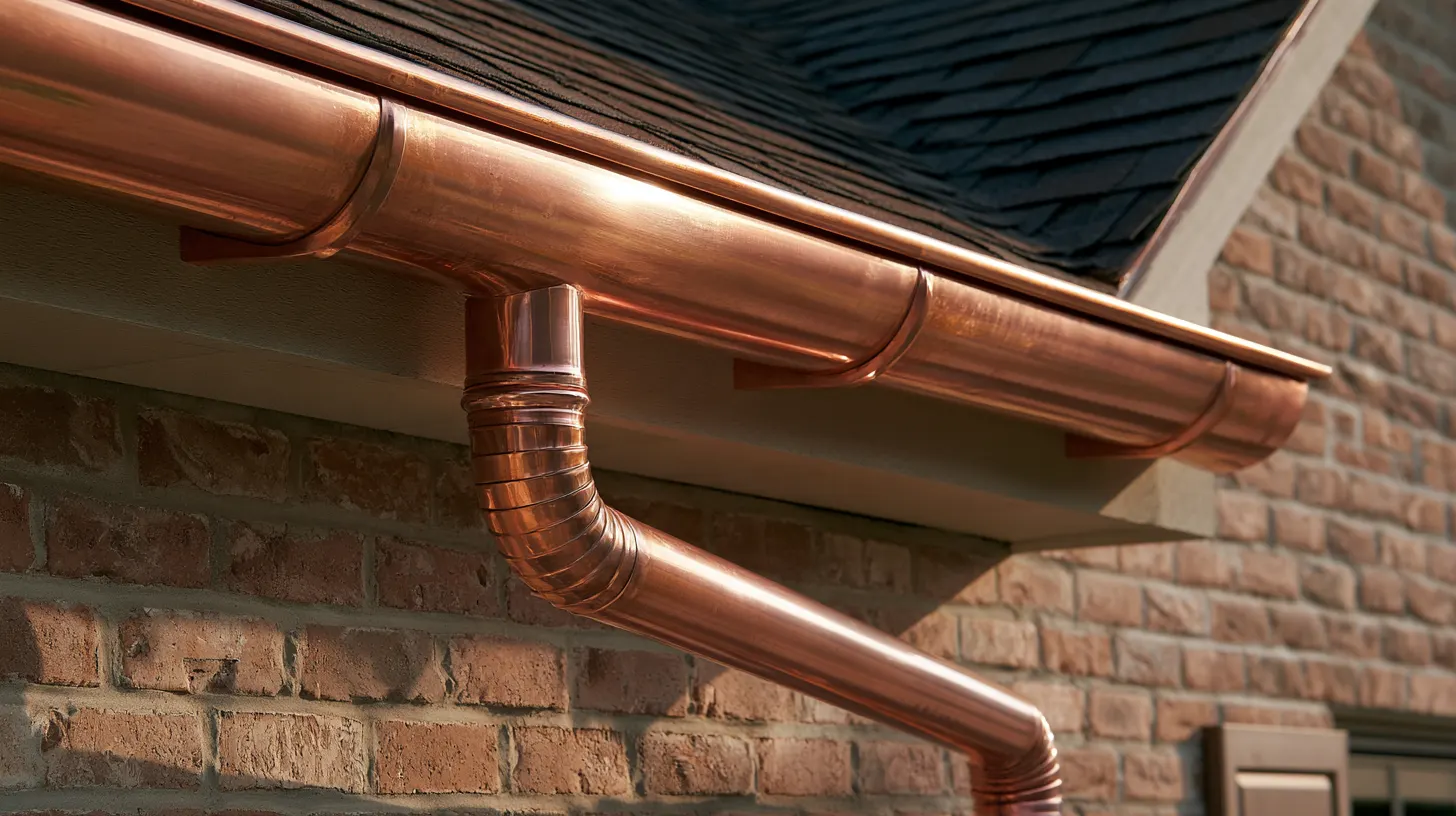
The main types of gutters are K-style, half-round, box and fascia. They come in aluminum, steel, copper, zinc or vinyl, and they go up either seamless or in sections. Most houses get seamless aluminum K-style, which costs about $6 to $14 per linear foot installed and lasts 20 to 40 years or more.
Choosing a gutter system comes down to four decisions.
- Pick a shape. K-style suits most houses, half-round suits historic and traditional homes, and box or fascia gutters are built into the roof edge.
- Pick a material. Aluminum is the best value, steel is tougher, copper and zinc last 50 years or more, and vinyl is the cheapest.
- Choose seamless over sectional. Seamless runs have joints only at corners and outlets, and they usually cost only $2 to $4 more per foot.
- Size the system to the roof. Five-inch gutters with 2x3-inch downspouts handle most roofs, and large or steep roof planes need 6-inch gutters with 3x4-inch downspouts.
K-style is the most common gutter
K-style is the most common gutter on American houses. Seen from the end, its front has a decorative curve similar to crown molding, and its flat back sits tight against the fascia board. The bends also stiffen the metal so it does not bow under water, ice or a leaning ladder.
K-style comes in two widths, 5-inch and 6-inch. Five-inch handles most average roofs, and 6-inch is for larger or steeper roof planes. Because the trough is deeper and squarer than a half-round, a K-style gutter carries more water than a half-round of the same nominal width.
The drawback is cleaning. The inside corners of the K collect silt, shingle granules and wet leaves, and that sludge holds moisture against the metal. Clean K-style gutters at least once a year, and add guards if you have many trees.
Half-round gutters suit historic homes
A half-round gutter is shaped like a pipe cut lengthwise, usually with a rolled bead along the front edge. It is common on historic houses and on Craftsman, Colonial and European-style homes, and it is often made of copper or zinc.
The smooth, cornerless bottom gives debris nowhere to settle, so it flushes out easily. A half-round holds less water, though. A 6-inch half-round handles about as much as a 5-inch K-style, so homeowners in heavy-rain areas often move up to 7-inch or 8-inch.
The round back needs special hangers, either brackets screwed to the fascia or straps nailed under the roofing. They must be spaced closely, because the water's weight hangs at the bottom of the curve. The extra hardware and careful leveling account for the higher price.
Box gutters are built into the roof edge
Box gutters are built into the roof edge or cornice instead of hanging from it. On an older house, a box gutter may be a wooden trough lined with metal or a membrane, hidden behind a decorative cornice. On commercial buildings, box gutters are wide, heavy-gauge steel channels that drain large roofs.
A well-maintained box gutter can last a very long time. When one fails, the water goes into the framing and walls instead of onto the lawn. Relining is specialist work that often costs $40 to $80 per linear foot, so check the lining every season if your house has built-in gutters.
Fascia gutters are a related type in which the gutter forms the fascia itself, giving a modern house a clean, continuous edge. They are more common in some regions and with certain builders, and they are almost always custom-formed by a professional.
Aluminum is the best value for most houses
Aluminum is the best value for most houses. It does not rust, weighs very little and comes in dozens of baked-on colors. Choose at least 0.027-inch thickness, or 0.032-inch for better resistance to dents and snow. InterNACHI's life expectancy chart puts aluminum gutters at 20 to 40+ years.
Galvanized steel is stronger and handles heavy snow and ladders better. Once the zinc coating wears through, it rusts, and InterNACHI lists galvanized steel gutters at about 20 years. Galvalume, steel coated with an aluminum and zinc alloy, resists corrosion better. Steel gutters typically cost about $9 to $18 per foot installed.
Copper is the premium choice. It never needs paint, develops a protective patina and is listed at 50+ years. Its joints are soldered rather than caulked, which raises labor costs, so copper systems often run $25 to $50 per foot. Zinc costs about $20 to $35 per foot, lasts about as long as copper and weathers to a soft gray, but it is difficult to work in cold weather.
Vinyl is the budget option at roughly $3 to $6 per foot. Homeowners can snap the pieces together over a weekend, and it never rusts. Cold snaps can make it brittle and strong sun can make it sag, so many professionals will not install it.
Seamless gutters leak less than sectional
Seamless gutters are the better choice for most houses, because seams are where gutters leak. The installer brings a coil of aluminum or steel and a roll-forming machine to your driveway and forms each run to its exact length, whether 40 feet or 60 feet, with no seams. Only the corners and downspout outlets have joints.
Sectional gutters come in 10-foot or 20-foot pieces joined with connectors and sealant. Each joint flexes as the metal expands and contracts, and eventually the sealant cracks. Sectional gutters are fine for a shed or a tight DIY budget, but seamless usually costs only about $2 to $4 more per foot.
How much do new gutters cost?
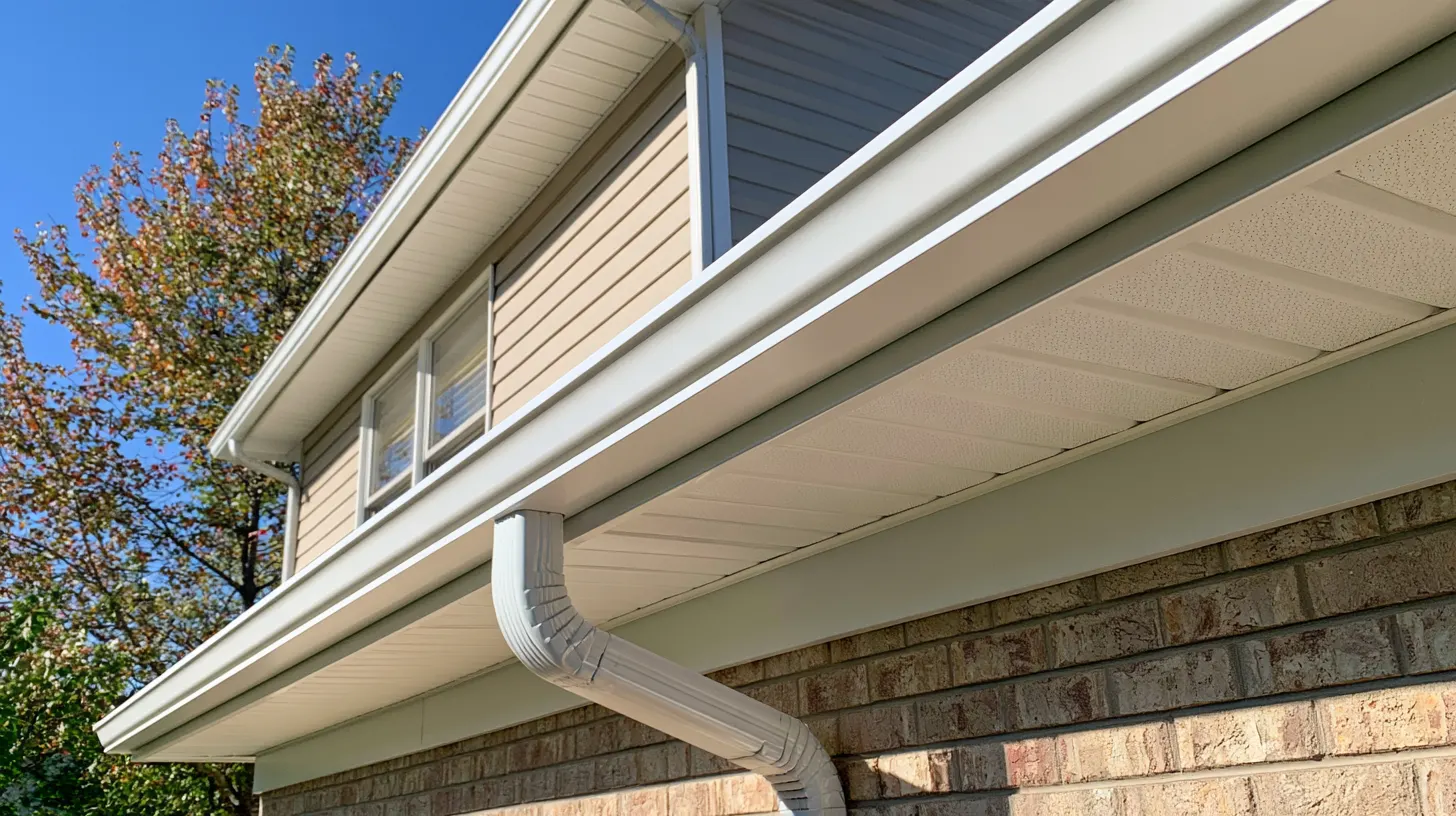
Professionally installed gutters cost most houses between $1,200 and $4,500. That covers the 150 to 200 feet of gutter a typical single-family house needs, and the material sets the base price.
| Material | Installed cost per linear foot | Typical lifespan |
|---|---|---|
| Vinyl | $3 to $6 | Shorter; brittle in cold, sags in sun |
| Seamless aluminum | $6 to $14 | 20 to 40+ years |
| Steel | $9 to $18 | About 20 years (galvanized) |
| Zinc | $20 to $35 | Similar to copper |
| Copper | $25 to $50 | 50+ years |
Extras add to the total:
- Downspouts are priced by the foot. Plan on one for every 30 to 40 feet of gutter.
- Corners add labor. Each one adds about $20 to $40, especially when the installer hand-cuts the miters for a cleaner look.
- Rotten fascia is common. It often turns up when the old gutters come off and costs $6 to $12 per foot to replace.
- Height costs more. A three-story house or a roof too steep for a ladder adds a premium of $1 to $3 per foot.
Location also changes the price. Rainy regions are often quoted 6-inch gutters with extra downspouts as standard, snow country gets heavier hangers, and big-city labor costs well above rural rates. The gutter cost guide works through a full estimate foot by foot and covers when repair makes more sense than replacement.
Most houses need 5-inch gutters
Most houses do well with 5-inch K-style gutters and 2x3-inch downspouts. A run that catches a large roof plane, a steep slope or a valley needs 6-inch gutters with 3x4-inch downspouts. The right size depends on the roof area draining into each run, its steepness and how hard it rains where you live.
Downspouts matter as much as the gutter. A 3x4 downspout carries far more than a 2x3, and adding one more downspout to a long run often fixes overflow better than moving up a gutter size. The roofing calculator gives each roof plane's area from its size and pitch, which is the starting number for sizing gutters and downspouts.
Gutters also need to slope toward their outlets, at about 1/4 inch of drop per 10 feet as a rule of thumb. Too little slope lets water sit and corrode the trough, and too much looks crooked against the roofline and can send water past the outlet. Runs longer than about 40 feet are often pitched from the middle down to a downspout at each end.
Hidden hangers hold better than spikes
Most gutters now use hidden hangers, screwed through the gutter into the fascia. They clip under the front lip out of sight and hold far better than the old spike-and-ferrule system, a long nail through the gutter face that gradually backs out as the metal heats and cools.
Spacing matters more than brand. Every 24 inches is fine in most places, and every 18 inches where snow and ice load the gutter. The screws must also bite into solid wood behind the fascia. Otherwise one spot sags and holds water, the extra weight deepens the sag, and eventually the fascia starts pulling away from the house.
Downspouts should carry water away from the house
Downspouts should carry water away from the house. InterNACHI notes that downspouts are designed to "discharge it safely away from the foundation". In practice, that means an extension, a splash block or a buried drain line that carries the water several feet from the wall, with soil graded to keep it moving downhill.
Round downspouts usually pair with half-round gutters, and rectangular corrugated downspouts with K-style. A buried 4-inch drain pipe can carry water to a daylight outlet, a dry well or a rain barrel. Check local rules before connecting to the sewer, because many cities prohibit it.
Are gutter guards worth it?
Guards reduce how often you clean gutters, but they do not eliminate it. Silt, pollen and shingle grit get through every type and settle on the bottom, and how often you clean depends mostly on your trees.
- Screens, foam and brush inserts are the cheapest. They stop large leaves but let fine debris through, and pine needles slip into the openings.
- Perforated aluminum is sturdier. Wet leaves can mat over the top.
- Stainless micro-mesh stops the most debris. It blocks needles and grit but needs an occasional brushing to clear the surface film.
- Reverse-curve (surface tension) guards shed leaves off the front. Water follows the rounded nose into the gutter, but only when the guard is pitched exactly right.
Prices run from about fifty cents per foot for DIY plastic to $15 to $35 per foot for a professionally installed system. How a guard attaches matters as much as its type. Guards slid under the first course of shingles can break the shingle seal and, if installed poorly, void the roof warranty, while fascia-mounted guards never touch the roof. The gutter guards guide compares every style, its cost and how to clear an existing clog.
How often should you clean gutters?
Clean unguarded gutters at least twice a year: in late spring after seeds and blossoms drop, and again after the leaves fall. Houses under pines or large oaks may need three or four cleanings. Professional cleaning typically costs $150 to $250 for a one-story house and $250 to $450 for a two-story.
Clogs usually start at the downspout outlet or the first elbow, where a few twigs catch and granules and silt build up behind them. Warning signs appear on the house first: water sheeting over the front lip in a storm, dark streaks on the siding and a trench in the mulch below the drip line. A full gutter is also heavy enough to bend hangers and pull the fascia loose.
If you clean gutters yourself, use a plastic scoop rather than a metal trowel, which scratches the finish and invites rust. Flush toward the downspout with a hose, and never stand on the top three rungs of the ladder.
Leaking corners and end caps are the other common complaint. Miter sealant lasts years, not decades, and resealing means scraping out the old sealant and applying new sealant to clean, dry metal.
Gutters and drip edge work as one system
The gutter and the bottom edge of the roof work as one system. Drip edge, a strip of bent metal tucked under the first course of shingles, directs water past the fascia and into the trough. That works only while the trough drains. When it fills with wet debris and standing water, water can wick back toward the roof by capillary action and reach the deck and underlayment.
That damage is usually invisible from the yard. The plywood or OSB along the edge rots slowly, and nobody notices until shingles near the eave start to sag or slide. The repair is slow, because several courses of shingles and the gutter both have to come off. When a roofer quotes a reroof, ask about the gutters as well; if they are near the end of their life, replacing them while the drip edge and fascia are exposed usually makes sense.
Gutters that fill with ice every winter point to a different problem. Ice dams come from heat leaking into the attic, so the fix starts with insulation and air sealing, and the ice dam prevention guide covers the steps in order. Larger gutters will not solve it, and a gutter packed with frozen leaves only helps the ice build.
Hire an installer who forms seamless gutters on site
Hire an installer who forms seamless gutters on site and puts the details in writing. The quote should state:
- The profile and width. For example, 5-inch or 6-inch K-style.
- The metal thickness. 0.032-inch aluminum is a solid choice.
- The number and location of downspouts. Too few is a common way to cut a bid.
- The hanger type and spacing. Wide spacing is another common shortcut.
- How corners and outlets are sealed. These are the usual leak points.
If one bid is far below the others, find out where the savings came from, since too few downspouts, thin metal and widely spaced hangers are the usual reasons. Ask about the labor warranty, because most gutter problems show up as pitch or fastening mistakes in the first year or two. Also confirm the installer carries liability and workers' compensation insurance, since the work is done from tall ladders.
More gutters guides
Types of gutters questions
What is the most common type of gutter?
K-style is by far the most common gutter on American houses. Its flat back screws directly to the fascia, and its front resembles crown molding. It also holds more water than a half-round gutter of the same width.
Which gutter material lasts the longest?
Copper lasts longest. InterNACHI lists copper gutters at 50+ years, and zinc lasts about as long. Aluminum usually lasts 20 to 40 years or more, and galvanized steel is listed at around 20 years before rust takes over.
Are seamless gutters better than sectional gutters?
On most houses, yes. Seamless gutters are formed on site to the full length of each run, so the only joints are at corners and outlets. Sectional gutters have a seam every 10 or 20 feet, and each seam is a likely leak point.
Should I get 5-inch or 6-inch gutters?
Five-inch K-style gutters suit most average roofs with a moderate pitch. Choose 6-inch gutters with 3x4-inch downspouts for a large or steep roof plane, a long run, heavy rainfall or a valley that empties into one spot.
Are half-round gutters more expensive than K-style?
Usually, yes. They need special hangers and careful leveling, and they are often ordered in copper for older houses. Expect a noticeably higher price per foot than seamless aluminum K-style.
Prices are 2026 US national averages and building codes vary by town. Materials, warranties and code adoptions change, so confirm prices with local contractors and code rules with your building department before you sign anything.
Estimate Your Roof Cost
Use our free roofing calculator. No sign-up required.