 RoofingCalculator.io
How Much Do Gutters Cost?
By RoofingCalculator.io. Updated October 19, 2026. Prices, ratings and code references link to their sources.
Pricing your own roof? Get squares, materials and a 2026 cost range in about two minutes. Free, no sign-up.
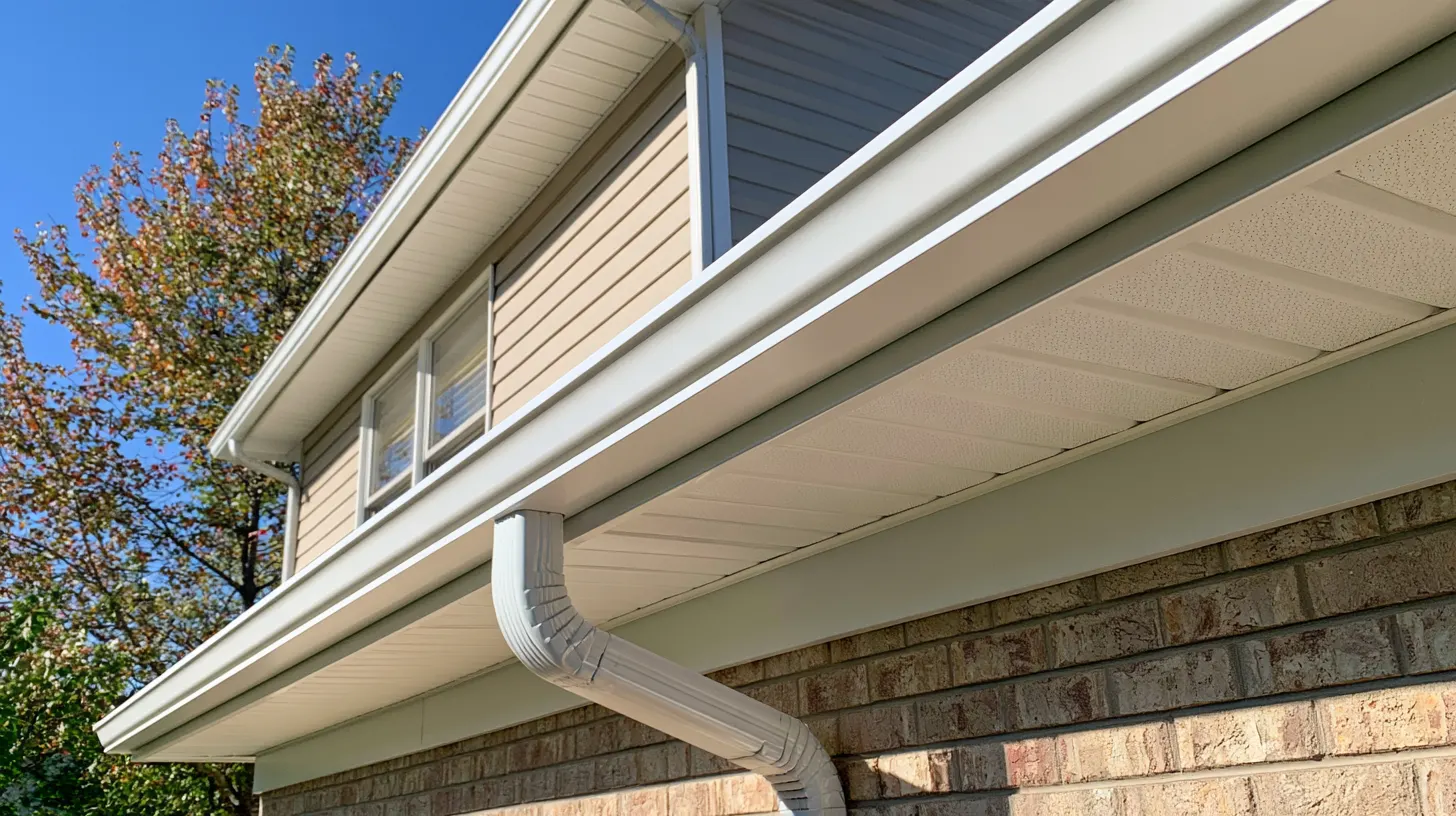
Professionally installed gutters cost between $1,200 and $4,500 for most homes, covering the 150 to 200 feet a typical single-family house needs. Seamless aluminum, the most common choice, costs about $6 to $14 a foot installed. Zinc costs about $20 to $35 a foot and copper $25 to $50.
Four choices set most of the price.
- Material. Vinyl is cheapest, aluminum is the standard, and steel, zinc and copper cost more but last longer.
- Seamless or sectional. Seamless costs $2 to $4 more a foot and leaks far less.
- Size. Six-inch gutters hold 40 percent more water than 5-inch for about $1 to $2 more a foot.
- Add-ons. Downspouts, hangers, fascia repair and gutter guards can add hundreds or thousands of dollars.
How much do gutters cost per foot?
Gutters cost from about $3 a foot for basic vinyl to $35 or more for premium metals. Material, style and how difficult the house is to work on decide where your price falls.
| Material | Installed cost per foot | InterNACHI lifespan |
|---|---|---|
| Vinyl | $3 to $6 | 25+ years |
| Aluminum | $6 to $14 | 20 to 40+ years |
| Galvanized steel | $9 to $18 | 20 years |
| Galvalume steel | $10 to $20 | Not listed |
| Zinc | $20 to $35 | Not listed |
| Copper | $25 to $50+ | 50+ years |
| Box gutters (replacement) | $40 to $80 | Not listed |
Labor makes up about half the bill. It covers removing the old system, forming new runs, and hanging downspouts and hangers. Many gables, multiple roof heights or a house taller than two stories can raise labor 20 to 50 percent.
Gutter costs by material
Material decides how long gutters last and how much maintenance they need, and each has its own per-foot price for troughs and hardware.
- Aluminum is the standard choice. It does not rust and comes in several thicknesses, or gauges, with .027 and .032 inches most common on houses. In snowy or windy areas, choose .032, which costs slightly more and resists denting and sagging much better.
- Vinyl is the cheapest option. It is light, snaps together and is popular for DIY installs, but it turns brittle in cold weather and can crack after long sun exposure. The InterNACHI life expectancy chart lists vinyl gutters and downspouts at 25-plus years, but in cold climates vinyl often cracks well before that.
- Galvanized steel is the toughest. At $9 to $18 a foot, it handles ladder strikes and falling branches better than aluminum. Its weakness is rust, since even zinc-coated steel eventually corrodes at seams and scratches. Galvalume, steel coated with an aluminum and zinc blend, resists corrosion better for $10 to $20 a foot.
- Copper suits historic and high-end homes. Its joints are soldered rather than caulked, which requires a skilled installer. It starts around $25 a foot and can exceed $50, and InterNACHI gives copper gutters 50-plus years as the metal develops its green patina.
- Zinc is durable and self-healing. At $20 to $35 a foot, it forms a protective layer that seals its own scratches, like copper. It is more common in Europe but increasingly used on high-end homes in the US.
Gutter profile affects price and capacity
The gutter's shape, called its profile, affects both the price and how much water each of the types of gutters can carry.
- K-style is the most common. Found on most newer houses, it resembles crown molding from the street and has a flat back that sits tight against the fascia. It holds more water than a round gutter of the same width, and most quotes start with it.
- Half-round costs 15 to 30 percent more. Shaped like a tube cut in half, it appears on older, historic and Mediterranean-style homes. It needs special hangers and more careful installation, so labor also costs more.
- Box gutters cost $40 to $80 a foot to replace. They are mostly found on commercial buildings or built into the roof structure of older homes, often custom-made on site. Replacement involves extensive metalwork and sometimes roof repairs to get a watertight seal.
Seamless gutters are worth $2 to $4 more a foot
Seamless gutters cost $2 to $4 more a foot than sectional gutters and are the better long-term choice. A roll-forming machine on the contractor's truck produces one continuous piece cut to the exact length of each roof edge, so the only seams are at the corners. Fewer seams mean less maintenance and no damage from slow leaks.
Sectional gutters come in pre-cut pieces, usually 10 to 20 feet long, joined with connectors and sealant. They cost less and are used in most DIY jobs. Every joint is a potential leak, though: the sealant dries out and fails, and the drip that follows can rot the fascia or soak the foundation.
Downspouts and hardware
Downspouts, elbows, end caps and hangers add to the cost of the troughs.
- Downspouts. They are priced by the foot like gutters, with one needed for every 30 to 40 feet of gutter. Rectangular downspouts pair with K-style and round ones with half-round. Corrugated downspouts are more common on houses than smooth-walled ones because they are stiffer.
- Hangers. Older systems used spikes and ferrules (a long nail through a tube), which tend to work loose. Most installers now use hidden hangers that clip into the front lip and screw into the fascia every 24 inches, or every 18 inches in heavy snow areas. Extra hangers add $50 to $150.
- Corner miters. Corners need strip miters or box miters where two runs meet. Skilled installers often hand-cut them for a cleaner look, and each corner typically adds $20 to $40 in labor.
Rotten fascia is the most common hidden cost
Rotten fascia is the most common hidden cost. The fascia is the horizontal board the gutters hang on, and it is often decayed behind old gutters. Soft or crumbling fascia cannot support a gutter full of water, and replacing it costs $6 to $12 a foot.
Height and roof steepness also add cost. A steep roof makes it harder for the crew to move and anchor equipment, and a roof too steep for a ladder, or a three-story house, usually carries a height premium of $1 to $3 more per foot.
The yard matters too. Dense shrubs around the house or a hillside lot mean more time setting ladders and carrying materials, and if the crew cannot easily walk the perimeter, the labor quote rises.
Six-inch gutters hold 40 percent more water
A 6-inch gutter holds 40 percent more water than a 5-inch gutter. Five-inch was the residential standard for decades, but many roofers now recommend 6-inch by default.
The extra capacity matters on a large roof (you can measure yours in squares with the roofing calculator) or a steep one where water runs off quickly. In heavy rain, 5-inch gutters often overflow because the water moves too fast to catch. Upgrading usually adds $1 to $2 a foot in material and gives much better protection against a flooded basement and foundation erosion.
Gutter guards add $2 to $35 a foot
Gutter guards are optional covers that keep leaves and debris out, and most cost $2 to $35 a foot. Cheap screens sit at the low end and installed micro-mesh at the high end.
- Screens are the cheapest guards. Plastic or metal mesh snaps over the top and keeps out large leaves, but pine needles and small seeds pass through.
- Micro-mesh blocks fine debris. Fine stainless steel mesh stops even small particles and works very well, at often $15 to $35 a foot installed.
- Surface tension guards can cost the most. Also called "reverse curve" guards, they rely on water clinging to a curved edge and flowing into the gutter while leaves fall off the front. They are usually sold as proprietary systems.
No guard eliminates maintenance. Fine silt still builds up inside, and some guards let water overshoot the gutter in heavy storms. Compare the cost with professional cleaning, which typically costs $150 to $300 a visit.
Gutter prices vary by region and climate
Location affects both labor rates and what the climate requires. In the rainy Pacific Northwest and Southeast, contractors often quote 6-inch gutters with extra downspouts as standard. Strong demand for high-capacity systems keeps material prices competitive there, while busy schedules keep labor high.
In the Northeast and Midwest, snow load is the main concern. Contractors use heavy-duty hangers, and some homeowners add heat cables to keep a drain path open through winter, at $500 to $1,500 depending on run length. Heat cables do not fix the attic heat loss that causes ice dams in the first place.
In expensive cities such as New York, San Francisco and Chicago, labor rates run well above the national average. Rural contractors have lower overhead, and their quotes are often lower.
How do you estimate gutter cost?
A gutter estimate starts with measuring every roof edge that will get a gutter, walking each one at ground level. Add 10 percent for waste, plus the vertical downspout runs.
For example, take a 2,000-square-foot rectangular ranch measuring 50 by 40 feet, with gutters on the two 50-foot sides for 100 feet of gutter. A 10-foot downspout at each of the four corners adds another 40 feet, for about 140 linear feet in total.
At an average of $10 a foot for seamless aluminum, the base cost is $1,400. Adding $200 to remove the old gutters and $150 for minor fascia repair brings the total to $1,750. Upgrading to 6-inch gutters with quality micro-mesh guards can more than double the price, to $4,000 or more.
Incorrect slope is the most common install mistake
Poor installation wastes even the best material, and incorrect slope is the most common mistake. Gutters must tilt toward the downspouts, and a common rule of thumb is 1/4 to 1/2 inch of drop every 10 feet. Too little slope leaves standing water that attracts mosquitoes and speeds corrosion, while too much can send water past the downspout opening.
Hangers spaced too far apart are the second mistake. A gutter full of water or ice sags between them, and the low spot collects debris and standing water. Fixing it usually means removing and rehanging the whole section.
Downspout discharge is the third. Water should land at least three to five feet from the foundation, because water released at the base of the wall can enter the basement or cause the foundation to settle. InterNACHI's roof drainage guide says downspouts should have an extension or splashblock "that will carry runoff away from the foundation." A quote that leaves them out is missing a real part of the system.
Questions to ask a gutter contractor
Compare gutter contractors on more than price by asking a few technical questions.
- What gauge is the aluminum? A very low quote may use .027 where .032 suits your weather better.
- How are the corners sealed? Tripolymer sealants outlast plain silicone, which can peel off within a few years.
- What warranties do you offer? Good contractors provide two: the manufacturer's material warranty (often 20 years to lifetime) and their own labor warranty (typically 1 to 5 years). Avoid contractors with no labor warranty.
- Are you insured? Gutter work is ladder work, and injuries happen. The National Roofing Contractors Association recommends asking for copies of liability insurance and workers' compensation certificates before exterior work starts. If an uninsured worker falls from your house, you could be liable.
- Is removal of the old gutters included? A professional quote should include tear-off and disposal. If it is vague, some contractors leave the scrap in your yard or add a fee later.
How long does gutter installation take?
On a typical house, a crew of two or three installs gutters in one day.
The crew removes the old system and checks the fascia for rot. Seamless stock is then run through the machine, cut to length and fitted with end caps and outlets. The gutters go up, followed by the downspouts and any guards you ordered.
Weather causes most delays, since crews do not hang gutters in heavy rain or with ice on the roof. Expect a two to four week wait for a spot on the schedule, and longer in spring and fall.
Not every gutter problem needs replacement
Not every gutter problem calls for replacement. A leaking seam can often be resealed, and a clogged downspout only needs cleaning. Some signs do mean the system is worn out.
- Constant clogging despite regular cleaning. The gutters may be too small for the water your roof sheds.
- Foundation cracks or basement water stains. The system is not moving water away from the house.
- Gutters pulling away from the fascia. Visible gaps usually mean the fasteners have failed or the fascia has rotted.
- Peeling siding paint or rust spots on the ground below. These show chronic overflow, with water sheeting over the edge, damaging paint and rotting wood.
Once these signs appear, a new, properly sized system is worth the cost, because the structural repairs it prevents cost more.
Gutter cost questions
How much do gutters cost for a 2,000-square-foot house?
Seamless aluminum gutters for a 2,000-square-foot house usually cost about $1,200 to $2,800 installed. A house that size typically needs 150 to 200 feet of gutter. Copper, steel, a tall house or many corners raise the price.
Are seamless gutters worth the extra cost?
Usually, yes. They cost about $2 to $4 more a foot than sectional gutters, but their only joints are at the corners and downspouts, which leaves far fewer places for leaks to start.
How long do gutters last?
InterNACHI's chart gives about 20 to 40-plus years for aluminum, 20 for galvanized steel, 25-plus for vinyl and 50-plus for copper. Gutters that are kept clean and hung with proper hanger spacing last toward the top of those ranges.
Should gutters be replaced with a new roof?
Often, yes, if they are already aging, since the drip edge and fascia are exposed during the reroof. If the gutters are in good condition, the roofer can usually work around them.
Prices are 2026 US national averages and building codes vary by town. Materials, warranties and code adoptions change, so confirm prices with local contractors and code rules with your building department before you sign anything.
Estimate Your Roof Cost
Use our free roofing calculator. No sign-up required.