 RoofingCalculator.io
Metal Roofing
By RoofingCalculator.io. Updated October 14, 2026. Prices, ratings and code references link to their sources.
Pricing your own roof? Get squares, materials and a 2026 cost range in about two minutes. Free, no sign-up.
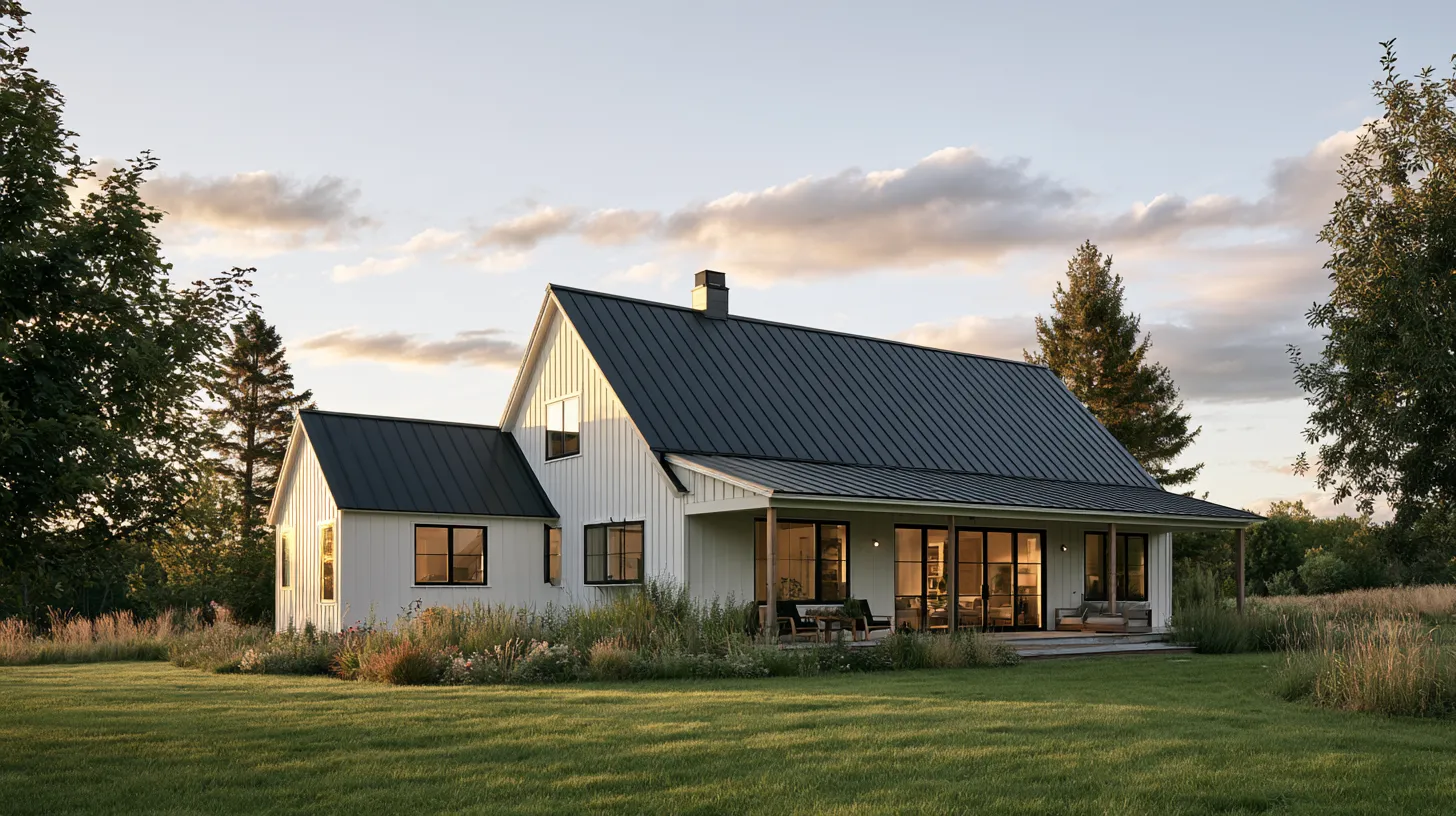
Metal roofing is steel, aluminum, copper or zinc formed into panels, tiles or shingle shapes, and on houses it is almost always painted steel. It costs about $6 to $10 per square foot installed for screw-down panels and $10 to $16 for steel standing seam. InterNACHI puts metal roofs at a life expectancy of 40 to 80 years, compared with roughly 20 to 30 for asphalt shingles.
Choosing a metal roof involves four decisions.
- Pick the panel type. Exposed screws or hidden clips decides most of the price and how much upkeep the roof needs.
- Pick the metal. Galvalume-coated steel suits most houses; aluminum suits coastal homes, and copper and zinc are luxury options.
- Pick the paint resin, then the color. PVDF holds color for decades, while SMP is cheaper and fades sooner.
- Hire a metal specialist. Installation quality decides where the roof lands in that 40 to 80 year range.
What are the main types of metal roofing?
Four styles cover nearly every house: standing seam, exposed fastener, stone-coated steel and metal shingles. Whether the screws go through the face or clips hide underneath decides most of the cost and how much maintenance the roof needs over the next few decades.
Standing seam
Standing seam uses long vertical panels running from ridge to eave, joined by raised seams about 1 to 2 inches tall, with no exposed screws. Clips hold each panel from underneath, so the most common metal-roof leak, a hole through the face of the panel, does not apply. The clips also let the metal slide as it heats and cools, and the movement is significant: a 50-foot steel panel can grow or shrink by half an inch or more in a single day.
Snap-lock panels click together and suit roofs of 3:12 and steeper. Mechanical-lock panels are crimped shut with a seamer, and double-lock is the version for very low slopes. The standing seam metal roof guide covers seams, gauge, flashing and the installation mistakes that ruin these roofs.
Exposed fastener
Exposed-fastener panels include corrugated, ribbed and 5-V crimp profiles. Large sheets overlap, and screws go through the face into the deck, each with a rubber washer. This is the cheapest metal roof, but an average 2,000-square-foot house can have well over a thousand screws, and every washer eventually dries out and cracks, so the low price comes with ongoing screw maintenance.
Stone-coated steel
Stone-coated steel is steel panels coated with bonded stone chips and stamped to look like shingles, cedar shake or clay tile. DECRA is the best-known brand. From the street it looks like a conventional roof, which helps it pass HOAs that reject standing seam. According to DECRA, its profiles carry a wind warranty of up to 120 mph and a UL 2218 Class 4 impact rating. It weighs 1.4 to 1.6 pounds per square foot, lighter than architectural shingles. The explainer on what DECRA roofing is covers profiles, battens and warranty terms.
Metal shingles
Metal shingles are smaller interlocking pieces pressed to look like shingles, shakes or slate, usually with hidden fasteners. They combine metal's durability and paint colors with a familiar shape, so they suit traditional houses where long vertical ribs might look out of place. The International Residential Code does not allow metal roof shingles on slopes below 3:12, while standing seam systems can go as low as 1/4:12 if the panel manufacturer rates them for it.
Steel suits most houses and aluminum suits the coast
Steel is used on most houses. Bare steel rusts, so it gets a metallic coating first. Traditional galvanized coating is pure zinc. Galvalume is an alloy of 55 percent aluminum and about 43.4 percent zinc, and it lasts much longer, because the aluminum shields the steel while the zinc protects scratched areas by corroding first. Most residential standing seam is 24- or 26-gauge steel, where the lower number is the thicker metal. Most professionals recommend 24-gauge for fewer dents and less waviness.
Aluminum cannot rust, which is why it is common near the ocean. Salt spray wears through steel's coating over the years, and many paint manufacturers limit or void finish warranties on galvanized steel close to salt water. Aluminum is softer, scratches more easily during installation and costs about 20 to 30 percent more than steel. It is measured in inches rather than gauge, with .032 inch the usual thickness for houses.
Copper and zinc are luxury materials, with the metal alone often costing more than $15 to $20 per square foot before labor. Both weather naturally into a patina, which is their main appeal. Paint manufacturers also sell faux finishes on steel, including patina copper and weathered zinc, at a lower price.
Everything that touches the roof must be compatible with its metal. Copper flashing on a steel roof, lead-based pipe jacks and even drips from a copper AC line can cause galvanic corrosion, where one metal slowly eats away the other whenever they get wet. Good crews keep every vent, boot and piece of flashing compatible with the panels.
Metal roofing costs $6 to $16 per square foot installed
Metal roofing costs about $6 to $16 per square foot installed, and panel type affects the price most.
| Metal roof type | Typical cost |
|---|---|
| Exposed-fastener steel panels | About $6 to $10 per sq ft installed |
| Stone-coated steel (DECRA) | About $9 to $16 per sq ft installed |
| Steel standing seam | About $10 to $16 per sq ft installed |
| Aluminum standing seam | Roughly 20 to 30 percent more than steel |
| Copper or zinc | Often over $15 to $20 per sq ft for the metal alone |
Steel standing seam on a 2,000-square-foot roof usually costs $20,000 to $32,000, and stone-coated steel about $18,000 to $32,000. Architectural shingles on the same roof cost about $9,000 to $15,000, so metal runs roughly double.
Labor causes most of the variation. A plain gable roof with no penetrations sits at the low end of the range. Every valley, dormer, skylight and chimney needs custom-bent flashing, and on a complex roof standing seam labor alone can exceed $12 per square foot. PVDF paint adds about 50 cents to a dollar per square foot over SMP. Contractors bid per square (100 square feet) rather than per square foot, so get your square count from the roofing calculator before comparing bids.
A metal roof lasts 40 to 80 years
InterNACHI estimates 40 to 80 years, and where a roof falls depends on the panel, the paint and the installer. Well-installed steel standing seam with a PVDF finish commonly lasts 40 years or more, and stone-coated steel tends to last 40 to 70. DECRA backs its residential products with a Lifetime Limited Warranty that transfers to a buyer within 20 years of installation.
The panels rarely fail first. The small parts wear out on their own schedule:
- Screw washers last about 10 to 20 years. On exposed-fastener roofs they harden and crack.
- Sealant lasts about 10 to 15 years. This applies to polyurethane or silicone sealant around flashing.
- Rubber pipe boots last about 10 to 12 years. These collars around plumbing vents dry-rot.
These parts are cheap, and replacing them on time keeps the metal underneath working for decades.
Paint has its own lifespan. PVDF finishes usually carry 30- to 40-year fade warranties. SMP tends to fade and chalk within 10 to 20 years, sooner in dark colors under strong sun, leaving a white powder when you rub the panel. A chalked roof still keeps water out, and a recoat (covered in the maintenance section below) can add another 10 to 15 years. The guide to how long a roof lasts compares metal with every other roofing material.
Noise and lightning fears are mostly myths
Noise and lightning concerns about metal roofs are mostly myths, and hail resistance is one of metal's strengths.
The loud metal roofs people remember are on barns, where thin sheets are screwed directly to open purlins with nothing beneath. A house has solid decking, underlayment and an insulated attic between you and the panels, so rain on metal sounds about the same as rain on shingles. Stone-coated steel is quieter still, because the stone chips break up each drop. Popping or groaning on a hot afternoon is an installation fault: panels fastened tightly at both ends ("pinned") cannot slide as they expand.
Lightning seeks the tallest object with the easiest path to ground, and a metal roof does not change that, so it does not attract strikes to a house. If lightning does strike, metal will not burn. Standing seam and stone-coated steel both carry Class A fire ratings with the correct underlayment, and wind-blown embers from a nearby fire will not ignite them.
Large hailstones can dent metal, and 26-gauge dents more easily than 24, but punctures are rare, so a dented roof usually still keeps the house dry. Shingles fail differently: hail knocks granules loose and cracks the mat out of sight, and the sun then degrades the bare spots until the roof fails early. Stone-coated steel carries the top UL 2218 Class 4 impact rating, and DECRA warrants it against hail up to 2.5 inches in diameter. In hail country, ask your insurer before signing, since many reduce premiums for an impact-rated roof.
Choose the paint resin before the color
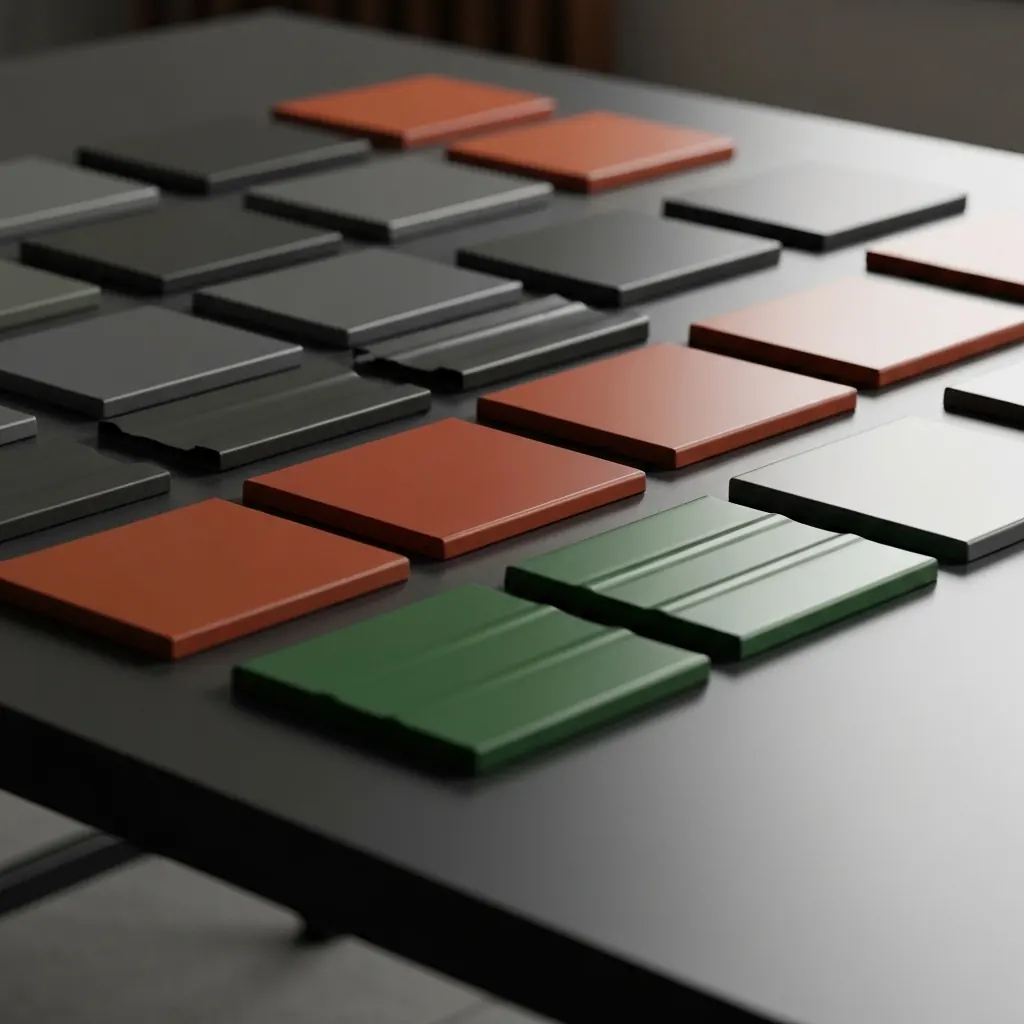
Choose the paint resin before the color. The resin is the binder that holds pigment to the metal, and it determines how long the color lasts. Quotes usually list one of two resins.
PVDF (polyvinylidene fluoride) is the premium finish, sold as Kynar 500 or Hylar 5000 and usually mixed 70 percent PVDF resin to 30 percent acrylic. Its carbon-fluorine bond is one of the strongest in chemistry, so UV light and oxygen barely affect it, and it typically uses sun-stable mineral pigments. Choose PVDF for reds, blues and forest greens, which are prone to fading. A typical warranty promises no more than five Delta E units of color change over 30 years, about the point where you would notice a difference next to a fresh chip, plus a No. 8 chalk rating or better under ASTM D4214.
SMP (silicone modified polyester) is the budget finish. It is the harder of the two and scratches less during installation, but its polyester slowly breaks down with moisture, and the silicone only partly offsets that, so after 10 to 20 years SMP fades and chalks considerably more. Dark colors accelerate the problem: a white SMP roof may go 30 years with little chalking while a black one in the same paint starts to fail at 10. If your estimate does not name the resin, assume SMP.
Color affects heat. ENERGY STAR cites Lawrence Berkeley National Lab findings that a clean white roof stays about 50°F cooler than a gray one on a typical summer afternoon. Plain white metal often scores above 80 on the Solar Reflectance Index, while dark bronze or black may score below 25. Cool pigments narrow that gap by reflecting invisible infrared light, so a cool-rated dark green runs well below a standard one. Metal also releases heat quickly after sunset, while asphalt keeps warming the attic for hours. Color has little effect on energy bills in the north and a larger one in the south. The guide to roof colors shows shades on real houses.
Gloss level matters as well. A glossy panel can reflect glare into a neighbor's window and makes oil canning, a wavy ripple across the flat of a panel, more visible. Oil canning is cosmetic and does not weaken the roof, but many owners dislike it. Matte or textured finishes, striated or narrower panels and 24-gauge steel all help hide it, while dark, glossy panels show it most.
Standard colors such as charcoal, evergreen, slate gray and tan cost about $1.50 to $2.50 per square foot for SMP panels and $2.50 to $4 for PVDF. Metallic PVDF adds roughly 15 to 25 percent, and its panels must all face the same direction or the roof looks patchy. Specialty finishes such as weathered zinc or wood grain can exceed $6 per square foot for material alone.
Charcoal and dark grays are the most popular colors, followed by black, dark bronze, Galvalume silver and forest green. Neutrals are the safest choice for resale. Modern houses suit dark gray or matte black, farmhouses suit deep red, and ranch and Mediterranean houses suit earth tones and copper patinas. The south slope fades first, so light gray or beige hides any difference between sides. Choose from real metal chips held against the siding outdoors at several times of day, not from a screen. If you have an HOA, get the color approved before ordering, and make sure panels and trim come from the same paint batch.
Inspect a metal roof twice a year
Inspect a metal roof twice a year: in late spring to check for winter damage and in late fall to prepare for the next winter. Check again after hail or a major windstorm. The rest of the work is keeping it clean and replacing small parts before they leak.
Start from the ground with binoculars and look for loose panels, sagging gutters and branches on the roof. Up close, look for screws backing out, cracked sealant and low spots where water stands after rain. Photograph the roof each time and keep the photos together so you can track changes over the years.
Leaves and needles hold moisture against the paint, and a buildup in a valley can dam water and push it under the panels. Clear valleys and gutters at least twice a year with a soft broom or leaf blower, never a metal rake, which scratches through to bare steel. Trim branches six feet back from the roof, and make sure downspouts discharge at least five feet from the foundation.
Wash the roof every two or three years, or every year near the ocean or under large trees. Use one cup of biodegradable laundry detergent in five gallons of warm water and a soft brush on a pole, working from top to bottom to avoid streaks. For algae or mildew, use one part bleach to three parts water, then rinse with plain water. If you use a pressure washer, keep it on low with a wide fan tip, at least 12 inches from the surface, and never aim it up into laps or seams, where it can force water past the sealant.
Most metal roof leaks start at a screw. On exposed-fastener roofs, look for washers that have cracked or squeezed out from under the screw head ("mushrooming") and for screws that have backed out. Snug loose screws without overtightening, which crushes the washer. Replace failed ones with oversize repair screws, which cost about 20 to 50 cents each to do yourself or $2 to $5 each from a contractor. A screw that spins without biting means rotted decking, and that panel has to come up. Hidden-fastener standing seam avoids most of this work.
Light orange dust at a scratch or cut edge is surface rust and is cosmetic at first. Sand it to bright metal, wipe it with mineral spirits, prime with a zinc-rich primer and touch up in the factory color. Flaking metal or holes mean the panel needs replacing. Use touch-up paint sparingly, because air-dried paint weathers differently from the oven-cured factory finish.
Snow slides off metal easily, and a whole roof's load can release at once onto gutters, shrubs or people below. Snow guards break it up so it melts off gradually. On standing seam they clamp onto the seams rather than screwing through the panel. Check them each fall; replacements cost $10 to $20 per guard. Ice dams are less common on metal, but a poorly vented attic can still cause them, and the fixes in the ice dam prevention guide apply here too.
Ventilation also protects the panels from underneath. Warm, damp house air that reaches the cold underside of a steel panel in winter condenses, and over time that moisture corrodes the roof from the inside. The International Residential Code sets the baseline at 1/150 of the vented attic area in net free vent openings.
Professional maintenance costs are modest:
- Inspection and tune-up costs $300 to $800. Large or steep roofs can exceed $1,200.
- Professional washing costs about 50 cents to a dollar per square foot. This applies to heavy algae.
- A recoat costs $2.50 to $5 per square foot. Badly chalked SMP can be cleaned, primed and given one or two coats of elastomeric or acrylic metal roof coating, compared with roughly $6 to $16 for a new metal roof. You can change the color at the same time. Coverage is about 100 square feet per gallon per coat, so buy one gallon per square per coat.
Is a metal roof worth it?
Whether metal is worth it usually depends on how long you plan to stay. Metal costs about twice as much up front and can outlast two or three shingle roofs, so over its service life it often costs about the same as architectural shingles, sometimes slightly less. If you will move within about ten years, metal rarely pays back. It usually starts to make sense at 15 to 20 years, sooner if your insurer offers a hail-resistance discount or you live where a reflective roof lowers cooling bills.
Budget also matters. A top-quality architectural shingle usually beats cheap screw-down metal, because a bargain metal roof with thousands of exposed screws is more likely to leak at 15 years than a well-installed shingle roof. If long life is your reason for choosing metal, choose standing seam or stone-coated steel. The metal roof vs shingles comparison lays out the cost-per-year numbers, along with wind, energy and resale.
Hire a crew that mainly installs metal. A shingle crew may not own the brakes, shears and seamers, and metal shows layout mistakes that overlapping shingles would hide. Questions to ask:
- What gauge and which paint resin does the quote include?
- How does the layout handle thermal movement?
- What do you cut with? The answer should be shears, never a circular saw, which sprays hot sparks into the paint.
- Is your crew certified by the panel manufacturer?
- Where can I see a metal roof you installed at least five years ago?
Get the sealants and screws named in writing. A contractor whose leak repair is a tube of general-purpose caulk is not the right hire.
More metal roofing guides
Metal roofing questions
How much does a metal roof cost?
Exposed-fastener panels cost about $6 to $10 per square foot installed, stone-coated steel about $9 to $16, and steel standing seam about $10 to $16. On a 2,000-square-foot roof, standing seam usually costs around $20,000 to $32,000. Aluminum, copper or zinc cost more, and so does a complex roof, since every valley adds bending and labor.
How long does a metal roof last?
InterNACHI estimates 40 to 80 years. Where a roof falls in that range depends on the installation, the paint and how close you live to salt water. The panels usually outlast the small parts, so plan to replace screw washers and sealant along the way.
Are metal roofs noisy when it rains?
Not on a house. Over solid decking and underlayment with an insulated attic below, rain on metal sounds about the same as rain on shingles, and stone-coated steel is quieter still. The loud drumming people imagine comes from barn roofs screwed directly to open purlins.
Do metal roofs need maintenance?
Yes, though less than most roofs. Inspect it twice a year and after major storms, keep valleys and gutters clear, and wash it every two or three years. Replace sealant, pipe boots and worn screw washers as they age, since that is where leaks start; a professional inspection and tune-up usually costs about $300 to $800.
What is the difference between Kynar 500 and SMP paint?
Kynar 500 is a brand name for PVDF paint, usually 70 percent PVDF resin, and it resists fading and chalking for decades. SMP (silicone modified polyester) is cheaper and actually harder, so it scratches less during installation, but it fades and chalks sooner in strong sun. PVDF adds about 50 cents to a dollar per square foot.
Prices are 2026 US national averages and building codes vary by town. Materials, warranties and code adoptions change, so confirm prices with local contractors and code rules with your building department before you sign anything.
Estimate Your Roof Cost
Use our free roofing calculator. No sign-up required.