 RoofingCalculator.io
Ice Dam Prevention
By RoofingCalculator.io. Updated October 14, 2026. Prices, ratings and code references link to their sources.
Pricing your own roof? Get squares, materials and a 2026 cost range in about two minutes. Free, no sign-up.
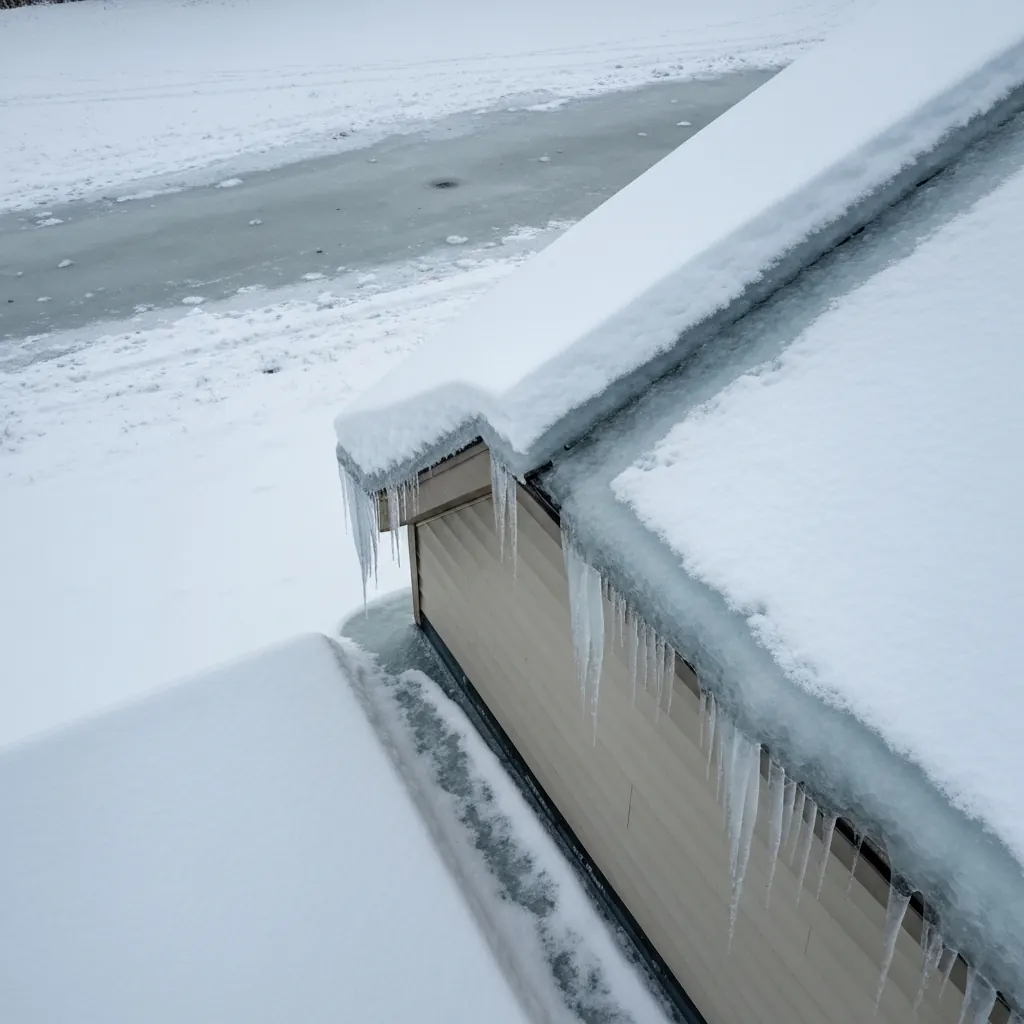
Ice dams form when heat from the house warms the roof deck and melts snow from underneath, and the water refreezes at the cold eave. Preventing them means keeping the deck as cold as the outside air. On a typical 1,500-square-foot house, the attic work that does this usually costs $3,500 to $6,000, often less than one winter of water damage.
The fixes work best in this order.
- Seal air leaks into the attic. Gaps around lights, pipes, wires and the attic hatch move more heat than the ceiling itself.
- Add insulation. ENERGY STAR recommends R-60 for an uninsulated attic in climate zones 4 through 8, where most ice dams occur.
- Vent from soffit to ridge. Air moving under the deck carries off whatever heat still gets through.
- Treat the ice only as a stopgap. Steam removal, roof rakes and heat cables deal with the symptom, not the cause.
Heat escaping from the house causes ice dams
An ice dam is a ridge of ice along the eave that stops melting snow from draining. It needs three conditions at once: snow on the roof, freezing outdoor air, and a deck warmed from below. The warmth is the real cause; InterNACHI names the primary contributor as "heat loss from the building's interior."
On a 20°F January afternoon, warm air seeps into the attic and the deck rises above 32°F. The bottom layer of snow melts and runs downhill until it reaches the overhang, which sits outside the heated walls and stays as cold as the yard. The water freezes there, and each day adds another layer until a ridge of ice holds back a small pond.
Shingles shed running water but not standing water. The pond works up under the courses, finds gaps in the underlayment and soaks into the sheathing. The results are ceiling stains, wet insulation, peeling exterior paint and, after a few winters, soft decking. A cold deck will not melt snow from below however deep it gets, so every lasting fix targets heat, not ice.
A continuous row of icicles signals heat loss
Icicles on the gutters are usually the first sign of the problem, since they come from the same meltwater. A row of long icicles on a day that stays below freezing points to heat escaping from the attic. A few short ones after a sunny afternoon are normal; a continuous row along the eave is not.
Icicles cause damage of their own. Solid ice weighs up to about ten times as much as fresh snow, and a gutter packed with ice and fringed with icicles carries far more load than its hangers were built for (hidden hangers every two feet or so are designed for flowing water). Screw holes strip, fascia cracks, and sometimes a whole run sags or pulls away from the house.
Falling icicles are also a hazard. One over a front step, driveway or air conditioner can injure someone, crack a windshield or crush condenser fins during a thaw. Knock small ones down with a long pole while standing to the side, and keep people away from the eaves over doors until the cause is fixed.
Gutters make dams worse but do not cause them. Leaves and pine needles hold water that freezes solid, and a gutter that does not drop about 1/4 inch per 10 feet toward the downspout holds water that freezes on the first cold night. Mesh guards can let ice bridge over the screen, and solid helmet covers can glaze over and spill meltwater off the front edge.
Seal the attic floor first
Air sealing comes before insulation because leaks usually move more heat into the attic than conduction through the ceiling does. Warm air rises and presses against the ceiling (the stack effect), and every gap lets a stream of warm, moist air through. Insulation laid over unsealed gaps loses much of its value.
The common leak points are:
- Older recessed "can" lights. They are vented by design, so replace them with airtight IC-rated LED housings or cover them with fire-rated airtight boxes.
- Plumbing stacks and wiring holes. These are often drilled much larger than the pipe or cable.
- The attic hatch. Many are a bare sheet of plywood with no weatherstripping.
- Dropped soffits. The boxed areas over kitchen cabinets and bathroom vanities can open directly into the attic.
- Top plates of interior walls. These long, narrow gaps add up across a whole house.
Seal small gaps with canned spray foam or caulk, and weatherstrip the hatch and cover it with rigid foam. Around chimneys and flues, use sheet metal and fire-rated sealant, never ordinary spray foam, which is flammable. While you are in the attic, confirm that bath and kitchen fans vent outdoors; a fan that dumps warm, wet air into the attic feeds both ice dams and mold.
A good contractor finds leaks with a blower door test or an infrared camera. Professional air sealing on a typical attic costs about $800 to $2,000, more if there are many penetrations or the attic is hard to work in.
How much attic insulation do you need?
Most attics need R-49 to R-60 of insulation once the floor is sealed, to slow the heat that conducts through the ceiling. ENERGY STAR recommends R-60 for an uninsulated attic in climate zones 4 through 8 and R-49 in zones 2 and 3. Many older houses have about six inches of compressed fiberglass, roughly R-19, which falls well short.
Most retrofits use blown-in cellulose at about R-3.2 to R-3.8 per inch, so R-60 takes roughly 16 to 19 inches. Loose-fill fiberglass is lighter but slightly lower per inch, so you need more of it. Batts work if they are cut snug and lie flat; gaps let air move around them and lower the effective R-value.
Blown-in insulation over an existing attic usually costs $1.50 to $3.00 per square foot installed, so a 1,000-square-foot attic runs about $1,500 to $3,000. It is the best money spent after air sealing, not a substitute for it.
The eave is the hardest spot to insulate. Where the rafters meet the outside wall there is often only a few inches of space, and that thin layer sits right above where the dam forms. Many contractors fill it with closed-cell spray foam at about R-6 to R-7 per inch, which also seals air, but it must not block the soffit vents.
Vent the attic from soffit to ridge
Ventilation removes the heat that gets past the sealing and insulation. Cold air enters at the soffits, flows along the underside of the deck and exits near the ridge, keeping the sheathing close to outdoor temperature. For sloped ceilings, InterNACHI recommends at least 3 inches of air space between the top of the insulation and the roof sheathing.
The usual rule is 1 square foot of net free vent area per 150 square feet of attic floor, split roughly evenly between the eaves and the ridge. A ridge vent with no soffit intake does little, and soffit vents with no exhaust do little as well. The roof ventilation guide covers the math and the vent types.
Baffles keep the air path open. These foam or plastic chutes are stapled between rafters from the soffit up past the insulation line so blown-in material cannot fill the vent space. They cost a few dollars each, adding about $300 to $600 to the insulation job in a typical attic. Blowing insulation without them can make dams worse by trapping heat at the eave.
Be wary of a powered attic fan sold as a cure. In winter it can pull the attic into negative pressure and draw more warm air through any unsealed gap, and in some homes it can backdraft a gas water heater or furnace.
Steam is the safe way to remove an ice dam
If water is already dripping inside, remove the ice first and fix the attic later. Professionals use low-pressure steam, which cuts the dam into pieces without damaging the shingles. Expect $400 to $600 per hour, often with a two-hour minimum, so most houses cost about $800 to $1,500, more for large or complex roofs. Confirm the company uses a true steamer, since a hot-water pressure washer strips granules and can force water into the attic.
Do not chip at the ice. Cold shingles are brittle, and InterNACHI warns that removal with "shovels, hammers, ice picks" can damage the roof and injure you. As a temporary measure, fill a nylon stocking with calcium chloride and lay it across the dam to melt a channel. Use calcium chloride, not rock salt, which corrodes gutters and flashing and kills plants below.
From the ground, a long-handled roof rake can clear the lower three or four feet of snow that would feed the next dam. Never climb onto a snowy roof to do this.
Heat cables rarely solve ice dams
Heat cables melt channels through the ice so water can drain. They run in a zigzag along the eave and down through the gutters and downspouts. Self-regulating cable lasts longer than cheap constant-wattage kits, and a professional install on a typical problem area, including a dedicated circuit, costs about $800 to $2,000.
InterNACHI is skeptical: "These rarely work, they require effort to install, they use electricity, and they can make shingles brittle." Cables make sense over a single north-facing valley or an entry door you cannot fix another way, not across a whole roof. If you install them, run the cable all the way down the downspout, or water will refreeze at the bottom and can split the pipe.
Code requires ice and water shield at the eaves
Ice and water shield is a self-adhering rubberized asphalt membrane applied to the deck at the eaves before the shingles go on. Where ice dams are a known risk, the International Residential Code requires this ice barrier from the eave edge to a point at least 24 inches inside the exterior wall line. On a house with a two-foot overhang, that usually means two courses.
The membrane seals around nails and keeps pooled water off the wood, but it does not prevent the dam. The dam still forms, still loads the gutters, and on a bad roof can push water past the top of the membrane. That is why roofers in snow country often run it six feet up from the eave and into every valley. Adding it during a reroof costs a few hundred dollars to about $1,500 on most houses.
Roofs most prone to ice dams
Some roof shapes are especially prone to ice dams:
- Valleys. They collect snow from two slopes and drain slowly.
- Skylights. They lose heat through the glass and through frames that are hard to insulate.
- Dormers and intersecting gables. They create pockets where snow drifts deep.
- Low-slope sections between 2/12 and 4/12. Water moves slowly and has time to refreeze.
Cathedral ceilings are the hardest case, with drywall fastened directly to the rafters and no attic to vent. Short of removing the ceiling, the lasting fix is a cold roof built on top: rigid foam over the old deck, then a vented air gap, then new sheathing. It is usually done during a reroof and can cost $15,000 to $30,000 or more. If you are pricing a replacement anyway, get the plain reroof figure from the roofing calculator first, then add the cold-roof work to see how much of the bill it represents.
How much does ice dam prevention cost?
For a 1970s ranch of about 1,500 square feet with six inches of old fiberglass in the attic, a typical job costs about $3,900 to $5,800 and breaks down like this:
| Work | Typical cost |
|---|---|
| Air sealing top plates, light fixtures and penetrations | $1,200 to $1,800 |
| Baffles for 30 to 40 rafter bays | $400 to $600 |
| About a foot of blown cellulose to reach R-60 | $1,800 to $2,400 |
| Opening or cutting in soffit vents, if needed | $500 to $1,000 |
| Total | About $3,900 to $5,800 |
Compare that with one bad ice dam winter, which can mean new drywall, insulation, paint and sometimes decking. Heating bills also drop, because the heat that was melting the snow was heat you paid for.
Hire a contractor who looks at the whole house. A roofer who only recommends more vents or more ice and water shield is skipping the attic floor, and an insulation crew that ignores venting can trap moisture. Questions to ask:
- How will you find the air leaks?
- How do you seal the top plates and can lights?
- What will the net free vent area be when you are done?
- How will you keep insulation out of the soffits where the eave is tight?
The contractor who inspects the hatch, the insulation depth and the vent path before quoting is usually the one to hire.
Ice dam prevention questions
What is the best way to prevent ice dams?
Keep the roof deck cold. Seal the gaps in the attic floor first, then add insulation, then make sure air can flow from the soffits to the ridge. Heat cables and a roof rake help in a pinch, but they treat the ice rather than the heat that causes it.
Are icicles on gutters a bad sign?
Usually, yes. Long icicles on a day that stays below freezing mean heat from the house is melting snow, which is the same melt that builds a dam. A few short icicles after a sunny afternoon are normal, but a thick row along the whole eave is a reason to inspect the attic.
Do gutters cause ice dams?
Not on their own. Clogged or badly sloped gutters make dams worse, because wet leaves and standing water freeze into a base that traps the next round of meltwater. Clean them before winter and check that they slope toward the downspouts.
Does homeowners insurance cover ice dam damage?
Most policies cover sudden water damage inside the house, such as a stained ceiling or soaked insulation, minus the deductible. Removing the ice and fixing the attic problem that caused it are usually not covered. Read your policy wording and take photos as soon as you see a leak.
Should I remove snow from my roof to prevent ice dams?
Clearing the bottom three or four feet from the ground is a sensible stopgap, since that snow feeds the dam. Use a long-handled roof rake and never climb onto a snowy roof. Raking does nothing about the heat leak, so treat it as temporary.
Prices are 2026 US national averages and building codes vary by town. Materials, warranties and code adoptions change, so confirm prices with local contractors and code rules with your building department before you sign anything.
Estimate Your Roof Cost
Use our free roofing calculator. No sign-up required.