 RoofingCalculator.io
Roof Colors
By RoofingCalculator.io. Updated October 14, 2026. Prices, ratings and code references link to their sources.
Pricing your own roof? Get squares, materials and a 2026 cost range in about two minutes. Free, no sign-up.
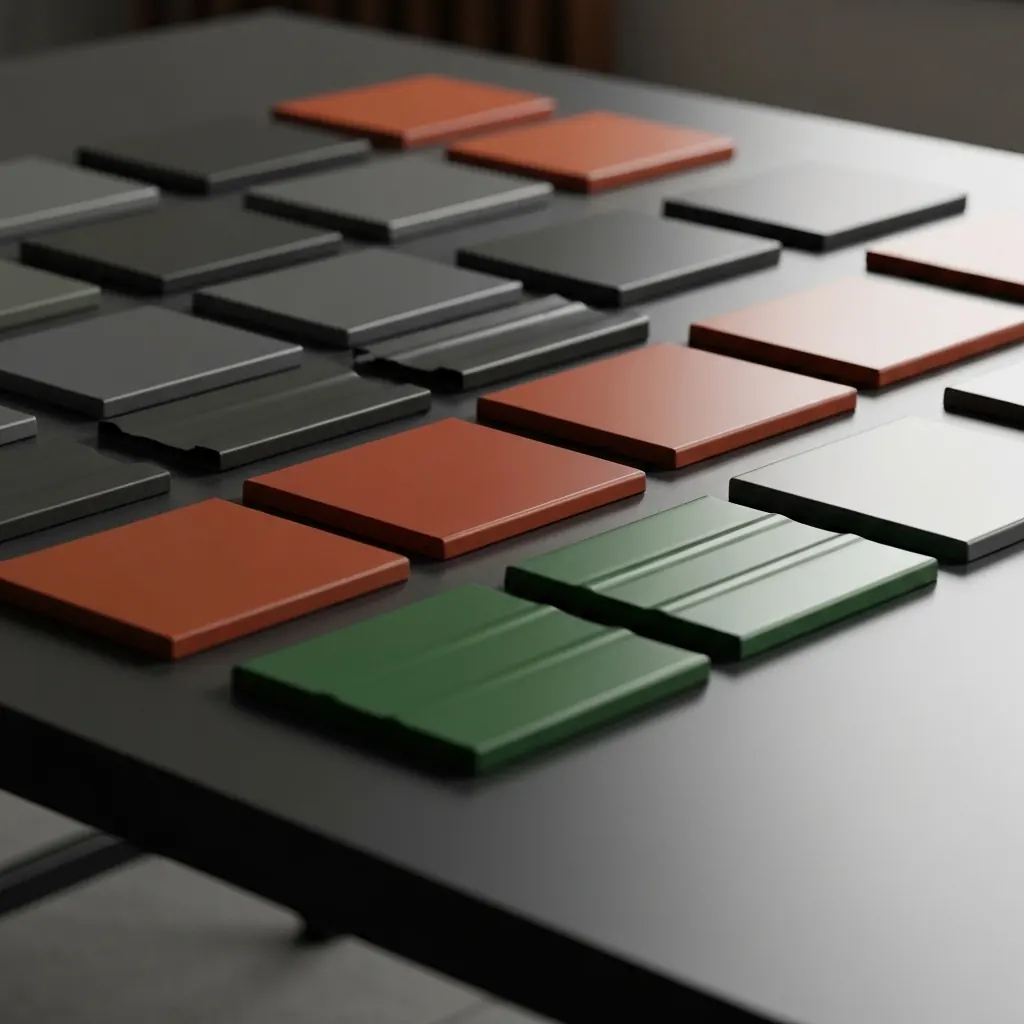
Choose a lighter roof color in a hot climate; in a cold climate, a darker roof works well, and beyond that the choice comes down to what suits your house. The temperature difference is large: ENERGY STAR cites research showing a clean white roof stays about 50°F cooler than a gray one on a typical summer afternoon.
Four factors decide the right color for most houses.
- Climate comes first. Light, reflective colors cut cooling costs in the south, while darker colors cost little in the north.
- The house style sets the range. Craftsman, colonial, modern and ranch houses each suit different tones.
- Siding and trim narrow it down. Warm exteriors pair with browns and cool exteriors with grays and black.
- Rules and durability finish the choice. Check HOA and code requirements, and avoid colors that fade quickly.
SRI measures how much heat a roof color holds
A roof's color determines how hot the attic gets and how long the shingles last. Roofers and code officials measure this with the Solar Reflectance Index (SRI), which combines solar reflectance (how much sunlight bounces off) and thermal emittance (how quickly the material releases heat it has absorbed). A higher SRI means a cooler roof.
Dark colors reflect less. Plain black asphalt absorbs most of the light that hits it, and by mid-afternoon its surface is far hotter than the surrounding air. A bright white surface reflects most of the sun's energy, so it stays much closer to the outdoor temperature.
Some darker shingles and metal panels use infrared-reflective pigments that raise their SRI above standard material of the same shade, and they are sold as cool roofs. A cool-rated dark gray outperforms a standard dark gray but rarely matches white or light silver. High-SRI material pays off most in the south, where it keeps more heat from passing through the deck into the house.
Can a light-colored roof lower your cooling bill?
A light roof can lower cooling costs, especially in climate zones 1 through 3, which cover the southern U.S., where cooling is the largest part of the annual utility bill. Replacing a dark roof with a light cool roof can reduce peak cooling demand, and the amount depends on climate, insulation and where the ductwork runs.
Heat moves from the shingles into the attic by conduction and radiation. Under a dark roof in afternoon sun, attic air climbs well above the outdoor temperature, and even with high R-value insulation on the attic floor, some of that heat reaches the living space, making the HVAC system work harder.
In the north the trade-off is smaller. A dark roof gains a little heat on sunny winter days, but short days and a low sun limit the benefit. Across most of the continental U.S., the summer cost of a dark roof outweighs its winter gain.
Ventilation matters as much as color. A poorly vented attic under a dark roof traps heat and bakes the shingles from below. A well-vented attic under a light roof stays close to the outdoor temperature, which is also easier on the rafters and deck.
Color affects asphalt shingles most
Color affects asphalt shingles most, and most houses have asphalt roofs; the guide to types of shingles covers the product lines. Asphalt shingles get both their color and their UV protection from ceramic-coated granules. Dark granules run hotter, which drives oils out of the asphalt sooner and leaves brittle shingles shedding grit into the gutter. A white or light gray roof often outlasts a black one of the same age on the same street.
Metal handles heat better, largely because of its paint. High-end metal roofs typically use Kynar 500 or Hylar 5000 resin finishes designed to resist chalking and fading for 30 years or more. Metal also releases heat quickly: an hour after sunset a dark bronze panel is already cool, while nearby asphalt stays warm for hours. White, sand and silver metal are among the most energy-efficient roofing options, and the guide to metal roof colors and finishes compares the paint systems.
Tile and slate are dense and heavy, so although color still sets their surface temperature, they warm and cool slowly. Terracotta clay reflects a good share of sunlight naturally and suits desert and Mediterranean climates. Concrete tile comes in any color, painted or stained, but hot regions with stricter efficiency rules require cool-roof pigments.
Roof color should suit the architecture
A roof color should suit the architecture. Bright white looks out of place on a Craftsman or Tudor, which suit darker, earthier roofs such as deep brown, weathered gray or forest green. If energy use matters, cool-roof granules keep the dark look while reflecting more infrared.
Colonials and Cape Cods traditionally have gray or black roofs, which stand out well over white or pale siding. Modern houses often use standing seam metal in charcoal or matte black; those colors absorb more heat, but good insulation and ventilation offset most of it.
Ranch houses need more care, because so much roof is visible from the street that a strong color can dominate the house. Middle tones such as driftwood, slate gray and tan usually look best and hide dirt and growth better than very light or very dark shingles. Check samples at different times of day, since a gray shingle can look blue in the morning and green in the afternoon depending on nearby trees and the angle of the sun.
Match the roof to the brick, stone or siding that stays
Match the roof to the materials that are staying, such as brick, stone or siding. Warm exteriors like red brick or tan siding suit browns, bronze and weathered wood. Cool exteriors in gray, blue or white suit black, gray and silver.
A house that already has three materials and four colors needs a quiet, neutral roof. Plain neutral siding leaves more room for a blended roof, such as grays mixed with greens.
Trim and shutters tie the design together. Repeating a dark roof color in shutters or the front door makes the house look cohesive, while light trim under a dark roof makes the roof appear lighter.
Heat wears dark roofs faster
Heat is the main cause of roof wear, and dark roofs swing further between hot and cold, expanding and contracting more each day. When a summer storm drops cold rain on a roof at full afternoon heat, the sudden contraction is called thermal shock. Over many summers it cracks asphalt and loosens the fasteners on metal roofs.
Some colors fade faster than others. Deep blues, bright reds and rich greens fade first, and standard asphalt in those shades can look noticeably washed out in 7 to 10 years. Metal with a good PVDF coating holds color longer, although 40 years of sun fades any finish somewhat. Gray, brown and tan show age the least.
In humid climates, light roofs are prone to black streaks from Gloeocapsa magma, an airborne algae that thrives in warm, damp weather. It does not always damage the shingle right away, but it spoils the appearance and lowers a light roof's reflectance. Shingles with copper mixed into the granules act as a biocide and prevent it.
Does roof color affect the price of a roof?
Color alone rarely changes the price; the technology in the material does. Asphalt shingles cost roughly $3.80 to $7.50 per square foot installed, from basic 3-tab to architectural, and black and gray in the same standard line usually cost the same. Whatever the roofing calculator estimates for your roof applies to every shade on the sample board.
Cool-rated products cost slightly more. Shingles rated by the Cool Roof Rating Council or built to meet California's Title 24 usually carry a small premium, and in hot climates lower cooling bills can recover part or all of it over the roof's life.
Metal costs roughly $6 to $16 per square foot installed, from exposed-fastener panels to standing seam. Its paint is more durable and it sheds heat better, and white metal delivers the highest efficiency for the longest time. Spread over a 50-year lifespan with lower cooling bills, the comparison with asphalt looks quite different from the upfront prices.
Roof colors by climate zone
| Climate zones | Regions | Recommended colors |
|---|---|---|
| 1 and 2 | Florida, the Gulf Coast, Arizona | White, light gray, tan |
| 4 through 6 | Mid-Atlantic, Midwest, mountain states | Slate gray, charcoal |
| 7 and 8 | The far north and Alaska | Often dark |
In zones 1 and 2, efficiency is the priority. Light colors give the air conditioner a real break and reduce thermal stress, so the roof lasts longer.
In zones 4 through 6, middle tones such as slate gray and charcoal are popular because they gain a little winter warmth without overheating the attic in summer.
In zones 7 and 8, darker roofs make the most of limited winter sun. Snow also slides off a dark roof faster, which can reduce ice dam risk when the attic is properly insulated.
Check HOA rules and cool-roof codes first
Check with your HOA before choosing a sample. Many keep an approved color list or require specific brands and styles so the street looks consistent, and ignoring the rules can bring fines or an order to replace the new roof.
Some jurisdictions require cool roofs on new construction or major renovations. California's Title 24 is the best-known example, with SRI minimums that vary by climate zone. These rules respond to the urban heat island effect, in which dark roofs and pavement make a city noticeably hotter than the surrounding countryside.
Where no code applies, a reflective roof may still qualify for a local utility rebate, but not a federal tax credit. The IRS does not list roofing among the items covered by the Energy Efficient Home Improvement Credit, and that credit ended with property placed in service in 2025.
Common roof color mistakes
- Choosing from a small swatch. A shade that looks subtle on a 3-inch chip looks much stronger across 3,000 square feet. View full-size bundles or real metal panels in daylight, and ask the contractor for addresses of nearby houses with that exact color.
- Ignoring undertones. Grays lean blue, green or violet, and browns lean red or yellow. A blue-gray roof over beige siding with a yellow undertone makes the house look slightly off.
- Not planning ahead. If you may repaint or replace the siding later, the roof has to work with those changes too. A bold green roof limits your options, while gray, black and brown leave the most flexibility.
Questions to ask the contractor
- What is the SRI of this color and material? A contractor who does not know may have little experience with energy-efficient roofing.
- Do you offer cool-roof granules? Many manufacturers make shingles that look like standard colors but reflect more infrared.
- Which brands are you certified with? Certification often determines warranty coverage for fading and granule loss.
- Does the color change the ventilation plan? A dark roof may need more ventilation to keep heat from building up.
- Will the drip edge and ridge vents match? Trim in the wrong color makes a new roof look cheap.
Before signing, take a real sample outside and hold it against the siding and trim in full sun and in shade. It takes about ten minutes and prevents the most common roof color regret.
Light roofs need occasional washing
Light roofs need occasional washing, because moss and algae show much more on white or tan. Use a cleaner the manufacturer approves, never a pressure washer, which strips granules from shingles, damages the finish on metal and can void the warranty.
Clear leaves and branches periodically. Decaying debris stains light roofs and holds moisture that wears the roof out faster. On metal, keep the gutters clear so water does not back up and corrode the panel edges, which leads to rust streaks.
Once a year, look for uneven fading or unusual blotches, which can indicate a manufacturing defect or a ventilation problem creating hot spots. Catching it early leaves time for a warranty claim or a small repair. A well-chosen, well-kept roof color gives you a house that looks right and a slightly lower energy bill for the life of the roof.
Roof colors questions
What is the most popular roof color?
Gray, charcoal and black are the most popular across most of the U.S. They work with almost any siding. Weathered wood and brown blends come next, and neutrals are the safest choice for resale and HOA approval.
Does roof color affect the temperature of a house?
Yes. A light roof stays much cooler in the sun, which keeps the attic cooler and reduces air conditioning use. The effect is large in hot, sunny climates and much smaller in the north.
Is a black roof a bad idea?
Not necessarily. In the south it runs warmer, which can raise cooling bills slightly and age shingles a little faster, though good ventilation and insulation reduce both effects. In the north the extra heat barely matters, and black suits many houses.
What roof color lasts the longest?
Light and neutral colors keep their appearance longest. They run cooler, and fading is less visible on them. Deep blues, reds and greens fade the most, and on metal a PVDF finish holds color much better than SMP.
How do I choose a roof color to match my house?
Start with the materials you are keeping, such as brick, stone or siding. Warm exteriors suit browns and weathered wood, while cool exteriors suit grays, black and silver. Before you sign, look at a full-size sample outdoors in the morning, at midday and in the evening.
Prices are 2026 US national averages and building codes vary by town. Materials, warranties and code adoptions change, so confirm prices with local contractors and code rules with your building department before you sign anything.
Estimate Your Roof Cost
Use our free roofing calculator. No sign-up required.