 RoofingCalculator.io
What Is DECRA Roofing?
By RoofingCalculator.io. Updated October 14, 2026. Prices, ratings and code references link to their sources.
Pricing your own roof? Get squares, materials and a 2026 cost range in about two minutes. Free, no sign-up.
DECRA roofing is a brand of stone-coated steel: steel sheet coated in an aluminum-zinc alloy, topped with ceramic-coated stone chips and stamped into the shape of shingles, cedar shake or clay tile. According to DECRA, its roofing profiles carry a warranty for winds up to 120 mph and the UL 2218 Class 4 impact rating. Installed cost runs about $9 to $16 a square foot.
Four features set DECRA apart from other roofing.
- It looks like a traditional roof. The Tile, Villa Tile, Shake and Shingle XD profiles imitate clay tile, cedar shake and heavy shingles.
- It is light. At 1.4 to 1.6 pounds a square foot, it weighs less than asphalt shingles and far less than tile.
- It resists severe weather. It is rated Class 4 for hail, warranted to 120 mph winds and rated Class A for fire with the right underlayment.
- It lasts decades. Expect 40 to 70 years, backed by a transferable Lifetime Limited Warranty.
DECRA is stone-coated steel
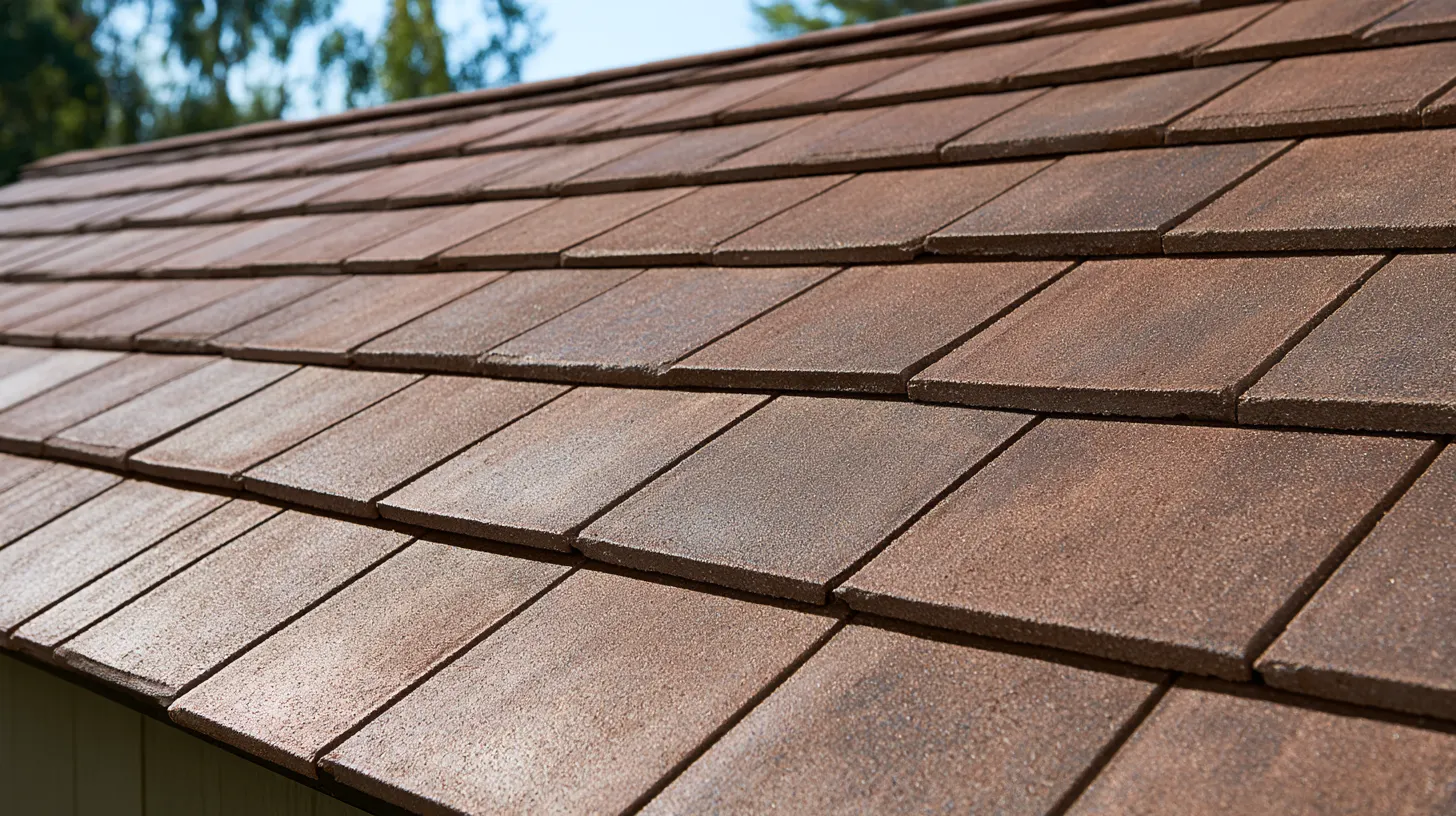
A DECRA panel is pressure-formed steel with an aluminum-zinc coating, finished with ceramic-coated stone chips. The result has the shadows and texture of a traditional roof with the strength of steel, which does not burn, resists blow-off and does not crack in hail.
Stone-coated steel originated in New Zealand in the mid-1900s, when builders brushed a tar-like bituminous emulsion onto corrugated steel to protect it from salty sea air. That asphalt coating gradually evolved into today's acrylic-bonded stone. Modern DECRA starts with 26-gauge or 24-gauge steel coated in Galvalume, an alloy of about 55 percent aluminum and 45 percent zinc.
Each panel has six layers, from the bottom up:
- Steel sheet, which carries the load.
- Galvalume coating, which prevents rust.
- Acrylic resin primer on both sides.
- Acrylic polymer base coat, a thick layer the stone chips are embedded in.
- Ceramic-coated stone chips, fired so the color does not fade in sunlight.
- Clear acrylic overglaze, which adds sheen and extra protection against grit and moisture.
DECRA costs $9 to $16 a square foot installed
A DECRA roof typically costs $9 to $16 a square foot installed, or $900 to $1,600 per square (100 square feet), which is more than architectural shingles. A 2,000-square-foot roof would run about $18,000 to $32,000 for materials and labor. DECRA is quoted by the square, so get your count from the roofing calculator and multiply by $900 and $1,600 to find your range.
| Cost component | Per square foot |
|---|---|
| Panels | About $4.50 to $6.50 |
| Trim (ridge caps, gable end caps, valley flashing, starter strips) | $1.50 to $2.50 |
| Labor, simple gable roof | $3 to $5 |
| Labor, complex roof (dormers, pitch over 8:12, many valleys) | $7 to $9 |
Location affects the price considerably. High-cost cities and coastal areas with stricter wind requirements can exceed $16 a square foot, while areas with lower labor costs and easy access may come in slightly under $9.
The existing roof also matters. DECRA is light enough to install over a single layer of asphalt shingles in some jurisdictions, but many roofers prefer to remove it, which costs $100 to $150 a square for each layer.
DECRA Tile, Villa Tile, Shake and Shingle XD
DECRA comes in four main profiles, each sized and installed a little differently.
- DECRA Tile imitates Mediterranean clay tile at a fraction of the weight: about 150 pounds a square, compared with 800 to 1,200 pounds for clay. It has the classic S-curve and often sits on battens, leaving an air gap that keeps heat out of the attic.
- Villa Tile imitates tall barrel tile. The panels interlock over their own fasteners so no screws show, and the half-round shape casts deep shadow lines. It is common in Spanish and Southwestern-style neighborhoods.
- Shake reproduces hand-split cedar in steel, keeping the thick, rough-edged look without the fire, rot and insect problems of real wood. It suits rustic and traditional houses.
- Shingle XD is a heavier-looking shingle with bold lines and deep texture, closer to thick architectural shingles or slate. Its fasteners are hidden, and it usually installs directly on the deck. It appeals to owners who want metal without the industrial look of standing seam.
How much does a DECRA roof weigh?
DECRA weighs 1.4 to 1.6 pounds a square foot. Three-tab asphalt shingles weigh about 2.3 pounds, architectural shingles 3 to 4 pounds, and concrete or clay tile is heavy enough that trusses often need reinforcement.
Lower weight means faster installation and less strain on the structure over the decades. In earthquake regions it matters more, because a lighter roof sends less lateral force into the walls during a quake, which can decide whether a house stays standing. Steel also carries heavy snow loads without cracking, unlike ceramic tile and slate.
The panels also interlock. Asphalt shingles rely on adhesive strips and gravity, while DECRA panels are mechanically fastened to each other and to the deck or battens. The roof acts as a single shell, leaving wind few edges to get under.
DECRA carries top hail, wind and fire ratings
DECRA carries a Class 4 rating under UL 2218, the highest impact rating, and the company warrants it against hail up to 2.5 inches in diameter. The test drops steel balls from set heights to simulate hailstones. Very large hail may leave cosmetic dents, but it will not puncture the panels or let water in.
Its profiles are warranted for winds up to 120 miles per hour, thanks to the fastening method. Standard shingles are nailed straight down, and fast-moving wind can peel them up from the edge. DECRA panels are fastened through their front and back edges, which holds them against that sideways force.
DECRA is rated Class A for fire when installed with the correct underlayment. Steel does not burn, and embers from a nearby fire will not ignite it. In fire-prone states that can make insurance easier to obtain and sometimes less expensive.
Should DECRA go on battens or direct to deck?
DECRA installs either directly on the deck or on battens, depending mostly on the profile and how much energy savings matter to you. Both methods have a minimum pitch: the International Residential Code does not allow metal roof shingles on slopes under 3:12.
Direct-to-deck installation is standard for Shingle XD and Shake. Fasteners go through the deck into the rafters, which is faster, uses less material and keeps the roof low and flush. Synthetic underlayment always goes underneath as a backup water barrier.
Batten installation, usual for Tile and Villa Tile, uses a grid of wood or metal strips on the deck with the panels fastened to them. The gap lets hot air under the metal rise and exit through ridge vents before it heats the attic. This is called Above Sheathing Ventilation (ASV), and in hot, sunny climates it can reduce summer cooling loads.
Battens can also correct an uneven deck, since the contractor can shim them to create a flat surface. The trade-off is cost, because the extra labor and lumber make batten installations more expensive.
DECRA carries a transferable lifetime warranty
DECRA residential products carry a Lifetime Limited Warranty, transferable to a new owner within 20 years of installation. Asphalt shingles are also sold with 30-year or lifetime warranties but rarely last 20 years in harsh climates, while stone-coated steel can realistically last 50. In field tests, Galvalume coatings have outlasted traditional galvanized steel by two to four times.
The warranty typically covers manufacturing defects, wind up to the stated speed, hail up to the stated size and granule adhesion. Some loose chips washing off in the first few rains is normal, and the base coat should hold the rest for decades. Read the proration and transfer terms before relying on the coverage.
With maintenance, these roofs often last more than 50 years. The panels do not warp, rot or crack, so failures usually involve flashing or fasteners. That is why installers use stainless or galvanized fasteners that last as long as the steel.
Most DECRA problems trace back to installation
DECRA is durable, but most of its problems trace back to installation and handling rather than the panels.
- Dents from foot traffic. Stepping on the high point or middle of a panel dents it. Crews wear soft-soled shoes and step only where panels overlap or battens support them. A small dent is cosmetic, but a large one can hold water and debris and slowly wear through the coating.
- Granule wear. Foot traffic or a branch rubbing in the wind can wear off the stone chips. The exposed acrylic base coat and Galvalume then take direct sun. It will not rust quickly, but it looks worn and those layers break down faster.
- Debris in valleys. The textured surface catches pine needles and leaves more than smooth standing seam, especially in valleys and behind chimneys. Wet debris grows moss or algae, which cannot damage steel the way it damages wood or asphalt but does hold water and block drainage. A leaf blower or low-pressure hose once a year usually handles it.
Stone-coated steel is highly recyclable
Steel is one of the most recycled materials, and stone-coated panels usually contain recycled content. When a DECRA roof is eventually removed, all of it can be recycled, while asphalt shingles send billions of pounds to landfills every year.
The stone chips have high infrared emissivity, meaning the roof releases the day's heat quickly after sunset. Installed on battens with Above Sheathing Ventilation, it noticeably lowers cooling loads, along with the household's energy bills and carbon footprint.
Longevity adds to the benefit. One 50-year roof replaces two or three asphalt roofs, saving the energy and raw materials needed to make, ship and install them.
DECRA and standing seam suit different houses
DECRA and standing seam are both strong choices for metal roofing, but they suit different houses.
Standing seam uses long vertical panels joined by raised ribs, as the standing seam metal roof guide explains. It has a modern, somewhat industrial look. It is usually 24-gauge steel with a Kynar-500 paint finish, smooth enough that snow slides off easily, which helps in snow country, though snow guards are needed to keep it from falling on people.
DECRA looks like a conventional house roof. That matters because many HOAs ban standing seam for its appearance, while stone-coated steel usually passes, since from the street it reads as shingles or tile.
DECRA is often quieter as well. The chips break up raindrops and the layered panels dampen sound. Standing seam over a solid deck is not especially loud, but in a downpour stone-coated steel sounds more like a shingle roof.
Questions to ask a DECRA installer
DECRA is a specialty product with its own tools and techniques, and the result depends on the crew. Ask these questions:
- What tools do you use to cut panels? High-speed circular saws and grinders burn off the Galvalume and leave the cut edge exposed to rust. A qualified installer uses a hand-operated guillotine-style shear that folds the coating over the cut edge.
- What fastening pattern will you use? DECRA specifies the number of fasteners per panel by wind zone. An installer who cannot state theirs may be cutting corners.
- Are you manufacturer-certified? DECRA trains installers, and experienced crews know its flashing systems and how to handle valleys and hips, where most leaks start.
- Can I see a stone-coated steel roof you installed at least five years ago? It shows whether the color held, whether granules are shedding and whether fasteners are backing out.
Is DECRA roofing worth it?
DECRA is best for owners who plan to stay 15 to 20 years or more. The upfront price is high, and it pays back slowly through avoided reroofs and lower maintenance costs.
In regions with frequent hail and high winds, the upgrade often pays for itself through insurance savings and fewer storm repairs. Many insurers in hail-prone states offer premium discounts for Class 4 impact-rated roofs.
Appearance is the other reason. Stone-coated steel combines metal's durability with the depth of shake or Mediterranean tile, a level of detail flat metal panels cannot match.
Look beyond the initial quote. When you add up two asphalt reroofs, one or two storm deductibles and the energy savings, stone-coated steel often costs less over 50 years. With a well-chosen installer and profile, it delivers what it was designed to do.
DECRA roofing questions
How much does a DECRA roof cost?
About $9 to $16 a square foot, or $900 to $1,600 a square, including materials and labor. On a 2,000-square-foot roof, that comes to roughly $18,000 to $32,000. A tear-off or a complex roof raises the price.
How long does a DECRA roof last?
Usually 40 to 70 years when installed correctly and maintained. DECRA gives its residential products a Lifetime Limited Warranty that can be transferred to a buyer within 20 years of installation.
Is DECRA roofing noisy in the rain?
No, not usually. The stone chips soften each raindrop, and most profiles sit on battens or a solid deck with underlayment. A storm sounds more like rain on shingles than rain on a barn roof.
Is DECRA better than standing seam metal?
Neither is better in every case. DECRA looks like shingles, shake or tile and passes many HOA rules, while standing seam has a sleek, modern look, sheds snow faster and works on low slopes. The choice depends on your style preference and roof pitch.
Does DECRA roofing hold up to hail?
Yes. It carries a UL 2218 Class 4 impact rating, the highest available, and the company warrants it against hail up to 2.5 inches in diameter. Very large hail can still leave cosmetic dents.
Prices are 2026 US national averages and building codes vary by town. Materials, warranties and code adoptions change, so confirm prices with local contractors and code rules with your building department before you sign anything.
Estimate Your Roof Cost
Use our free roofing calculator. No sign-up required.