 RoofingCalculator.io
Metal Roof vs Shingles
By RoofingCalculator.io. Updated October 14, 2026. Prices, ratings and code references link to their sources.
Pricing your own roof? Get squares, materials and a 2026 cost range in about two minutes. Free, no sign-up.
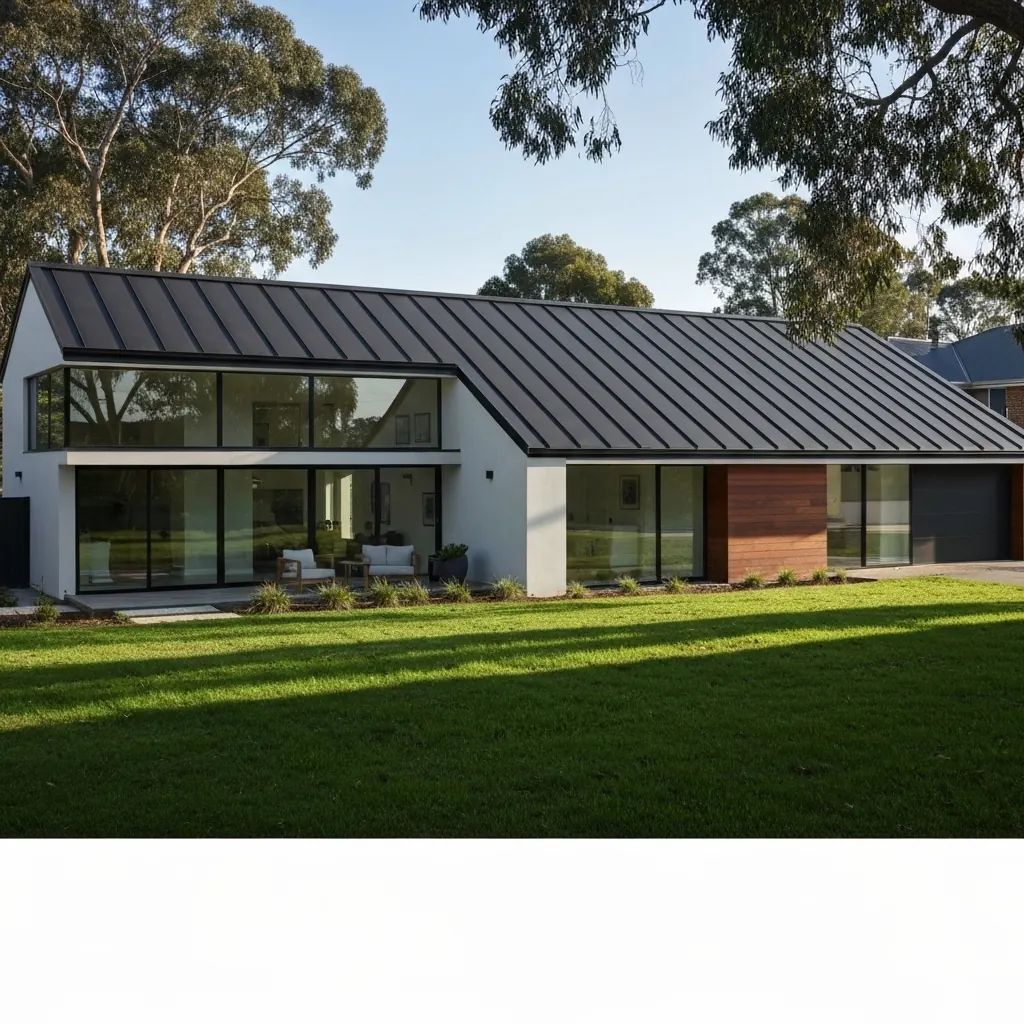
A metal roof costs roughly twice as much as asphalt shingles and lasts two to three times as long. On a 2,000-square-foot roof, architectural shingles cost about $9,000 to $15,000 installed and standing seam about $20,000 to $32,000. The deciding question is usually how long you will keep the house.
The comparison comes down to four factors.
- Upfront cost favors shingles. Metal costs more in both material and specialized labor.
- Lifespan favors metal. InterNACHI estimates 40 to 80 years for metal against about 20 to 30 for asphalt.
- Cost per year is often close. Over a long stay, metal can match or beat shingles because you skip a second roof.
- Storms and climate tip the balance. Metal handles wind, hail and snow better, which matters most in severe-weather regions.
How much more does a metal roof cost than shingles?
A standing seam metal roof costs roughly twice as much as architectural shingles, which remain the default choice. IBHS reports that they cover about 80% of installed residential roofs in the U.S., because they are inexpensive, every roofer knows them, and they come in many colors. Metal costs more and lasts much longer; InterNACHI estimates 40 to 80 years for metal, against about 20 to 30 years for asphalt shingles.
| Roof | 2,000 sq ft installed | Typical lifespan |
|---|---|---|
| Architectural shingles | $9,000 to $15,000 | About 30 years |
| Standing seam metal | $20,000 to $32,000 | 40 to 80 years |
Premium metals or a complex roof push the metal figure higher, and each extra square widens the gap. Get your own count from the roofing calculator to compare both totals for your roof. The metal itself is only part of the difference; the rest is specialized labor, special tools and more days on the roof.
If you are moving within ten years, a high-end metal roof rarely pays for itself. For a long stay, metal often costs less per year of service, because a shingle owner may buy two roofs in the time one metal roof lasts. Rising labor and material costs make doing it once even more attractive.
Asphalt shingles come in 3-tab and architectural styles
An asphalt shingle is a fiberglass or organic mat soaked in asphalt and coated with mineral granules that have a ceramic finish. The granules provide color and, more importantly, shade the asphalt from UV light. Sun exposure dries out the asphalt's oils, making the shingle brittle until it cracks.
Two types dominate the market:
- 3-tab shingles are the budget option. They are flat, single-layer and cost about $0.90 to $1.20 per square foot for material, usually with a 60 mph wind rating. They last 15 to 20 years in most climates, often short of the 25-year warranty on the package.
- Architectural shingles are the standard upgrade. Also called dimensional or laminate, they bond two or more layers for a thicker, textured look resembling wood shake or slate. Material runs about $1.05 to $1.65 per square foot, wind ratings often reach 110 to 130 mph, and a good install in a mild climate lasts 25 to 30 years.
On a tight budget, the difference between 3-tab and architectural shingles can matter as much as the choice between metal and asphalt.
Residential metal roofs are usually steel or aluminum
Residential metal roofing is usually steel or aluminum. Steel is coated with zinc (galvanized) or Galvalume, a zinc and aluminum alloy, to prevent rust. Aluminum does not rust at all, which makes it the usual choice near the ocean, where salt spray corrodes steel.
Metal roofs are installed in one of two ways:
- Exposed fastener panels are the cheapest metal option. Large overlapping sheets are screwed through the face into the deck, each screw sealed with a neoprene or EPDM washer. They cost roughly $6 to $10 per square foot installed.
- Standing seam is the premium option. Hidden clips hold each panel to the deck, and the next panel snaps over it or is machine-seamed shut. The panels slide as the metal expands and contracts, so there are no exposed screws to work loose. Steel standing seam costs about $10 to $16 per square foot installed, and aluminum or copper costs considerably more.
Metal takes more skilled labor than shingles
Labor accounts for a large share of the price gap. Shingles are forgiving: a good crew can tear off and reroof a typical house in a day or two, small dips in the deck disappear under them, and the tools are simple (utility knives, hammers, nail guns and safety gear).
Metal requires shears, benders and seaming tools, and the layout must be precise, because a metal panel shows mistakes that overlapping shingles would hide. Standing seam on a 2,000-square-foot house can take five to seven days.
The work is also harder. Panels have sharp edges, catch the wind and are often custom-cut to the full length of the slope, sometimes 30 feet or more. A panel dented during installation cannot be patched like a shingle and must be replaced, and all of this is reflected in the labor rate.
Metal outperforms shingles in severe weather
Metal outperforms shingles in severe weather. Strong wind can catch shingle edges and peel them back or off, exposing the underlayment and leading to leaks. Heat also ages asphalt faster, causing curling and blistering.
Hail is hard on asphalt. Large stones knock granules loose or crack the fiberglass mat, often in ways you cannot see from the ground, and the sun then degrades the exposed spots until the roof fails early. Many insurers have moved older shingle roofs to actual cash value coverage, which pays less as the roof ages.
Standing seam panels lock together, so wind has difficulty getting under an edge, and many systems carry high uplift ratings when installed to the manufacturer's specification. A metal roof rarely leaks after hail; large stones may dent it but seldom puncture it. In storm-prone regions, many owners receive homeowners insurance discounts for that impact resistance.
Is a metal roof more energy efficient than shingles?
Yes. Metal reflects more heat than shingles. Shingles absorb and hold the sun's heat, dark ones far more than light ones, and ENERGY STAR notes that a clean white roof stays about 50°F cooler than a gray roof on a summer afternoon. That heat moves into the attic and down into living spaces, making the air conditioner work harder. Cool shingles with reflective granules help only slightly.
Even dark metal with cool roof pigments reflects a good share of sunlight. Metal also releases heat quickly, so when a cloud passes or the sun sets, it cools almost immediately instead of heating the attic into the evening.
In hot, sunny climates, a light or cool-rated metal roof can lower cooling bills compared with dark shingles, depending on color, insulation and ventilation. In cold climates the gap is smaller, and metal's main benefit is shedding snow: it warms quickly in winter sun, so snow slides off instead of building into ice dams. Install snow guards so sliding ice does not fall on walkways or tear off gutters.
Neither material is maintenance-free
Neither material is maintenance-free. Shingles need periodic checks for moss, algae streaks and wind damage. Moss grows in shady, damp areas, roots into the granules and holds water against the shingle, slowly rotting it. Algae streaks are mainly cosmetic. Clean gently, because a pressure washer strips granules.
Metal has its own issues. On exposed-fastener roofs, the rubber washers dry out and crack after 10 to 15 years and should be checked and replaced before they leak. Standing seam needs very little upkeep. Its most common quirk is oil canning, a wavy appearance across the flat of a panel caused by thermal expansion or overtightened fasteners; it is cosmetic and does not affect performance.
Steel can rust if its coating is scratched or if panels were cut with a circular saw, whose hot sparks melt into the paint and leave small rust spots. Good crews cut cold with nibblers or shears. Aluminum does not rust, but it is softer and scratches more easily during installation.
Metal is the more sustainable choice
Metal is the more sustainable choice. Asphalt shingles are petroleum-based and energy-intensive to make, and millions of tons of torn-off shingles go to U.S. landfills each year. A few programs grind old shingles into pavement, but most are still thrown away.
Steel and aluminum roofing usually contains recycled metal and is recycled again at the end of its life. Old metal roofing has scrap value, so it rarely ends up in a landfill.
Standing seam also simplifies solar. Racks clamp directly onto the seams without penetrating the roof. On asphalt, installers bolt through the shingles into the rafters, and every bolt is a potential leak.
Cost per year is closer than upfront prices suggest
Cost per year is often closer than the upfront prices suggest. On a 2,500-square-foot roof, shingles at $15,000 lasting 20 years cost $750 per year, while standing seam at $35,000 lasting 50 years costs $700 per year.
The larger savings come from the roof you never buy. In twenty years, inflation will likely have doubled the cost of labor and asphalt, so the shingle owner's second roof costs much more than the first, while the metal owner skips it. Energy savings and insurance discounts can close the initial gap further over time.
Your stay, budget and house style decide it
Three factors usually decide it: how long you will stay, what you can spend and the style of the house. If you will stay under 15 years, metal rarely pays off. Resale value does not always reflect the higher price, although it can help a house sell, so a good architectural shingle usually makes more sense.
On a limited budget, a top-quality architectural shingle is usually a better choice than cheap screw-down metal. A bargain metal roof with thousands of exposed screws is more likely to leak within 15 years than a well-installed architectural roof. If you want metal that lasts a lifetime, choose a standing seam metal roof.
Metal has a distinct look that suits modern, farmhouse and industrial houses. Some HOAs ban it or limit the colors. Shingles fit almost any style and imitate wood or slate more convincingly at a lower price.
Questions to ask the contractor
Installation quality matters as much as the material. Questions for a shingle roof:
- What is your ventilation plan? Shingle warranties require proper attic ventilation.
- Synthetic underlayment or felt? Synthetic tears less and makes a better backup water barrier.
Questions for a metal roof:
- How much standing seam have you installed? Many residential roofers mainly install shingles and may not own the tools.
- Are panels pre-cut or rolled on site? Rolling on site gives one continuous piece from ridge to eave with no horizontal seams.
- What gauge is the steel? 24-gauge is standard for quality residential standing seam, while thinner 29-gauge is more common on farm buildings and screw-down panels.
- How will you flash chimneys and vents? The quote should specify matching metal trim and flashing with high-grade sealant, not roofing cement.
Finally, compare warranties for both labor and materials. Shingle manufacturers offer long material warranties that are often prorated, so coverage shrinks each year. Metal warranties mainly cover the paint finish against fading and peeling for 30 to 40 years, and the metal often carries a structural warranty beyond 50 years. With either material, a good contractor should provide a separate labor warranty of at least five to ten years for installation errors.
Metal roof vs shingles questions
Is a metal roof cheaper than shingles in the long run?
Often, if you stay in the house. Standing seam costs about twice as much up front but can outlast two or more shingle roofs. Spread over its life, the cost per year usually comes out close to architectural shingles or slightly below.
Does a metal roof increase home value?
Any new roof makes a house easier to sell, and many buyers like metal. Recovering the extra cost dollar for dollar at sale is less certain. If you plan to sell within about ten years, architectural shingles are usually the better buy.
Are metal roofs noisy when it rains?
Not on a house. Installed over solid decking, underlayment and an insulated attic, rain on metal sounds about the same as rain on shingles. The loud drumming people imagine comes from barn roofs screwed directly to open purlins.
What are the disadvantages of a metal roof?
The main one is price, roughly double architectural shingles for standing seam. Large hail can dent it, flat panels can show a wavy look called oil canning, and repairs need a crew experienced with metal. Exposed-fastener roofs also need their screw washers checked and replaced periodically.
How long do shingles last compared to metal?
InterNACHI estimates about 20 years for 3-tab shingles, 30 for architectural and 40 to 80 for metal. Climate, ventilation and installation quality shift those numbers up or down. Hot, sunny climates wear out asphalt fastest.
Prices are 2026 US national averages and building codes vary by town. Materials, warranties and code adoptions change, so confirm prices with local contractors and code rules with your building department before you sign anything.
Estimate Your Roof Cost
Use our free roofing calculator. No sign-up required.