 RoofingCalculator.io
Impact-Resistant Shingles
By RoofingCalculator.io. Updated October 14, 2026. Prices, ratings and code references link to their sources.
Pricing your own roof? Get squares, materials and a 2026 cost range in about two minutes. Free, no sign-up.
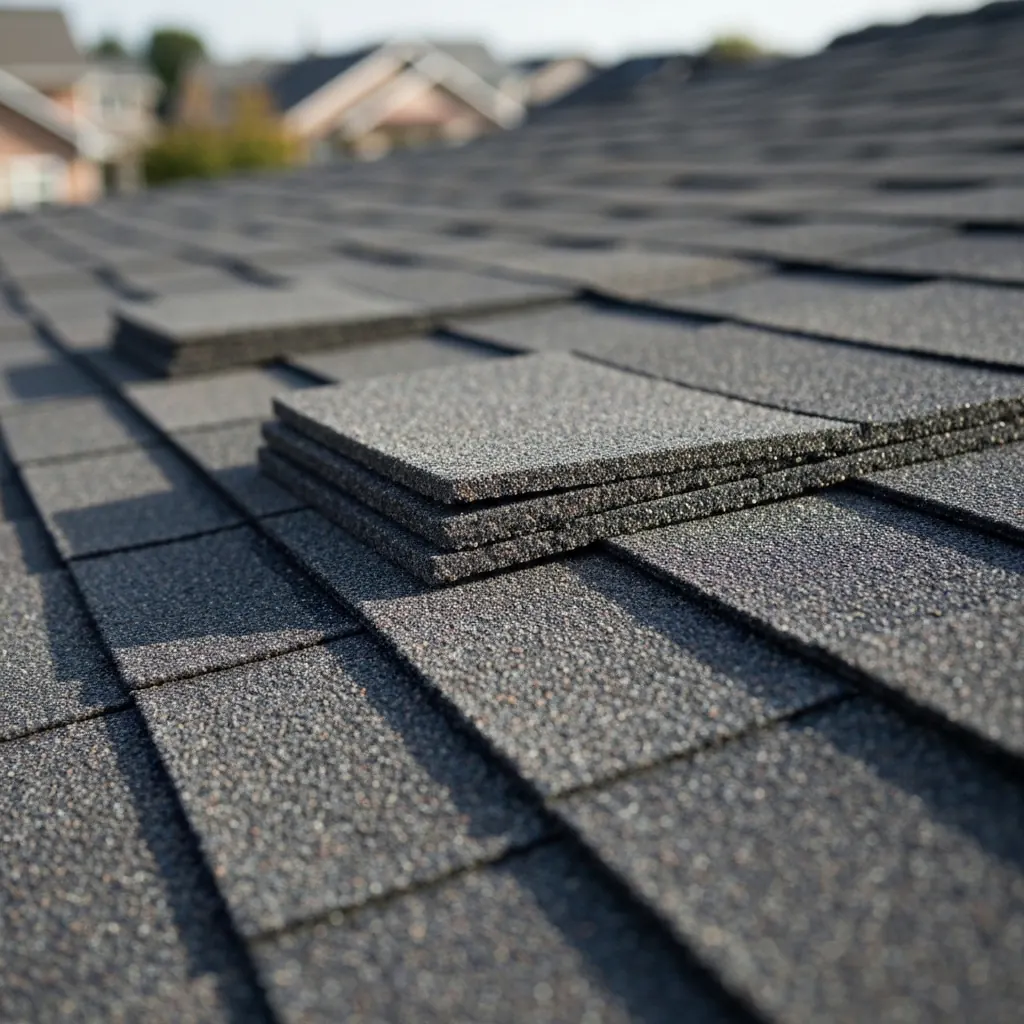
An impact-resistant shingle is an asphalt shingle that earns UL 2218 Class 4, the top rating, by surviving two hits from a 2-inch steel ball on the same spot without cracking. Most reach that rating with rubbery SBS-modified asphalt that flexes on impact. They usually cost a little more than standard architectural shingles, which run about $450 to $750 per square installed.
Whether they make sense for your house depends on four things.
- Where you live. In the hail belt from Texas to the Dakotas, a damaging storm in any 10-year stretch is likely.
- The insurance discount. Many insurers in hail-prone states cut premiums for a Class 4 roof, sometimes with a cosmetic damage exclusion attached.
- How long you will stay. The upgrade pays back over years, through lower premiums and avoided deductibles.
- The specific product. Class 4 is pass or fail, and newer IBHS testing shows real differences between Class 4 shingles.
Flexible asphalt keeps the shingle mat from cracking
Hail damages a standard shingle by cracking the fiberglass mat inside it. The granules may look fine from the street, but the broken mat lets water seep through over the following years, so the leak and the repair bill arrive later. An impact-resistant shingle is built so the mat survives the hit.
The difference is usually the asphalt. Standard shingle asphalt is oxidized (air-blown) to make it stiff and heat-resistant, which also makes it brittle. SBS (styrene-butadiene-styrene) modified asphalt contains a synthetic rubber that stretches on impact and then recovers, spreading the force over a wider area instead of concentrating it at one point.
Some products reach Class 4 another way, with a reinforcing fabric or polymer backing or a heavier mat. The goal is the same: the hailstone may mark the surface, but the waterproof layer stays intact. SBS shingles also tend to keep their granules better, so they age more slowly in the sun after a storm.
How does the UL 2218 hail test work?
The UL 2218 test drops steel balls onto a shingle sample from a fixed height chosen to match the energy of real hailstones, up to about 20 feet for the largest ball. There are four classes: Class 1 uses a 1.25-inch ball, Class 2 a 1.5-inch ball, Class 3 a 1.75-inch ball and Class 4 a 2-inch ball. Each ball strikes the same spot twice. According to IBHS, "the product passes if no crack is visible on the back of the shingle."
Class 4 is therefore a pass or fail result against steel, not a guarantee about real storms. Real hail is less dense than steel, irregular in shape and often driven sideways by wind. A hard, smooth ball tests one kind of impact well but says little about how the shingle ages or handles softer, jagged ice.
The Insurance Institute for Business and Home Safety addressed that gap: it "engineered laboratory-manufactured hailstones" and fires them at shingles, including weathered samples. Its IR Shingle Ratings compare the results, and many Class 4 shingles score quite differently from one another. If two products cost about the same, check their IBHS ratings before choosing.
Class 4 is a hail rating and Class H is a wind rating
Class 4 and Class H both appear on shingle packaging but measure different things. Class 4 is the hail impact rating from UL 2218. Class H is a wind rating from ASTM D7158, which tests how well the sealant strip holds a shingle down in high wind.
Class H is the top class in D7158, above Class D and Class G. The International Residential Code uses these classes in its wind-resistance table and calls for Class H in the highest wind zones it lists. A shingle can be Class H and fail hail testing, or Class 4 with only a moderate wind rating. Many premium impact-resistant lines carry both, so read each rating on the package separately.
How much do impact-resistant shingles cost?
Impact-resistant shingles cost more than standard laminates, but the difference is in the material, not the labor. Installation is nearly the same job, so most crews charge the same or close to it. Expect installed prices toward the top of the architectural range of $450 to $750 per square, and occasionally a little above it for premium lines.
On a 25-square roof, a typical Class 4 job costs about $14,000 to $20,000, depending on pitch, tear-off and region. Tear-off adds $100 to $150 per square for each old layer. Matching Class 4 hip and ridge caps and starter strips cost a little more and are worth it, because the roof is only as strong as its weakest component.
Because the upcharge is per square, roof size determines the real difference. Get your square count from the roofing calculator, then compare a standard architectural quote with a Class 4 quote line by line. Once labor, tear-off and disposal are included, the gap is usually smaller than people expect.
Many insurers discount Class 4 roofs in hail states
In hail-prone states, many insurers reduce premiums for a Class 4 roof because those homes file fewer and smaller claims after storms. The size of the discount depends on your state, your insurer and sometimes your deductible type. The only reliable figure is the one your agent puts in writing.
Before counting on the discount, ask whether it comes with a cosmetic damage exclusion. With that endorsement, the insurer will not pay for dents or granule loss that do not cause a leak. The premium is lower, but a dented roof that still keeps water out becomes your responsibility. Some homeowners accept that trade; others prefer to pay more for full coverage.
After installation, get the UL 2218 Class 4 certificate or product documentation from your roofer and send it to your insurer, since many discounts require it. If you are already in a hail claim, the guide to hail damage on roofs covers inspection and documentation.
No shingle is hail-proof
No shingle is hail-proof, which is why manufacturers use the term hail-resistant. Stones larger than 2 inches, or smaller ones carried by 60 mph gusts, can still bruise, dent or crack a Class 4 shingle. A bruise is a soft spot where the asphalt has been crushed and granules pushed in; it may not leak at first but tends to shed granules and open up later.
Age matters as well. The polymers in SBS asphalt slowly stiffen from heat and UV exposure, so a 15-year-old Class 4 roof is less forgiving than it was when new. It usually still outperforms an old standard shingle.
Poor installation can also undo the rating. High nails, missing starter strips, standard ridge caps and a poorly vented attic all weaken the system, and a hot attic bakes shingles from below and ages them early. Inspect a Class 4 roof after major storms, as you would any roof.
The rating depends on matching parts and correct nailing
The Class 4 rating applies to the shingle, but insurers and manufacturers evaluate the whole roof. Most warranty programs require matching hip and ridge caps, the manufacturer's starter strip and its recommended underlayment. The ridge is the most exposed line on the roof and often takes the first direct hits, so a standard cap puts the weakest piece in the worst spot.
Nailing matters more than many homeowners realize. Every shingle has a marked nailing zone, and high-wind or enhanced warranties often require six nails per shingle instead of four. Nails placed above the zone leave the bottom edge loose, which hurts both wind and impact performance. SBS shingles also soften in summer heat, so good crews avoid walking on fresh courses during the hottest part of the day.
Ventilation completes the system. Balanced intake at the soffits and exhaust at the ridge keep the deck cooler, which slows the aging of the rubber polymers that make the shingle tough. Ask the contractor to put the ventilation plan in writing and whether they are certified by the shingle manufacturer, since certification usually unlocks the longer system warranties.
Class 4 shingle product lines
Most major manufacturers now sell at least one Class 4 shingle:
- GAF Timberline AS II. An SBS-modified version of GAF's best-selling architectural shingle.
- Owens Corning Duration FLEX. SBS asphalt combined with the SureNail nailing strip.
- CertainTeed Landmark ClimateFlex. Designed to stay workable in cold weather.
- Malarkey Legacy. Built around rubberized asphalt.
From the street these look almost identical to standard architectural shingles, so appearance is rarely a reason to skip the upgrade. The real differences are in wind ratings, warranty terms, algae resistance and IBHS hail results. For each option you are quoted, ask for the warranty sheet and the IBHS rating.
Impact-resistant shingles pay off in the hail belt
Whether they pay off depends mostly on where you live. In the hail belt from Texas up through the Dakotas, a damaging storm in any 10-year stretch is likely, and avoiding one deductible of $1,000 to $5,000 can cover much of the upgrade. With an insurance discount added, the extra cost can come back within several years.
The case is stronger if you plan to stay. A roof that survives storms means fewer claims, fewer contractors on the roof and less risk of mismatched patches. Buyers in hail country also value a Class 4 roof and the lower premium that comes with it.
In the Pacific Northwest and other places where hail is rare, the math is weaker, and you may never recover the premium. A good architectural shingle with a strong wind rating is often the better buy there.
Impact-resistant shingles questions
Are impact-resistant shingles worth it?
In hail country, such as Texas, Oklahoma, Colorado and the Plains, they usually are, especially with an insurance discount and 10 or more years left in the house. Avoiding a single hail deductible covers much of the upgrade. Where hail is rare, the extra cost may never come back.
Do impact-resistant shingles lower insurance premiums?
Often, in hail-prone states, for a UL 2218 Class 4 roof. The size of the discount depends heavily on the state and the insurer, and some discounts come with a cosmetic damage exclusion. Get the terms from your agent first, and keep the Class 4 certificate from your roofer, because the insurer will ask for it.
How long do impact-resistant shingles last?
About as long as a good architectural shingle, roughly 25 to 30 years, and sometimes longer because they hold granules better and crack less. The rubberized asphalt does age, so a 15-year-old Class 4 shingle resists impact less well than a new one. Their limited lifetime warranties are prorated over time.
Can hail still damage Class 4 shingles?
Yes. Class 4 means the shingle passed a lab test with a 2-inch steel ball, not that it is hail-proof. Larger or wind-driven stones can still bruise, dent or crack it, so have the roof inspected after a major storm.
What is the difference between Class 4 and Class H shingles?
They come from different tests. Class 4 is a hail impact rating under UL 2218, while Class H is a wind resistance rating under ASTM D7158 and has nothing to do with hail. Many premium impact-resistant lines carry both.
Prices are 2026 US national averages and building codes vary by town. Materials, warranties and code adoptions change, so confirm prices with local contractors and code rules with your building department before you sign anything.
Estimate Your Roof Cost
Use our free roofing calculator. No sign-up required.