 RoofingCalculator.io
What Is a Clay Tile Roof?
By RoofingCalculator.io. Updated October 14, 2026. Prices, ratings and code references link to their sources.
Pricing your own roof? Get squares, materials and a 2026 cost range in about two minutes. Free, no sign-up.
A clay tile roof is made of overlapping kiln-fired clay tiles laid so water runs from one tile onto the next. It is one of the longest-lasting roof coverings available: the National Park Service puts the life expectancy of clay tile at generally about 100 years, several times that of an asphalt roof. Installed, it costs about $10 to $25 per square foot in 2026.
Four points matter most before you choose clay.
- Match the frost grade to your climate. ASTM sorts clay tile into three grades, and the wrong one cracks early in cold weather.
- Check the framing. Clay weighs 600 to 1,500 pounds per square, so a house built for shingles often needs an engineer's review.
- Budget for the underlayment. The tiles outlast it, so the roof needs a lift and reset every 25 to 35 years.
- Hire a tile specialist. Fastening, flashing and load handling decide whether the roof reaches its full life.
Clay tile is kiln-fired until it turns stonelike
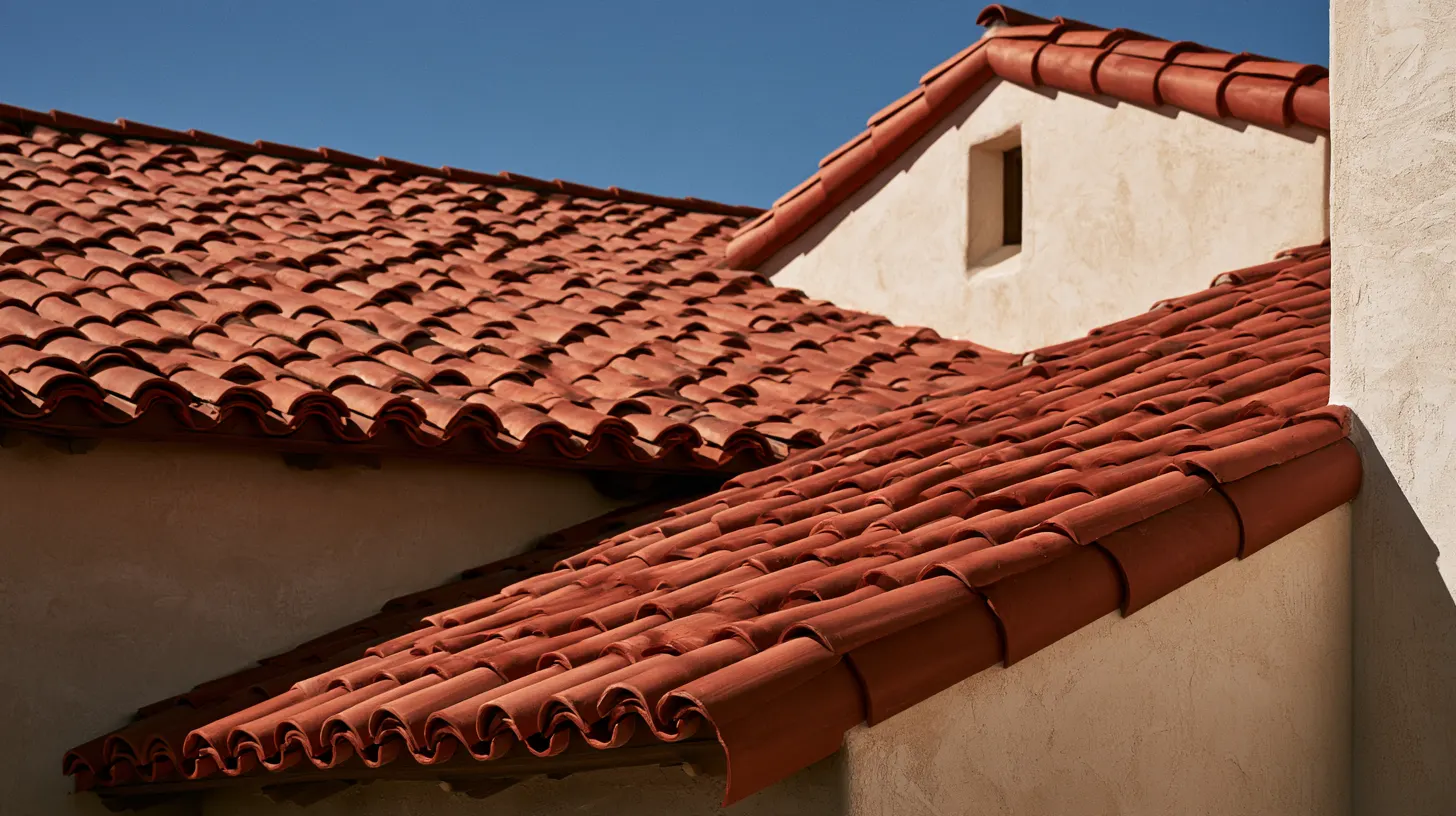
Clay tile is natural clay or shale that is shaped and fired in a modern kiln at around 2,000 degrees Fahrenheit. The heat causes vitrification, a chemical change that fuses the clay particles into a dense, stonelike material that resists water and fire. Unglazed tile has the familiar earthy orange-red of terracotta, and makers can fire on a ceramic glaze for permanent colors from deep blue to forest green.
The finished tile is heavy, stiff and chemically stable. Asphalt shingles depend on petroleum, adhesives and granules, while clay is a mineral that does not rot, decay or attract insects. Its mass also absorbs heat slowly, which delays the sun's heat from reaching the attic.
Clay tiles are either machine-pressed or handmade. Machine-pressed tiles are uniform, with consistent interlocking channels. Handmade tiles have the irregular look of old Mediterranean and Spanish Colonial houses. Both protect equally well, but handmade tiles usually cost more.
Clay tile costs $10 to $25 per square foot installed
A clay tile roof typically costs about $10 to $25 per square foot installed, or $1,000 to $2,500 per square. A typical 2,000-square-foot roof (20 squares) costs between $20,000 and $50,000. Tile shape, deck complexity and local labor rates set where a job falls in that range, and since tile is quoted per square, the roofing calculator gives a quick estimate of your roof's size.
| Cost item | Typical price |
|---|---|
| Unglazed Spanish S-tile (material) | $400 to $700 per square |
| Glazed or custom-colored flat tile (material) | $800 to $1,200 per square |
| Specialty pieces (ridge caps, bird stops, hip starters) | 10% to 15% on top of tile cost |
| Labor | $500 to $1,200 per square |
| Structural reinforcement, if needed | $2,000 to $7,000 |
The specialty pieces are not optional, because they close the gaps that curved or interlocking field tiles leave. Labor costs more than for asphalt or metal because tile work is skilled. The crew must spread heavy pallets around the roof so no single spot is overloaded, and cut tile around valleys and chimneys with diamond-blade wet saws. Labor runs toward the top of its range on steep roofs or roofs with many dormers.
Choose the right frost grade for your climate
ASTM (the American Society for Testing and Materials) sorts clay tile into three grades by frost resistance and water absorption. Choosing the wrong grade for your climate leads to early failure, because water inside a tile freezes, expands and cracks or flakes the tile (spalling).
- Grade 1 is for repeated freeze-thaw. It absorbs the least water and is the right choice for the Northeast, the Midwest and high mountain regions.
- Grade 2 is for occasional freezing. It absorbs a little more water and cannot survive repeated deep freezes, so it is used in the Southeast and parts of the Pacific Northwest.
- Grade 3 is for frost-free regions only. It is the most porous and breaks down quickly when exposed to ice, so it belongs in places like southern Florida, the desert Southwest and Southern California. Installing it in a cold climate invites spalling and cracks and can affect the manufacturer warranty.
Weight is the main hurdle in switching to clay tile
Weight is the main obstacle in converting a shingle roof to clay tile. Asphalt shingles weigh about 200 to 300 pounds per square, and clay tile weighs 600 to 1,500. On a 2,000-square-foot roof, that means 12,000 to 30,000 pounds of tile.
Many house frames were designed for a shingle dead load of only a few pounds per square foot, and clay can add 6 to 15 psf on its own, cutting into the margin meant for snow and wind. Pitch is also regulated: the International Residential Code allows clay and concrete tile only on slopes of 2.5:12 or steeper and requires double underlayment from 2.5:12 up to 4:12. Before installation, a structural engineer should check the rafters and trusses and specify any reinforcement.
Reinforcement usually means sistering (bolting new lumber alongside the existing rafters) or adding collar ties and purlins to spread the load, at a cost of about $2,000 to $7,000. Skipping it risks a sagging roof, cracked tiles and a bowing ceiling.
Clay tile shapes
Tile shape sets the look of the house and how water moves across the roof. Four shapes are common today.
- Mission or barrel tile is laid pan and cover. Half-cylinders alternate between upward-facing troughs and downward-facing caps over the gaps, creating the rolling ripple of Spanish Colonial Revival and Mission-style houses.
- Spanish S-tile is a one-piece version. Each S-shaped tile forms its own pan and cover, so there are fewer pieces and installation is faster, with the same curved look.
- French tile (also called Marseille tile) is flat with deep interlocks. Interlocking grooves along the edges and two flutes down the middle channel water, giving a textured, geometric look common on European-style homes.
- Flat tile imitates wood shake or slate. It often has beveled edges or a molded grain, and it suits modern and traditional English-style houses where owners want clay's lifespan without a Mediterranean look.
The underlayment wears out long before the tile
The tile may last 100 years, but the roof as a whole almost never does without major work. The weak link is the roof underlayment, the waterproof sheet laid on the wood deck beneath the tiles.
Underlayment is usually heavy felt or a synthetic, and both wear out much faster than clay. Heat trapped under the tiles can make ordinary organic felt brittle and cracked within 20 to 30 years. Once it fails, rain blown under the tiles in a storm reaches the house, even if every tile is intact.
Every 25 to 35 years, the roof needs a lift and reset. A crew removes the tiles and stacks them carefully on the roof, strips the old underlayment, replaces any rotted decking, installs a new high-quality membrane and relays the original tiles. The job costs about 40% to 60% of a new install, but it saves the expensive clay. A premium self-adhering modified bitumen underlayment can lengthen the cycle, though the tiles will still outlast it.
Clay tile performs especially well in fire
Clay tile performs especially well in fire. Clay does not burn, so these roofs carry a Class A fire rating, which is one reason they are common in wildfire country. Flying embers will not ignite them, and they can help keep fire from spreading between houses.
Clay tile also handles wind well. Heavy tiles fastened with the right clips or screws hold up in hurricane-force gusts, and many tile systems meet Florida's strict High Velocity Hurricane Zone (HVHZ) requirements. Fastening is critical: in high-wind zones, every tile needs stainless steel screws and wind clips, not every third or fourth tile.
Impact is clay's weakness. The National Park Service preservation brief on clay tile lists careless foot traffic, falling tree limbs and heavy hail among the common causes of broken tiles. Some tiles carry a Class 3 or 4 impact rating, but most standard clay is brittle. In hail-prone areas, check the impact rating of the exact tile model and keep overhanging branches trimmed.
Does a clay tile roof need maintenance?
A clay tile roof needs very little cleaning and no chemicals, because clay gives algae and moss nothing to feed on, unlike wood or asphalt. Leaves and pine needles still collect in valleys and behind chimneys, where they hold moisture against the underlayment, so clear them once a year.
The most important rule is to stay off the roof. Clay handles water and wind well, but a foot concentrates weight on a small area, and stepping on the middle of a tile or an overlap can snap it.
If someone has to go up, hire a professional who spreads the load with walk boards or pads. Replace broken tiles promptly. A single cracked tile exposes the underlayment to sun and water, that spot wears through, and the result is a leak that is hard to trace.
A detailed estimate signals a careful contractor
A detailed estimate is the best sign of a careful tile contractor. Look for these line items:
- Underlayment. Expect at least two layers of 30-pound felt, or one layer of high-performance synthetic or rubberized asphalt membrane.
- New flashing. Reusing old lead or copper flashing is a mistake, since it will fail long before the new tiles do.
- Fasteners. Older roofs often set tiles in mortar, which cracks as the house settles. Today's standard is stainless steel or copper nails and screws, which do not rust. Galvanized nails corrode within about 20 years and lead to early repairs.
- Bird stops or eave closures. These inserts fill the first row of curved tiles. Without them, birds, bats and rodents move into the gaps and damage the underlayment.
Concrete tile costs less than clay
Clay and concrete tile look alike from the street, but they differ in cost and durability. Concrete tile is made of Portland cement, sand and water and typically costs $900 to $1,600 per square installed, often noticeably less than clay.
Concrete is more porous than frost-rated Grade 1 clay and absorbs more water, so it grows more mildew and moss. It also fades, because its color is usually a surface pigment, while clay's color is fired in or glazed on.
The two weigh about the same, and both need a structural check. If the budget allows, clay is the better choice for lifespan and appearance. If the budget is tight, concrete gives the tile look at a lower price, though it will show its age sooner.
Is clay tile good for hot climates?
Clay tile works best in warm, sunny climates. Curved tiles such as the Spanish S leave an air gap between tile and deck, called above-sheathing ventilation. As the sun heats the tile, the air beneath it warms and rises out through the ridge vents, drawing cooler air in at the eaves.
That moving air acts as a thermal break. The deck stays much cooler than it would under asphalt, less heat reaches the attic, and summer air conditioning costs can drop.
Clay can also work in cold climates with attention to ice dams. Heavy tiles hold heat, so snow can melt near the top of the roof and refreeze at the cold eaves. Good attic insulation and ventilation keep the roof surface evenly cool, which prevents ice from building up and forcing water under the tiles.
What to ask a contractor
Tile installation is a specialized skill that many general roofers never fully learn. Ask these questions before you sign:
- How do you build valleys? A good install uses a double-channeled metal valley, so if debris blocks one channel, the second still carries water away from the underlayment.
- Have you done many lift and resets? A crew that can salvage and relay old tiles usually understands the finer points of a new install too.
- Where will the tile pallets go? Stacking them in one spot can crack rafters. A professional spreads them across the roof or keeps them on the ground and lifts tile up as the work progresses.
- Can I see your manufacturer certification? Major clay makers such as Ludowici and MCA run training programs, and a certified installer knows the tolerances and fastening patterns needed to keep the long-term warranty valid.
Clay tile roof questions
How long does a clay tile roof last?
The tiles last around 100 years, the figure the National Park Service cites for historic clay roofs. The underlayment beneath them wears out much sooner. Plan on a lift and reset every 25 to 35 years to replace it; the original tiles go back on, but you still pay for the labor.
How much does a clay tile roof cost?
Roughly $1,000 to $2,500 per square installed in 2026, or about $10 to $25 per square foot. A 2,000-square-foot roof usually costs between $20,000 and $50,000. Structural reinforcement, if needed, can add several thousand dollars more.
Is clay tile better than concrete tile?
Over the long run, usually yes. Clay keeps its color, absorbs less water and tends to outlast concrete. Concrete is cheaper, typically $900 to $1,600 per square installed, so it is the budget route to a tile look.
Can you walk on a clay tile roof?
You should avoid it. The tiles handle rain and wind well, but a foot concentrates weight on one spot and cracks them, especially curved barrel and S-tiles. Roofers who must go up use walk boards or pads to spread the load.
Does a clay tile roof need extra framing?
Often, yes. Clay weighs roughly 600 to 1,500 pounds per square, against about 200 to 300 for asphalt shingles. Have an engineer confirm the rafters or trusses can carry it before replacing shingles with tile.
Prices are 2026 US national averages and building codes vary by town. Materials, warranties and code adoptions change, so confirm prices with local contractors and code rules with your building department before you sign anything.
Estimate Your Roof Cost
Use our free roofing calculator. No sign-up required.