 RoofingCalculator.io
What Is a Concrete Tile Roof?
By RoofingCalculator.io. Updated October 14, 2026. Prices, ratings and code references link to their sources.
Pricing your own roof? Get squares, materials and a 2026 cost range in about two minutes. Free, no sign-up.
A concrete tile roof is covered in molded tiles made of Portland cement, sand and water, colored with iron-oxide pigments and laid in overlapping rows. It costs about $900 to $1,600 per square installed (a square is 100 square feet). The tile itself can outlast the house, and the InterNACHI life expectancy chart lists clay and concrete tile at 100+ years, but the underlayment under it wears out much sooner and decides when the roof needs real work.
Before choosing concrete tile, check five things.
- Confirm the framing can carry the weight. Standard tile weighs about 900 to 1,000 pounds per square, three to four times as much as asphalt shingles. An engineer should review the rafters or trusses before any tile is ordered.
- Check that the roof pitch is 2.5:12 or steeper. The International Residential Code does not allow concrete tile on lower slopes, and slopes below 4:12 need two layers of underlayment.
- Choose the underlayment as carefully as the tile. Standard underlayment under tile lasts about 25 years, and replacing it means a lift and relay.
- Match the tile to your climate. Concrete tile does best in hot, sunny regions. Hail and freeze-thaw cycles can crack it.
- Ask whether the color is integral or slurry-coated. Color that runs through the whole tile holds up better than a surface coat.
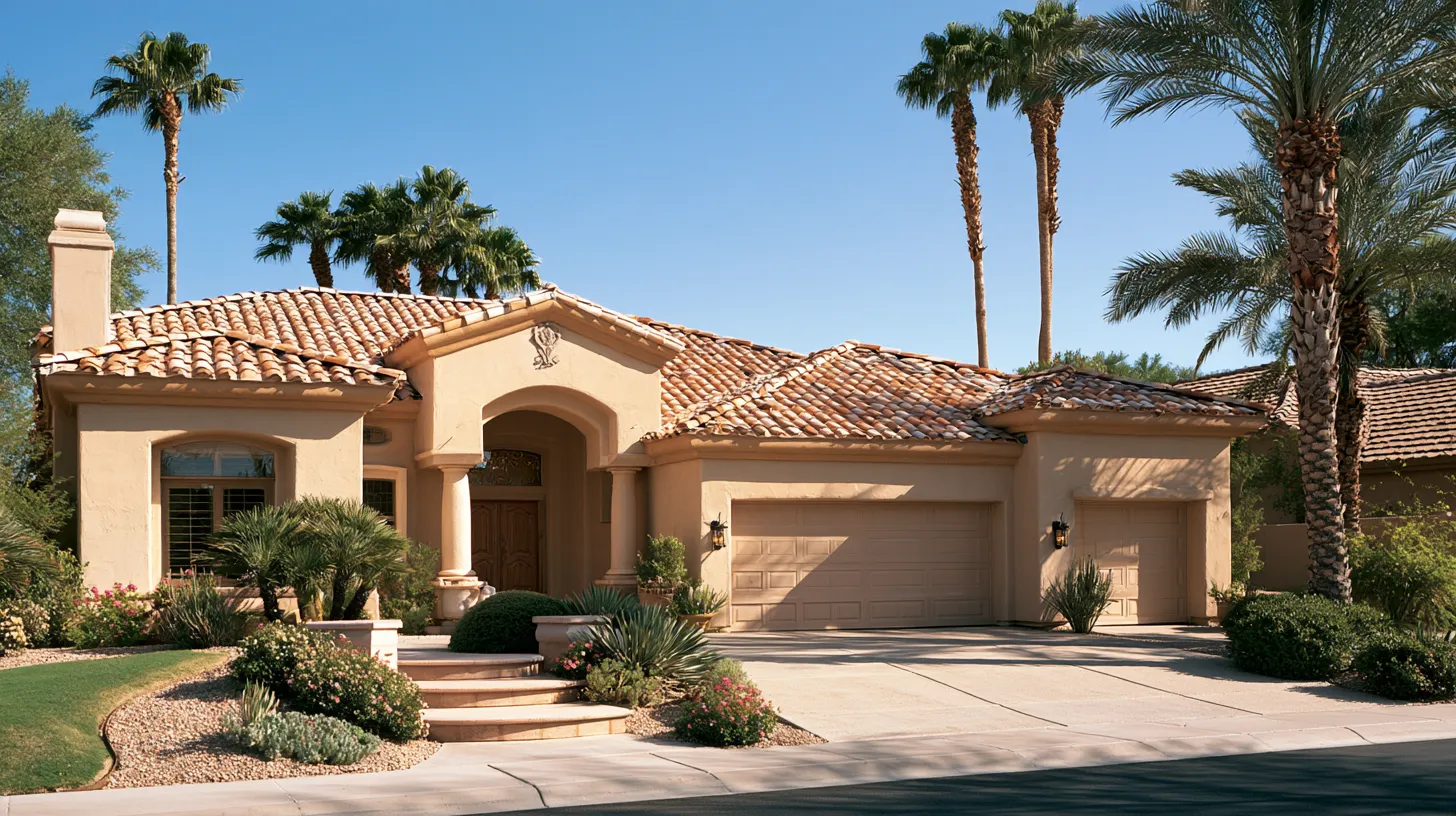
Concrete tile is made of cement, sand and water
Concrete roof tile is a mix of Portland cement, sand and water, pressed or extruded into shape and cured. Color comes from iron-oxide pigments. In through-colored (integral) tile the pigment runs through the whole tile; in slurry-coated or color-bonded tile, a pigmented cement layer sits on the surface.
Surface color can wear and fade over the years, while integral color holds up better. Eagle Roofing's own brochures note that its fire, high-wind and freeze-thaw testing claims exclude color-bonded or slurry tiles, so ask which kind you are buying.
Most tile on American houses falls into three profile families:
- Flat tile, which imitates slate, wood shake or a clean modern line. A flat or low-profile tile rises half an inch or less.
- Low or medium profile S-tile, a gentle wave that suits ranch, Craftsman and modern Mediterranean homes.
- High profile or barrel tile, the deep "Spanish" curve seen across Florida, Arizona and Southern California.
The two largest U.S. makers are Eagle Roofing Products and Westlake Royal Roofing Solutions, which took over the former Boral concrete tile line and now sells it as Newpoint. Both make standard-weight and lightweight tile, with availability that varies by region.
Concrete is cheaper, but clay ages better
Concrete tile is the cheaper way to get a tile roof, but clay usually ages better. From the street the two can look nearly identical. The differences show up in price, weight, water absorption and color.
| Factor | Concrete tile | Clay tile |
|---|---|---|
| Installed cost per square | $900 to $1,600 | $1,000 to $2,500 |
| Made from | Portland cement, sand, water, pigment | Natural clay or shale fired in a kiln |
| Weight per square (standard) | About 900 to 1,200 lb | About 600 to 1,500 lb |
| Water absorption | Higher; prone to moss and staining | Lower, especially frost-rated grades |
| Color | Can fade, especially surface-coated tile | Fired or glazed in; holds color |
| Fire rating | Class A | Class A |
| Minimum slope (IRC) | 2.5:12 | 2.5:12 |
Because concrete soaks up more water, it tends to grow moss and mildew in shady, damp spots and can show efflorescence (white mineral deposits). Clay is denser and keeps its color for decades. If the budget allows clay and you like the look, the clay tile roof guide covers frost grades, shapes and fastening.
Concrete tile costs $900 to $1,600 per square installed
A concrete tile roof typically costs $900 to $1,600 per square installed, or $9 to $16 a square foot. On a 20-square roof, about 2,000 square feet of roof surface, that works out to roughly $18,000 to $32,000 before tear-off and any structural work. That puts it in the same range as standing seam metal and about double architectural shingles, as the new roof cost guide shows side by side.
Where your quote lands in that range depends on a handful of factors:
- Profile and color. Flat and low-profile tiles are usually the least expensive; high-profile barrel tile and custom color blends cost more.
- Weight and structure. Moving from shingles to tile may require an engineer and added framing.
- Underlayment. A premium synthetic or self-adhered membrane costs more up front but stretches the time before a lift and relay.
- Tear-off. Removing old shingles or tile is usually priced separately, and a second layer of shingles costs more to remove.
- Pitch and complexity. Steep roofs, valleys, hips, dormers and chimneys all mean more cutting, flashing and labor.
- Wind zone. High-wind areas require more fasteners, clips or adhesive per tile.
Since tile is priced by the square, the free roofing calculator is a quick way to turn your roof's footprint and pitch into squares and see where your house falls in that range.
How much does concrete roof tile weigh?
Standard-weight concrete tile weighs roughly 9 to 10 pounds per square foot installed, or about 900 to 1,000 pounds per square. Eagle's technical specifications list about 970 pounds per 100 square feet for most of its standard profiles and 720 pounds for the lightweight Eaglelite versions. Asphalt shingles, for comparison, weigh about 200 to 300 pounds per square.
That gap is why re-roofing from shingles to tile is not a simple swap. Many houses framed for shingles were never designed to carry three or four times the dead load, plus snow and wind. Before any tile is ordered, a structural engineer should check the rafters or trusses, and if they fall short, the engineer will specify reinforcement such as sistered rafters, added purlins or new bracing.
Lightweight tile is the other route. At roughly 5.5 to 7 pounds per square foot, it may let some shingle-framed houses take tile with little or no added framing, though an engineer should still confirm. Ask the contractor which weight class they are quoting, since standard and lightweight versions of the same profile can look identical on the pallet.
Concrete tile needs a pitch of 2.5:12 or steeper
The International Residential Code allows concrete tile only on roofs with a pitch of 2.5:12 or steeper. Section R905.3 of the International Residential Code requires two layers of underlayment on slopes from 2.5:12 up to 4:12, and at least one layer at 4:12 and steeper. If you are not sure of your roof's slope, the roof pitch guide explains how to measure it.
The code also requires concrete tile to meet ASTM C1492, the standard specification for concrete roof tile. It covers tiles made of Portland cement, water and mineral aggregates and sets requirements for dimensional tolerance, freeze-thaw resistance, transverse strength, permeability and water absorption.
Wind rules get stricter near the coast. In hurricane zones each tile is mechanically fastened with screws, nails plus clips, or approved foam adhesive, following the manufacturer's tested pattern. Florida's High Velocity Hurricane Zone (Miami-Dade and Broward counties) requires product approvals specific to that zone, and Eagle lists separate Florida versions of some profiles.
Concrete tile does not burn, and it is commonly rated Class A for fire, the highest rating. That makes it a popular choice in California's wildfire areas, provided the eaves are closed off with bird stops so embers cannot blow under the first row.
The underlayment wears out decades before the tile
The tile can last 50 to 100 years or more, but the roof system usually needs major work at 30 to 50 years because of the underlayment. Tile sheds most water, yet some always gets beneath it, so the membrane on the deck is what actually keeps the house dry.
Roof consultant Carl Brown, writing for Association Reserves, states that "standard underlayment has a general useful life of about 25 years, depending on climate exposure." He puts it closer to 15 to 20 years in hot desert areas and up to about 30 near the coast. When it fails, a crew does a lift and relay (also called a tile reset). They remove and stack the tiles, replace the roof underlayment and worn flashing, then reinstall the same tiles with new ones mixed in for any that broke.
A heavier underlayment at installation is the best way to push that date back. A self-adhered modified bitumen or high-temperature synthetic membrane costs more than felt but holds up longer under hot tile. The roof lifespan guide compares this cycle with asphalt, metal and slate.
Where does concrete tile work best?
Concrete tile performs best in hot, sunny climates such as the Southwest, Florida and California. Its mass slows heat transfer into the attic, and curved profiles leave an air gap above the deck that helps carry heat out at the ridge. It is also one of the few roof coverings that holds up to both hurricane wind and wildfire embers when properly installed.
Freeze-thaw country is harder on it. Water absorbed into a tile can freeze, expand and cause cracking or surface flaking. Tiles that meet ASTM C1492 are tested for freeze-thaw resistance, but a cold-climate buyer should still confirm the specific product is rated and warranted for the region. Snow load adds to an already heavy roof, so the engineering check matters even more there.
Hail is the main weakness. Large hailstones can crack concrete tile, particularly older or thinner tiles, and cracked tiles are sometimes hard to tell apart from foot traffic damage during an insurance inspection. Impact ratings vary by product, so if you live in hail country, ask for the tile's tested impact rating in writing or compare it against metal roofing, which dents rather than cracks.
Concrete tile roof pros and cons
Concrete tile gives you most of the look and durability of clay at a lower price. The trade-offs are weight, water absorption and fragility underfoot.
Pros:
- Long-lived tile that can be reused when the underlayment is replaced
- Class A fire rating and strong wind resistance when fastened to code
- Lower installed cost than clay or natural slate
- Many profiles and colors, including flat slate-look and shake-look styles
- Resistant to rot and insects
Cons:
- Heavy enough that many houses need an engineering review and possibly added framing
- More porous than clay, so more prone to moss, staining and efflorescence
- Surface color can fade over time
- Can crack from hail, falling branches or careless foot traffic
- Underlayment replacement every few decades is a real cost
- Not allowed below 2.5:12 pitch
Keep people off the roof and water moving
Most concrete tile maintenance comes down to keeping people off the roof and keeping water moving. The tile needs no coating or sealing to do its job, though some owners apply a sealer to slow fading or moss.
- Stay off the roof. Walking on tiles is the most common cause of breakage, and a cracked tile exposes the underlayment to sun and water.
- Replace cracked or slipped tiles promptly. A single-tile repair is usually a small job, though matching an older or discontinued color can be the hardest part, so keep a few spare tiles from the original install.
- Keep valleys, gutters and the spaces behind chimneys clear of leaves and needles, which hold moisture against the underlayment.
- Trim overhanging branches to cut down on impact damage and shade-loving moss.
- Have a tile roofer inspect after major storms and every few years as the roof nears 20 years old.
What to ask a concrete tile contractor
Tile installation is a specialty, and the questions below separate experienced tile crews from shingle crews who occasionally lay tile. Ask them before you sign, and get the answers reflected in the written estimate.
- Is this standard-weight or lightweight tile, and has an engineer reviewed my framing?
- Which tile line, profile and color are you quoting, and is the color integral or slurry-coated?
- What underlayment are you using, how many layers, and what is its rated service life?
- How is each tile fastened, and does the pattern meet my local wind requirements?
- Is new flashing included at walls, chimneys and valleys, and what kind of valley metal will you use?
- Are bird stops or eave closures included?
- How will you load and stage the tile so one area of the roof is not overloaded?
- Are you trained or certified by the tile manufacturer, and what warranty covers the tile and the workmanship?
If you are still weighing materials, the types of roofs guide compares concrete tile with shingles, metal, clay and slate on cost, lifespan and weight. For a tile-friendly house in a warm climate, concrete tile is a sound long-term choice once the framing is checked and the underlayment is budgeted as the part you will replace.
Concrete tile roof questions
How long does a concrete tile roof last?
Usually 30 to 50 years before the roof system needs major work, although the tiles themselves can last a century. InterNACHI lists clay and concrete tile at 100+ years, but the underlayment beneath them usually needs replacing after about 20 to 30 years. A lift and relay at that point lets you keep the original tiles.
How much does a concrete tile roof cost?
Usually about $900 to $1,600 per square installed in 2026, or $9 to $16 a square foot. A 20-square roof (about 2,000 square feet) comes to roughly $18,000 to $32,000 before tear-off. Structural reinforcement, if the framing needs it, adds to that.
Is concrete tile better than clay tile?
Usually not, except on price. Concrete costs less and comes in more shapes and colors, which makes it the budget route to a tile roof. Clay absorbs less water, holds its color longer and generally ages better. Both are heavy and both depend on good underlayment.
Can you put concrete tile on a house that had asphalt shingles?
Often, but only after an engineer confirms the framing can carry it. Standard concrete tile weighs about three to four times as much as asphalt shingles. If the rafters or trusses fall short, they are reinforced before the tile goes on, or you choose a lightweight tile.
Can you walk on a concrete tile roof?
Only with care, and it is better to stay off it. Tiles crack when weight lands in the wrong spot, especially on the unsupported part of a curved tile. Roofers step on the lower third of each tile, over the batten or the tile below, or use walk pads to spread the load.
Prices are 2026 US national averages and building codes vary by town. Materials, warranties and code adoptions change, so confirm prices with local contractors and code rules with your building department before you sign anything.
Estimate Your Roof Cost
Use our free roofing calculator. No sign-up required.