 RoofingCalculator.io
What Is a Butterfly Roof?
By RoofingCalculator.io. Updated October 14, 2026. Prices, ratings and code references link to their sources.
Pricing your own roof? Get squares, materials and a 2026 cost range in about two minutes. Free, no sign-up.
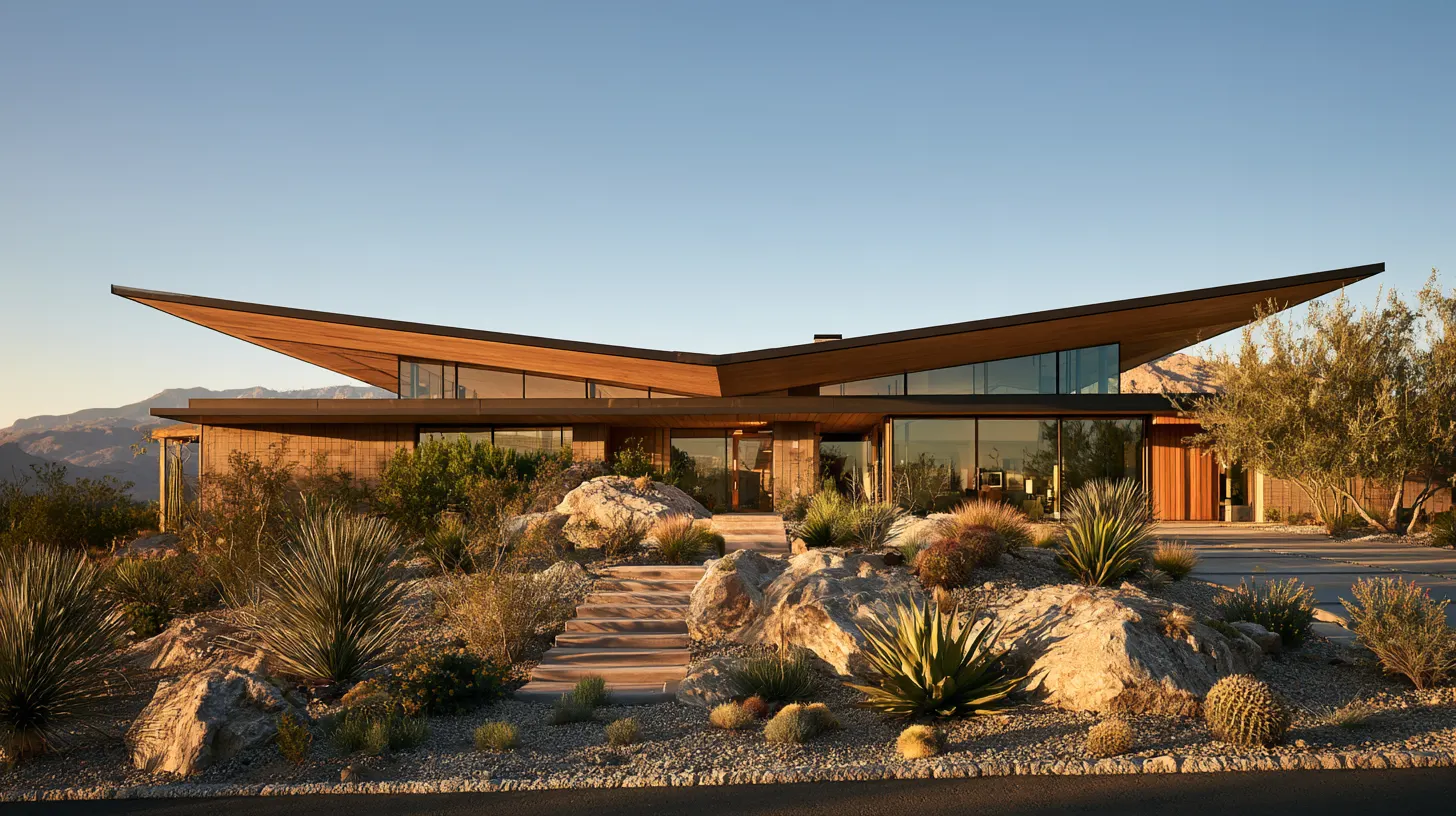
A butterfly roof is an inverted gable: two roof planes slope down from tall outer walls and meet in a central valley, forming a V. Rain runs to the center and leaves through one or two drains or a scupper instead of falling off the eaves. Because the valley behaves like a low-slope roof, it needs low-slope materials such as TPO at roughly $650 to $1,100 per square installed, or standing seam metal at around $1,000 to $1,600.
Before you build one, weigh four things.
- The light is the main appeal. Tall outer walls leave room for clerestory windows that make a small house feel larger.
- Drainage is the main risk. All water runs to the center, so the roof needs large drains, an emergency overflow and cleaning at least twice a year.
- Shingles will not work in the valley. The low slope calls for a membrane or standing seam metal.
- It costs more than a gable. Engineering, a heavy valley beam, site framing and special drainage all add to the price.
A butterfly roof drains to the middle
A butterfly roof reverses the drainage of a gable. On a gable, water runs from the ridge out to gutters at the eaves. On a butterfly, the outside walls are tall and the middle is low, so all the water on either wing flows inward to the valley.
The framing is reversed as well. Gable rafters push their load out onto the exterior walls, while a butterfly valley carries both wings plus any water or snow sitting in it. That requires a strong beam under the valley, often LVL or steel, or a line of interior bearing walls. Prefabricated trusses rarely fit, so most butterfly roofs are framed by hand on site from engineered drawings.
The code requirement is simple to state and harder to build. Where a roof does not drain over its edges, the International Residential Code requires roof drains at each low point of the roof. On a butterfly roof, the low point runs the full length of the valley.
Modernist architects introduced it in the 1930s
Modernist architects began drawing butterfly roofs in the 1930s. Le Corbusier designed one for the Errázuriz house in Chile, which was never built, and the shape spread through Latin American and American modernism. William Krisel then used butterfly roofs on a series of Alexander Construction Company tract homes in Palm Springs through the 1950s and 1960s, and the shape became a symbol of mid-century design.
Today it appears on contemporary custom houses, accessory dwelling units and eco-focused builds. Designs with large windows, solar panels or rainwater tanks benefit from tall walls and a single collection point for water.
Most people choose it for natural light
Most people choose a butterfly roof for the natural light. Because the roof rises toward the outside walls, those walls can reach 12 feet or more and hold clerestory windows, long bands of glass near the ceiling. The windows show sky and treetops while keeping privacy from the street, and a small floor plan feels much larger.
Rainwater collection is the second draw. All the runoff goes to one or two outlets, so connecting a cistern is easy. One inch of rain on 1,000 square feet of roof yields roughly 600 gallons, a useful supply for a garden in a dry climate.
Solar panels also fit well. They sit on the inward-sloping wings, partly hidden from the street by the raised edges. On mild days, opening the clerestory windows lets hot air escape from the high points of the room, which provides nearly free ventilation.
The central valley is the weak point
The central valley is a butterfly roof's biggest weakness, because gravity pulls water toward the middle of the house instead of away from it. When leaves, pine needles or ice block a drain, water ponds over the living space, and standing water tends to find any weak seam.
Snow adds to the problem. It cannot slide off, so it piles up and drifts into the valley, where it melts, refreezes, blocks the drains and forms ice, all of which loads the valley beam. In snow country these roofs are engineered for drift loads and usually get heated drains.
A butterfly roof also costs more in money, maintenance and possibly resale. Custom framing, engineering and low-slope materials all cost more than a standard gable. The valley and drains need cleaning at least twice a year, and more often under trees. Buyers who like modern design will pay for the look, while more traditional buyers may see it as extra upkeep.
Butterfly roofs need a waterproof covering
A butterfly roof needs a waterproof covering rather than one that sheds water. Near the valley the roof acts like a flat roof, and shingles, shakes and tile all depend on slope to move water past their overlaps. The IRC allows asphalt shingles only on slopes of 2 in 12 or steeper, and many butterfly valleys are flatter than that, so shingles are ruled out.
Most butterfly roofs use TPO or PVC, single-ply membranes whose seams are heat-welded into one continuous sheet. A white membrane also reflects much of the summer sun. ENERGY STAR says a clean white roof reflecting 80% of sunlight stays about 50°F cooler than a gray roof reflecting 20%. EPDM rubber is another proven option. The guide to TPO roofing compares the membranes in more detail.
Standing seam metal costs more and has a premium look. Each panel runs in one piece from the high edge down to the valley, with raised seams above the water line and no side laps for water to get under. The IRC allows standing seam metal on slopes as low as 1/4 in 12. The valley itself still needs a carefully detailed metal or membrane liner and a sound connection at the drain.
How much does a butterfly roof cost?
Price the covering like any low-slope roof: in 2026, about $650 to $1,100 per square for TPO and $1,000 to $1,600 for standing seam metal. On a house with 22 squares of roof, that works out to roughly $14,300 to $24,200 in TPO or $22,000 to $35,200 in standing seam. Tearing off an existing roof adds about $100 to $150 per square for each layer.
A butterfly roof also needs items a gable does not:
- Structural engineering and a heavy valley beam. The valley carries both wings and any water or snow.
- Site-cut framing. Standard trusses rarely fit.
- Tapered insulation. It keeps water moving toward the drains.
- Internal drains or large scuppers, plus an emergency overflow. These handle normal and backup drainage.
These costs vary so much between designs that only a bid on your plans gives a real number. Each wing is effectively a small shed roof, so you can work out area and covering cost one wing at a time in the roofing calculator and add the builder's structural and drainage figures.
A butterfly roof needs a primary and a backup drain
A butterfly roof needs two drainage routes, a primary and a backup. The primary route is usually one or two scuppers at the ends of the valley that empty into oversized downspouts, or internal drains piped down through the house. Tapered insulation or framing slopes the valley slightly toward those outlets so water does not sit.
The backup is an emergency overflow. Where edges or parapets would trap water behind a clogged drain, the IRC requires secondary overflow drains or scuppers set above the low point. On a butterfly roof, that usually means scuppers at both ends of the valley, larger than the primary drains. Plans without an overflow are not complete.
Internal drain lines need watching. They run inside walls and ceilings, so a leaking pipe can soak the framing for months before anyone notices. After heavy rain, check the ceilings and walls near the center of the house for stains.
Rigid foam on top of the deck does the insulating
Most butterfly roofs sit over vaulted ceilings that follow the roofline, with no attic for blown-in insulation or ductwork. The usual solution is continuous rigid foam on top of the deck, called an unvented or compact roof assembly. Done well, it keeps the deck warm and dry; gaps in the foam lead to condensation and high energy bills.
Ductwork needs a plan too. Without an attic, ducts are left exposed as part of the design, hidden in soffits and dropped ceilings, or replaced with ductless mini-splits. Decide this during design, since the ceiling will be on view for years.
Where do butterfly roofs work best?
Butterfly roofs work best in dry, mild climates such as the Desert Southwest and inland California, where sun, light and rainwater collection matter most. In rainy areas, size the drains generously and make sure they are cleaned. In heavy snow areas, the roof needs serious engineering, heated drains and a maintenance plan you will follow.
Wind also matters. Raised edges and overhangs can catch uplift in high-wind and hurricane zones, so the framing needs strong connections to the walls, such as hurricane ties, and edge metal rated for local wind speeds. If you are comparing options, a flat roof uses mostly the same materials without the valley problems.
Questions for your architect and roofer
- Ask the structural engineer about valley loads. Get the dead and live loads at the valley, including snow drift if you get snow.
- Ask the architect where the ducts and overflow scuppers go. Both should be on the plans.
- Ask the roofer which system they will use. Have them explain the membrane or metal, how they will detail the valley and drains, and where you can see low-slope or butterfly roofs they have finished.
Hire a roofer with commercial or low-slope experience, not a shingle-only crew. If a roofer suggests shingles in the valley or is willing to frame the roof without engineered drawings, keep looking. A well-built butterfly roof is attractive and comfortable to live under, but it punishes poor detailing and skipped cleanings more than almost any other roof shape.
Butterfly roof questions
What are the disadvantages of a butterfly roof?
The main disadvantage is that water, snow and leaves all collect in the center valley, so one clogged drain can leave a pond over the living room. The custom framing, engineering and low-slope materials also cost more than a standard roof, and the drains need regular cleaning. Some buyers who prefer traditional houses may also pass on the style.
Do butterfly roofs leak?
They leak more often than a plain gable when the details are poor or maintenance is skipped. Leaks almost always start at the valley, a drain or a roof-to-wall joint. A continuous membrane or standing seam metal, a tapered valley, large drains and an emergency overflow prevent most problems, along with cleaning the drains twice a year.
Why is it called a butterfly roof?
Seen from one end, the roof is low in the middle and high at both outer edges, like a butterfly's wings in mid-flap. It is also called an inverted gable or a V-shaped roof.
Are butterfly roofs good in snow?
They can work in snow, but only with careful design. Snow drifts into the valley, so the structure must be engineered for the extra weight, and the drains need heat or heat cable so they do not freeze shut. In heavy snow regions, many architects avoid the shape or use a shallower butterfly on a heavier frame.
Can you put shingles on a butterfly roof?
Usually not near the valley. Asphalt shingles need a slope of at least 2 in 12, and the area around a butterfly valley is usually flatter. Most butterfly roofs are covered in TPO, PVC, EPDM or standing seam metal.
Prices are 2026 US national averages and building codes vary by town. Materials, warranties and code adoptions change, so confirm prices with local contractors and code rules with your building department before you sign anything.
Estimate Your Roof Cost
Use our free roofing calculator. No sign-up required.