 RoofingCalculator.io
TPO vs Modified Bitumen
By RoofingCalculator.io. Updated October 14, 2026. Prices, ratings and code references link to their sources.
Pricing your own roof? Get squares, materials and a 2026 cost range in about two minutes. Free, no sign-up.
TPO is a white, heat-welded single-ply membrane that reflects heat and costs about $6.50 to $11 per square foot installed. Modified bitumen is a thicker, multi-layer asphalt roof at about $5.50 to $9 per square foot that handles foot traffic much better. TPO usually suits a sunny house with a flat roof nobody walks on, and modified bitumen often suits a deck people use.
Four differences decide most jobs.
- TPO keeps the house cooler. Its white surface reflects sunlight, which can lower summer cooling costs.
- Modified bitumen takes more abuse. At about two pounds per square foot in two plies, it stands up to foot traffic and falling branches better than a single sheet.
- Seams are built differently. TPO seams are heat-welded into one continuous skin, while modified bitumen relies on overlapping layers bonded by torch, cold adhesive or self-adhesive backing.
- TPO needs no open flame. Torch-down modified bitumen carries a fire risk on a wood-framed house, though cold-applied and self-adhered versions avoid it.
The main differences
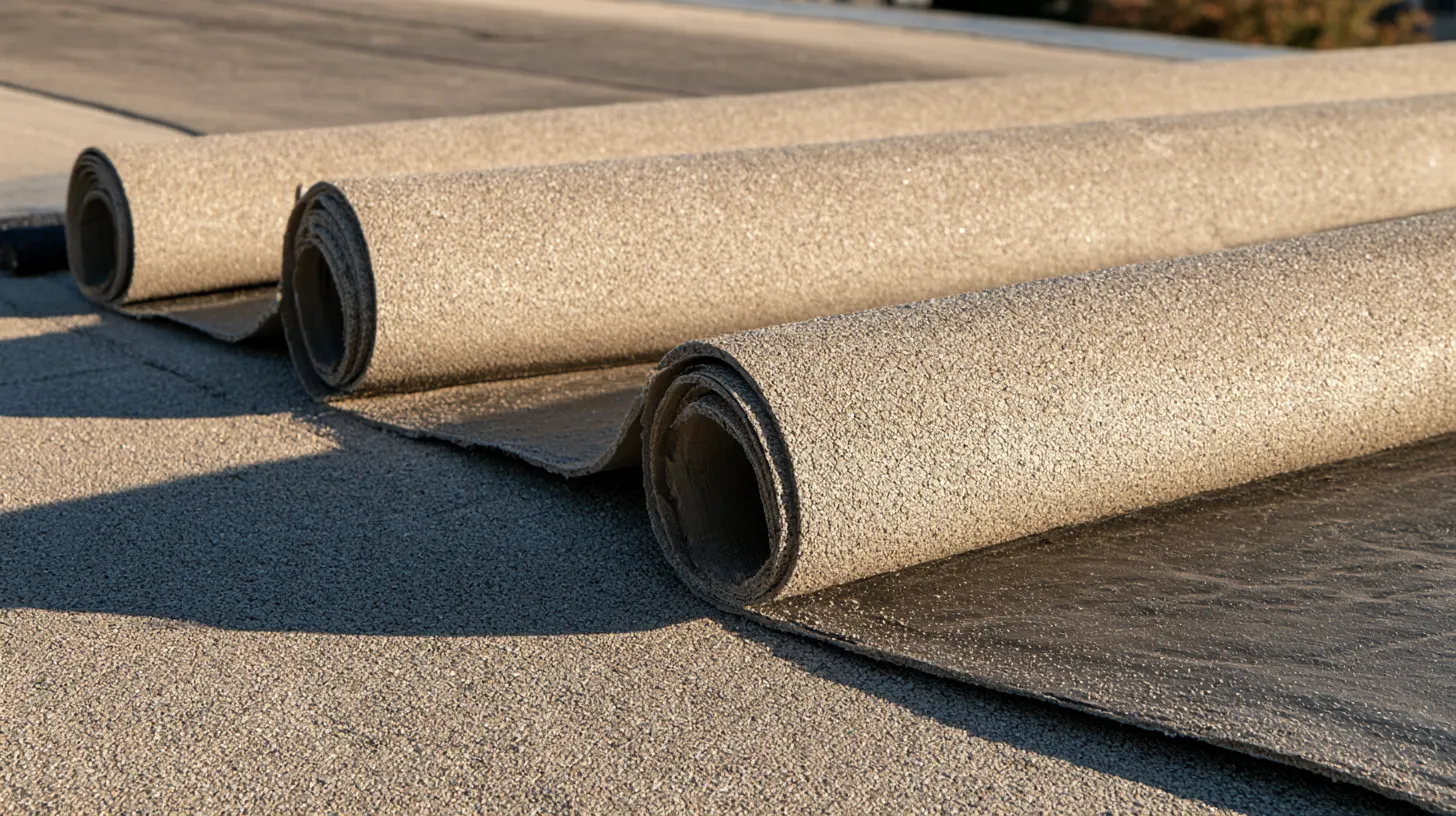
Most flat and low-slope house roofs end up with one of these two materials. TPO (thermoplastic polyolefin) is a single sheet made from a blend of polypropylene and ethylene-propylene rubber, usually white and highly reflective; the guide to TPO roofing covers it in more depth. Modified bitumen grew out of traditional built-up roofing. It is asphalt reinforced with polyester or fiberglass, blended with plastic or rubber modifiers and laid in more than one ply.
The choice affects your energy bill, your maintenance and your upfront cost. TPO is the newer option, valued for staying cool and going down quickly on large open spans. Modified bitumen remains the standard for small residential decks and areas with heavy foot traffic.
| TPO | Modified bitumen | |
|---|---|---|
| Installed cost | $6.50 to $11 per sq ft | $5.50 to $9 per sq ft |
| Weight | Under 0.5 lb per sq ft | About 2 lb per sq ft (two-ply) |
| Seams | Hot-air welded | Torched, cold-glued or self-adhered |
| Typical life | 7 to 20 years | 12 to 20 years |
| Surface | White, reflective | Granulated, usually dark |
A TPO sheet has three layers
A TPO sheet has three layers: a base, a reinforcing polyester scrim, and a top ply that carries the weathering package of UV stabilizers and flame retardants. Most houses get 60-mil membrane, and 45-mil and 80-mil are also sold. A mil is a thousandth of an inch, so 60-mil is about the thickness of a quarter.
The seams are TPO's main advantage. A hot-air welder fuses the sheets at 800 to 1,200 degrees Fahrenheit, and the bond is stronger than the sheet itself. Glued EPDM seams can let go as they age, while welded TPO seams do not. The white top also reflects most of the sun, so the building absorbs less heat. ENERGY STAR cites research showing a clean white roof stays about 50°F cooler than a gray one on a summer afternoon.
TPO resists mold, punctures and common household chemicals, but quality varies widely between brands. Cheap membranes can skimp on stabilizers and then crack or erode early. Check that the membrane meets or exceeds ASTM D6878.
Modified bitumen comes in SBS and APP types
Modified bitumen comes in two types, named for what is mixed into the asphalt. SBS (styrene-butadiene-styrene) is a synthetic rubber that lets the asphalt stretch and shrink without cracking. APP (atactic polypropylene) is a plastic that raises the melting point and improves UV resistance.
At least two layers go down. A base sheet is fastened or bonded to the deck or insulation, and a granulated cap sheet goes on top, much like a shingle surface, to shade the asphalt from UV and add fire resistance. That gives a redundancy TPO lacks: if the cap is punctured, the base sheet often stops the water.
Modified bitumen is also heavier. A two-ply roof weighs about two pounds per square foot, while TPO weighs under half a pound. That mass makes a tougher surface for a roof that doubles as a balcony or an equipment deck.
TPO runs $6.50 to $11 per square foot installed
TPO on a house usually costs $6.50 to $11 per square foot installed, with tear-off, new polyiso (polyisocyanurate) insulation and a cover board adding to the total. On a 1,500-square-foot flat roof, the membrane system tends to land between $9,750 and $16,500. For a different size, get the square footage from the roofing calculator and multiply it by both per-foot ranges; the gap between TPO and modified bitumen is usually smaller than people expect.
Modified bitumen usually costs $5.50 to $9 per square foot installed, so a 1,500-square-foot roof typically runs $8,250 to $13,500 before tear-off and insulation. The asphalt materials cost less, but labor rises with extra plies or a cold-adhesive install. Peel-and-stick modified bitumen is the cheapest to install and often has a shorter life.
Insulation can move the budget a lot. TPO needs a flat, clean surface, which often means a new layer of high-density cover board such as DensDeck. Modified bitumen can sometimes go over existing insulation if code allows and the old material is dry, though that is rarely a good long-term choice.
How are TPO and modified bitumen installed?
TPO is installed without flame, which makes it the safer choice on a house. Crews either fasten it mechanically or glue it down with water-based adhesive.
- Mechanically fastened TPO is quicker. Screws and plates go through the membrane into the deck, but the sheet can flutter in high wind.
- Fully adhered TPO looks smoother. Contact adhesive bonds the whole sheet, so it does not flutter.
Modified bitumen has three main methods.
- Torch-down gives a strong bond. A propane torch melts the underside as the roll is laid out, which carries a real fire risk on a wood-framed house, and many insurers restrict or exclude it.
- Cold-process avoids the flame. Liquid adhesive is spread with a squeegee or roller, but it cures slowly and has a strong smell.
- Self-adhered is gaining ground on houses. The sheet has factory adhesive under a release liner, so crews peel and roll it. Below 50 degrees Fahrenheit, the adhesive will not grab without added heat.
Seams and edges are the weak points
TPO fails mostly at the seams. A weld is only as strong as the operator makes it, and moving the welder too fast leaves a cold weld, a seam that looks closed but splits under stress or through freeze-thaw cycles. TPO also suffers under ponding water, which concentrates UV, wears away the top weathering layer and can leave the sheet brittle and cracked within 10 to 12 years.
Modified bitumen develops alligatoring, a pattern of small cracks like dried mud. The sun bakes the oils out of the asphalt until it turns brittle and can no longer move with the building. Its glued or melted asphalt seams are also a weak point and can separate if water sits on them for long periods.
Both can fail at the edges. Poor perimeter flashing lets wind get under the membrane and can peel the whole roof off the deck, which is why the ES-1 metal edge standard matters in high-wind areas. Walls and chimneys need proper terminations too: TPO uses special flashing boots, and modified bitumen uses stripping-in and cant strips to turn from flat to vertical.
The layers under the membrane set its lifespan
The layers under the membrane largely decide how long a flat roof lasts. TPO almost always goes over polyiso boards, rated at roughly R-5.6 to 6.0 per inch. Energy codes in many areas require substantial continuous insulation above the deck, which often means several inches of polyiso.
Good installers add a cover board between the foam and the TPO, usually 1/4-inch or 1/2-inch gypsum panels or high-density polyiso. The board keeps foot traffic from crushing the foam, gives the adhesive a better surface and improves the fire rating.
Modified bitumen may go over insulation, but it often goes over a base sheet nailed to a plywood deck. Where there is foam, a recovery board or cover board is required, because asphalt products cannot go directly onto polyiso. A torch would melt the foam, and adhesives often will not bond to the board facer.
Which is more energy efficient, TPO or modified bitumen?
TPO is clearly better on energy. Its high Solar Reflectance Index keeps the house cooler, which reduces electricity use and the carbon footprint that comes with it. TPO is recyclable in principle, though most areas still lack the facilities to recycle old membranes.
Modified bitumen is asphalt, and most cap sheets are dark gray or black, so they absorb heat. Cool-roof cap sheets with white or light granules rarely match white TPO. Asphalt production uses more energy and releases more VOCs (volatile organic compounds), and a worn-out modified bitumen roof usually goes to the landfill because its layers are hard to recycle.
Both membranes top out around 20 years
InterNACHI estimates a life expectancy of 7 to 20 years for TPO. A good install of 60-mil membrane with decent drainage lands near the top of that range, while ponding, harsh UV and poor welds pull it down.
Modified bitumen usually lasts 12 to 20 years, with two-ply systems at the low end and three-ply systems reaching 20. Because it is thicker, it tolerates abuse better. On a roof where HVAC technicians walk regularly or trees drop branches, modified bitumen may outlast TPO in practice despite similar rated lifespans.
Inspect either roof twice a year
Flat roofs need more attention than pitched ones. Inspect either type twice a year, in spring and fall, and focus on keeping drains, scuppers and gutters clear, because water that cannot drain eventually finds a way in.
TPO repairs need proper equipment, not caulk. A technician cleans the area with a special cleaner to remove oxidation, then welds on a new TPO patch with a handheld heat gun and a silicone roller. On membranes older than about 10 years, a new patch may not fuse to the old sheet, and the repair then calls for special primer and pressure-sensitive tape.
Modified bitumen is easier to repair. Small punctures and cracks can be sealed with asphalt mastic (roof cement) and reinforcing mesh, so minor fixes are fairly DIY-friendly. Larger repairs need a professional to bond new material to the granulated surface, and where granules have worn off, the asphalt underneath must be cleaned and primed first.
Questions for the contractor
The roofer matters more than the material. These questions reveal a lot about a bid.
- Are you a manufacturer-authorized TPO installer? Manufacturer training is often required for a long NDL (No Dollar Limit) warranty, so ask which brand they install.
- How will you weld the seams? Experienced crews run a robotic automatic welder down long seams. Hundreds of feet of hand welding with a small heat gun leaves more room for weak spots.
- Which modified bitumen method will you use, and why? For torch-down, ask for an insurance certificate that specifically covers open-flame or torch work, since many standard liability policies exclude it.
- How many plies? Single-ply modified bitumen is not a standard system and will likely fail within a few years, so insist on at least a base sheet and a cap sheet.
- How will you fix the drainage? If water stands on the roof now, ask about tapered insulation, which is cut at a slight angle to slope a flat roof toward the drains.
Drainage is also a code issue. The International Residential Code requires single-ply membrane roofs to have a design slope of at least 1/4 inch per foot. A new membrane over a roof that ponds is likely to fail early.
TPO is the better pick for most houses
TPO is the better choice for most modern houses with a flat roof, and the roundup of the best materials for a flat roof compares it with EPDM and PVC. It offers a cool surface, welded seams and light weight. It works best on large open areas where a white roof can noticeably cut the utility bill, and no one has to use a torch near your house.
Modified bitumen still makes sense where people walk on the roof often or where you want a more traditional look. It is thick and rugged and takes punishment a single sheet cannot. In northern climates, where some winter heat gain is welcome, its dark surface may even be an advantage.
Either membrane depends on the deck under it. All wet insulation should come out and the deck should be checked for rot before anything new goes down. With the drainage, insulation and seams done right, a flat roof can stay watertight for its full expected life.
TPO vs modified bitumen questions
Which is better, TPO or modified bitumen?
TPO is usually better for an open, sunny flat roof, because the white welded membrane reflects heat and its seams are very strong. Modified bitumen is tougher underfoot, so it is the better choice for decks and roofs people walk on often. The quality of the install and the drainage matter more than the material.
How much does TPO cost compared to modified bitumen?
TPO runs about $6.50 to $11 per square foot installed, and modified bitumen about $5.50 to $9. Tear-off, new insulation, tapered drainage and many penetrations push either one higher.
How long does a TPO roof last?
InterNACHI puts TPO at 7 to 20 years. A well-installed 60-mil membrane on a roof that drains properly lands near the top of that range. Ponding water and poor welds are the usual causes of early failure.
Is torch-down modified bitumen safe on a house?
It bonds well, but an open flame on a wood-framed house is a real fire risk, and some insurers restrict it. Self-adhered and cold-applied modified bitumen avoid the flame entirely. If you choose torch-down, confirm that the contractor's insurance covers torch work.
Can you put TPO over modified bitumen?
Sometimes. The old roof has to be dry and sound, code has to allow a recover, and a separation layer or cover board must go between the asphalt and the TPO. Wet insulation and rotten layers come off first, and many roofers recommend a full tear-off.
Prices are 2026 US national averages and building codes vary by town. Materials, warranties and code adoptions change, so confirm prices with local contractors and code rules with your building department before you sign anything.
Estimate Your Roof Cost
Use our free roofing calculator. No sign-up required.