 RoofingCalculator.io
What Is EPDM Roofing?
By RoofingCalculator.io. Updated October 19, 2026. Prices, ratings and code references link to their sources.
Pricing your own roof? Get squares, materials and a 2026 cost range in about two minutes. Free, no sign-up.
EPDM roofing is a single-ply synthetic rubber membrane used on flat and low-slope roofs, usually black and glued down in large sheets. It comes in 45, 60 and 90 mil thicknesses and typically costs $5 to $12 per square foot installed. Installed properly, it often lasts 25 to 30 years.
For a homeowner, the decision comes down to four choices.
- Choose 60 mil for most homes. It balances cost and durability, and Carlisle makes 60-mil systems eligible for 30-year warranties.
- Have it fully adhered. Glue across the whole sheet gives the best wind resistance of the three installation methods.
- Pick black in cold climates and consider white in hot ones. Black absorbs heat and sheds snow faster; white reflects sunlight and cuts cooling loads.
- Insist on seam tape and perimeter securement. Most EPDM failures start at seams and edges, not in the membrane itself.
EPDM is synthetic rubber
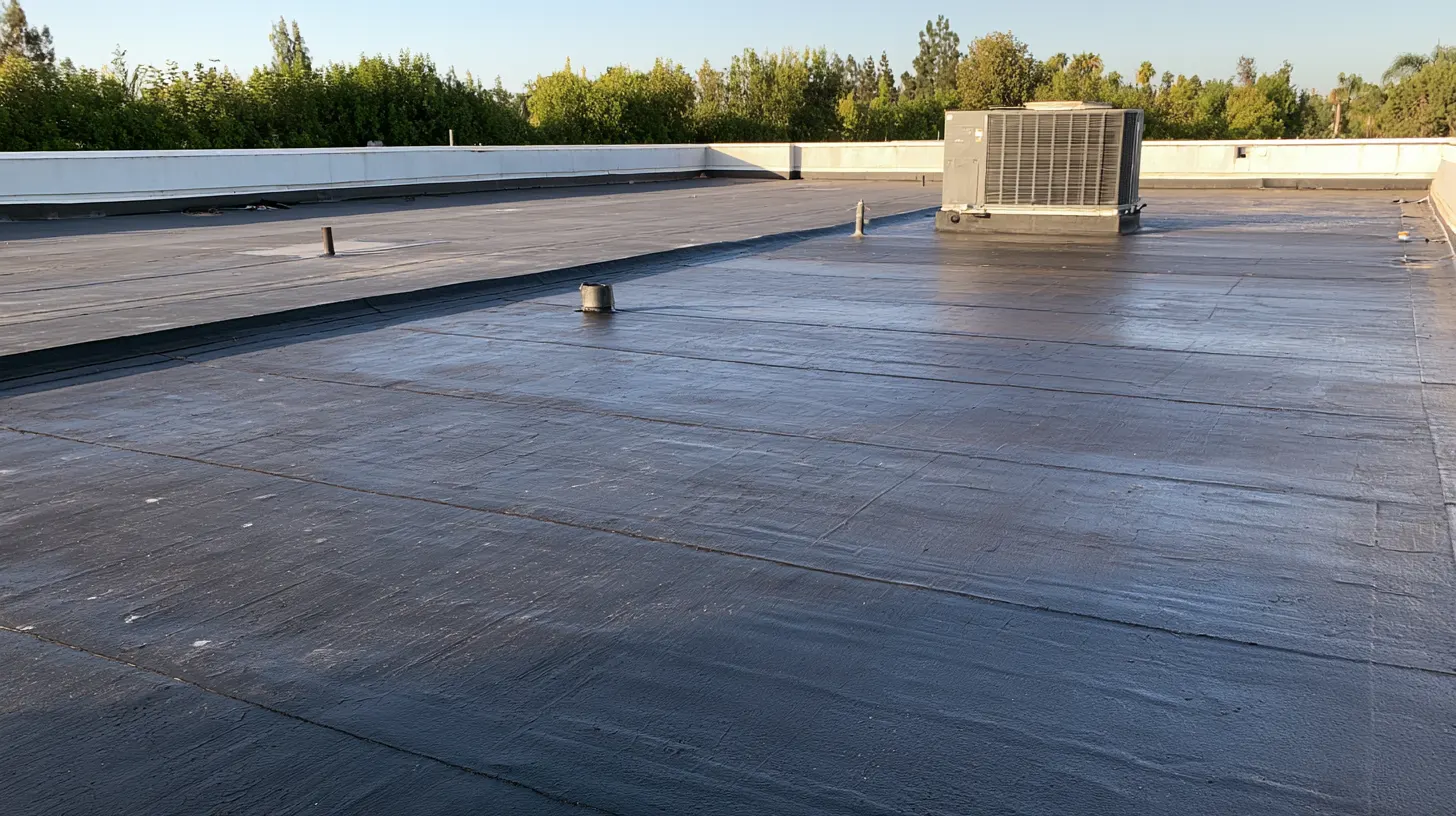
EPDM stands for ethylene propylene diene monomer, a synthetic rubber made mainly from ethylene and propylene, both derived from oil and natural gas. A small amount of diene lets the polymer chains cross-link, so the rubber stretches and returns to shape instead of deforming permanently. That elasticity is why it performs well where temperatures swing widely.
The finished membrane is stable and inert, and it resists UV and ozone. The International Residential Code requires thermoset single-ply roofs like EPDM to have a design slope of at least 1/4 inch per foot for drainage. Most EPDM is black. White EPDM is also available, usually reinforced with a polyester scrim for tear resistance, which makes it a little stiffer than standard black.
EPDM has been in use since the 1960s, and some roofs from the 1970s are still in service. Unlike asphalt products, it does not turn brittle and crack with age, and it stays flexible down to -40°F. A single ply also weighs far less than the multiple layers of a built-up roof.
A full EPDM job costs $5 to $12 a square foot
A full EPDM job costs $5.00 to $12.00 per square foot, covering tear-off of the old roof, new substrate or insulation, and the membrane. Membrane thickness, attachment method and deck complexity move the price within that range.
The rubber itself is only about $0.80 to $2.50 per square foot; labor, adhesives, flashings and insulation boards make up the rest. A standard 1,000-square-foot flat roof on a garage or addition generally runs $6,000 to $9,000. Membrane is ordered by the square foot, so the area from the roofing calculator tells you how much sheet you are paying for. Larger homes and tall commercial buildings pay more for labor because materials have to be lifted higher.
Most roofs also need insulation. Polyisocyanurate (polyiso) board is the standard, giving the membrane a flat, stable surface and good R-value. A one-inch board adds about $0.70 per square foot in materials, and the thicker boards needed to reach R-30 under current energy codes can cost $3.00 per square foot or more.
Labor rates depend on location. In large metro areas, specialized roofing crews may charge $75 to $120 per hour per worker. EPDM involves solvents, seam tape and precise detailing, so hire a roofing crew rather than a general handyman. An experienced crew can usually dry-in a 1,500-square-foot roof in a day, weather permitting.
What thickness of EPDM do you need?
Most homes are best served by 60 mil. Thickness is measured in mils, and one mil is 1/1000 of an inch.
- 45 mil is the entry-level residential grade. It is about as thick as a dime and the least expensive, but also the easiest to puncture with falling branches or foot traffic.
- 60 mil is the standard for a long-lasting roof. It is roughly the thickness of a quarter and offers the best balance of cost and service life.
- 90 mil is for heavy traffic or hail. It is heavy and harder to handle but offers the most puncture resistance.
Thickness also sets warranty length. Carlisle, for example, makes its 45-mil Sure-Seal systems eligible for 25-year warranties and its 60-mil systems eligible for 30-year warranties when the required detailing is used. It offers a 40-year, non-prorated material warranty on its 90-mil EPDM.
Standard black EPDM is non-reinforced. Reinforced sheets sandwich a polyester mesh between two layers of rubber to limit stretching, which matters in mechanically attached systems with strong wind uplift. Non-reinforced rubber is easier to shape around pipes, corners and curbs, so it suits complicated roofs.
EPDM is installed one of three ways
EPDM is installed one of three ways: fully adhered, ballasted or mechanically attached. The method determines how the roof handles wind and how long it lasts.
Fully adhered is the usual choice on houses. Adhesive is applied to the substrate and the back of the membrane, allowed to become tacky, and the sheet is rolled into place with a heavy roller to remove air bubbles. Because the sheet is bonded edge to edge, wind has no gap to get under, and this method has the best uplift resistance of the three.
Ballasted systems are the fastest to install and common on large commercial roofs. The membrane lies loose over the insulation with its edges secured, and three to four inches of smooth river rock or concrete pavers hold it down. It is inexpensive, but the structure must be engineered for an extra 10 to 15 pounds per square foot, and finding a leak means moving the ballast.
Mechanically attached systems pin the sheet to the deck with heavy screws and plastic or metal plates, usually along the seams, with the next sheet lapped over the fasteners. This method suits decks that cannot carry ballast or weather too cold for adhesive to cure. Its weakness is billowing: in high wind, air pressure from inside the building lifts the sheets, and repeated flexing can back out fasteners or tear the rubber.
Shrinkage and seams are EPDM's weak points
EPDM shrinks a small percentage over its life. On a 50-foot roof, even 1 percent shrinkage pulls six inches at the edges. If the perimeter is not anchored, the membrane pulls away from walls and flashings and lets water in.
Reinforced perimeter strips (RPS) prevent this. They are fastened to the deck at the base of every wall and curb, and the field sheet bonds to them so it cannot creep inward. If a quote does not mention perimeter securement, expect problems at walls and curbs long before the membrane wears out.
Seams are the other weak point. Older roofs used liquid seam adhesive, which breaks down with heat and moisture. Modern installations use double-sided, pressure-sensitive butyl EPDM seam tape, which forms a bond stronger than the rubber itself when applied with primer.
Seam failures usually come from poor preparation. The rubber must be cleaned with the specified solvent, primed and then taped. Skipping the primer or taping over a damp or dirty surface eventually causes the seam to open up, a failure roofers call fish-mouthing.
EPDM needs a smooth, clean substrate
EPDM needs a smooth, clean substrate. It cannot go directly over old shingles, gravel or rough wood, because anything sharp will slowly wear a hole through the membrane as the building moves.
Best practice is a recovery board or polyiso insulation over the old deck. Over a heated space, code usually requires a set R-value, which in many places means at least 5.5 inches of polyiso to reach R-30.
The boards are fastened with special screws and three-inch metal plates, and the pattern matters. The field of the roof may need eight fasteners per board, while corners and edges, where wind uplift is strongest, may need 16 or even 32.
Some assemblies also include a vapor barrier between the deck and the insulation. Without one, warm, moist indoor air can reach the cold underside of the membrane, condense, and cause mold or rot.
Climate decides between black and white EPDM
Climate decides between black and white EPDM. Black is the standard: highly UV-resistant and heat-absorbing, which helps in northern climates by melting snow and ice faster and slightly lowering heating costs.
White EPDM, often sold as cool roofing, reflects far more sunlight. ENERGY STAR notes that a clean white roof reflecting 80 percent of sunlight stays about 50°F cooler than a gray roof reflecting 20 percent, a large difference in the South, where air conditioning dominates energy use.
White EPDM has drawbacks. It costs considerably more than black, and the white is usually a laminated layer or factory coating that can peel or wear over the years. It also shows footprints and dirt, and because it stays cooler, it dries more slowly after rain or dew. Without a proper vapor barrier, some assemblies collect algae or moisture.
Can you repair an EPDM roof?
EPDM can be repaired for its entire life. Because it is inert, new rubber bonds to old rubber even after twenty years of sun, while TPO and PVC become harder to weld as they age.
A small hole or tear takes a patch kit. Scrub the area with a scouring pad and EPDM cleaner until it is a dull matte black, apply primer, then apply self-adhering cover tape or a piece of EPDM backed with seam tape. Roll it firmly with a hand roller, and the repair is permanent.
Inspect the roof twice a year. The most important spots are the terminations, where the membrane meets a wall or chimney, usually secured with a metal termination bar and a bead of water-block sealant. If the sealant is cracking or peeling, replace it before water gets behind the membrane.
Keep drains and scuppers clear. EPDM tolerates ponding water (water standing more than 48 hours) better than asphalt roofing, but standing water adds weight and collects dirt. Over time, plants can take root, and some roots are strong enough to puncture the membrane.
Hiring an EPDM contractor
Ask a contractor how much rubber roofing they install. EPDM is chemical-heavy, detailed work, and a shingle company may not have the tools or training to get seams and flashings right.
Ask whether they use uncured rubber for flashings. Cured rubber is the flat, vulcanized sheet on the main roof, and it wants to stay flat. Uncured rubber is soft and stretchy, made for wrapping pipes and corners, and it cures in the sun into the shape it covers. Cured rubber on a complex corner slowly pulls back toward flat and eventually leaks.
A good quote spells out the following:
- Brand and thickness. Firestone/Holcim, Carlisle or Elevate, preferably 60 mil.
- Insulation type. The board type and thickness under the membrane.
- Seam method. Seam tape, stated in writing, rather than liquid adhesive.
- Flashing details. A line stating all flashings follow the manufacturer's printed details, so the warranty stays valid.
- Debris removal. All debris hauled away and the site left clean; rubber scraps and primer cans count as industrial waste.
There are two warranties. The manufacturer's material warranty covers premature membrane failure, which is rare. The contractor's workmanship warranty covers the installation, where most leaks start, and a reputable roofer should offer at least five years on a flat roof.
EPDM suits simple flat roofs on garages and porches
EPDM is often the best choice for a simple flat roof on a garage or porch. It is tougher than rolled asphalt roofing and easier to repair than aged TPO roofing, and it suits climates with large temperature swings.
It does not tolerate grease. Petroleum products make EPDM swell and soften, so if a kitchen exhaust fan vents onto the roof, choose PVC instead.
For most homeowners, 60-mil, fully adhered black EPDM is the dependable choice. With proper perimeter securement and seam tape, thirty years from one installation is a reasonable expectation, which makes it cheaper over time than materials that need replacing every ten to twelve years.
EPDM roofing questions
How long does an EPDM roof last?
Often 25 to 30 years when it is installed well. Thicker sheets can last longer, and Carlisle makes its 90-mil EPDM eligible for a 40-year material warranty. In practice, seams, edge securement and flashings decide how long a given roof lasts.
How much does EPDM roofing cost?
About $5 to $12 per square foot installed, including tear-off, insulation and the membrane. A 1,000-square-foot garage or addition roof usually costs around $6,000 to $9,000.
Is EPDM better than TPO?
It depends on your climate. EPDM has the longer track record, stays flexible in severe cold and is easy to patch even decades later. TPO is white and reflective with heat-welded seams, which suits hot climates, so cold regions tend to favor EPDM and sunny regions tend to favor TPO.
Can you walk on an EPDM roof?
Yes, for occasional maintenance. Heavy or frequent foot traffic can puncture thinner sheets. Install walkway pads around HVAC units and hatches, and choose 60-mil or 90-mil membrane, which holds up better than 45-mil.
Can EPDM be installed over an old roof?
Only over a smooth, solid surface. Contractors usually install a recovery board or polyiso insulation over the old deck first, and code limits re-covering a roof that already has two or more layers. Wet or rotted roofing has to be removed.
Prices are 2026 US national averages and building codes vary by town. Materials, warranties and code adoptions change, so confirm prices with local contractors and code rules with your building department before you sign anything.
Estimate Your Roof Cost
Use our free roofing calculator. No sign-up required.