 RoofingCalculator.io
Signs You Need a New Roof
By RoofingCalculator.io. Updated October 14, 2026. Prices, ratings and code references link to their sources.
Pricing your own roof? Get squares, materials and a 2026 cost range in about two minutes. Free, no sign-up.
Age is the main sign you need a new roof, followed by the wear it causes: curling or cracked shingles, bald spots with granules collecting in the gutters, missing shingles, daylight in the attic, a sagging or soft deck, and recurring leaks. InterNACHI estimates about 20 years for 3-tab asphalt shingles and 30 years for architectural shingles.
Five checks tell you most of what you need to know.
- Check the roof's age. An asphalt roof past 20 years is due for planning, even if it looks fine from the driveway.
- Look at the shingles from the ground. Curling, bald patches, missing shingles and moss across large areas point to replacement.
- Check the gutters. Heavy granule buildup means the shingles have lost their UV protection.
- Go into the attic. Daylight through the boards, damp insulation or dark streaks on the rafters mean water is getting in.
- Sight down the ridge. A sagging ridge or wavy roof planes mean the decking or rafters are damaged.
Most asphalt roofs wear out at 20 to 30 years
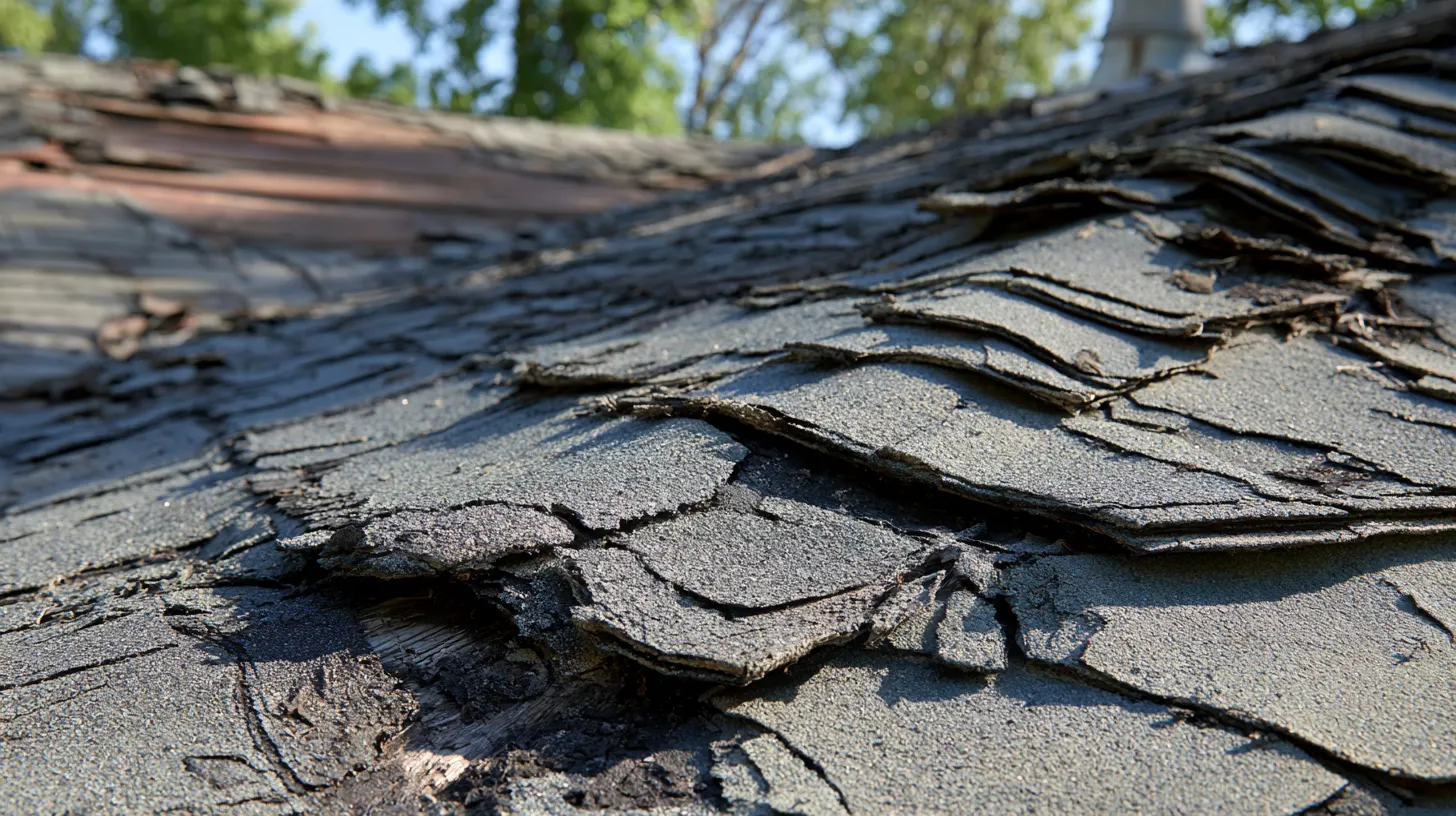
Most asphalt shingle roofs last roughly 20 to 30 years. Architectural shingles sit at the long end, and basic three-tab often fails sooner, especially in hot climates. An overlay, where the new roof was nailed over an old one, shortens that life because heat trapped between the layers ages the new shingles faster. If you have owned the house for 20 years and never reroofed, start planning, even if the roof looks acceptable from the driveway.
Asphalt contains oils that keep it flexible and waterproof, and sun and heat slowly drive them out, a process called volatilization. The shingles stiffen and can no longer flex with temperature changes. After about 20 years, sudden failure becomes more likely, and a single windstorm or heavy rain can cause new leaks. If you do not know your roof's age, find the original permit or home inspection report, or use the other methods in how old your roof is.
Curling shingles are drying out
Shingles that will not lie flat are drying out. Cupping means the edges turn up and the middle sinks, often because the bottom is aging at a different rate than the top, and a humid attic makes it worse. Clawing means the edges turn down and the middle humps up. Both mean the shingles are brittle and vulnerable to wind.
A curled shingle will likely snap underfoot. It can no longer seal out water, and wind catches the raised edge and pulls it loose. Replacing curled shingles one at a time rarely works, because the neighboring shingles are usually just as worn. Curling on more than one side of the roof normally means replacement.
Heavy granule loss means the shingles are failing
Ceramic granules shade the asphalt from UV, and bare asphalt breaks down quickly. A new roof shedding a few granules is normal. An old roof shedding many is failing, and the evidence collects in the gutters as coarse, dark sand.
Bald spots look darker or shinier than the rest of the roof because raw asphalt is showing. Granules also pile up at the base of downspouts. Once the protective layer is gone, cracking speeds up, along with thermal shock, where rapid heating and cooling fractures the brittle asphalt. Left alone, the roof eventually becomes porous.
Damaged valleys let in the most water
A valley is where two roof slopes meet, and it carries more water than any other part of the roof. Newer roofs usually have metal valley flashing or a closed valley of overlapping shingles. Missing, cracked or crumbling shingles in a valley create a serious leak risk directly into the structure of the house.
Valleys often fail first because they handle more water and collect leaves and pine needles that hold moisture against the shingles. Repairing one is a substantial job, since shingles must come off both slopes. Failing valleys usually mean the rest of the roof is close behind, so repairing only the valleys on an old roof rarely makes sense.
Missing shingles expose the deck to weather
A single missing shingle exposes the underlayment and wood deck to the weather, and underlayment is only meant as a backup. Most asphalt shingles are rated for winds between 60 and 130 miles per hour, so shingles blowing off in a moderate breeze mean the sealant bond, the adhesive strip that holds them down in storms, has failed.
Damage then spreads quickly. One gap lets wind under the neighboring shingles, and whole sections can peel off in a single storm. After a strong wind, walk the yard, and if you find pieces of shingle, have the roof inspected. A patch will hold for a while, but on an old, brittle roof the new shingles will not bond properly to the old ones.
Daylight in the attic means the roof has gaps
Daylight through the roof boards is one of the clearest signs. Go into the attic on a sunny afternoon and turn off the light. If light comes through, water, snow and animals can get in as well. The gaps usually appear near the chimney, along the ridge or in the valleys, and they mean the decking has shifted or the underlayment has failed.
Check for damp insulation and dark streaks on the rafters while you are there, since both indicate a leak. Air should move through the attic by way of the vents, but no light should come through the shingles. Even small pinpricks of light mean the shingles have lost their integrity, often because poor ventilation has overheated them from below.
A spongy or sagging deck means the decking has failed
A roof should feel as solid as a floor. If it feels bouncy or soft, the decking under the shingles, usually OSB (oriented strand board) or plywood, has likely failed. Water got past the shingles, soaked into the panels and rotted the wood until it lost its strength. Rotten decking is dangerous, because heavy snow can cause part of it to collapse.
Sagging is visible from the street. A straight ridge line means the structure is healthy, while a ridge that dips in the middle or wavy roof planes mean water has reached the rafters or decking. Rotten decking raises the cost of the new roof, with contractors charging $100 to $150 per sheet of plywood. Caught early, the rot stays out of the main trusses.
Cracked flashing lets water in at chimneys and vents
Flashing is the thin metal, usually galvanized steel or aluminum, that directs water away from chimneys, dormers and vent pipes. Older houses often had flashing sealed with roof cement or tar, which eventually cracks and peels; modern flashing is tucked into the masonry or woven in with the shingles. Rusty, cracked or missing flashing will soon cause a leak.
Plumbing vent boots are another weak point. They are usually rubber, and after about 10 years of sun the rubber cracks and water runs down the pipe into the walls. A new boot is a small job, but failing chimney flashing often means the whole roof is old. Contractors also check the step flashing along walls, where exposed and corroded metal means the seal has failed.
Moss does more damage than algae
Algae appears as black streaks and is unsightly but not proof of failure on its own. Moss is the real problem. It grows in thick clumps that hold water against the shingles, and in cold climates that water freezes and thaws, lifting the shingles and breaking their seal. Its roots can also grow into the shingle mat, causing permanent damage.
Moss across a large part of the roof means the shingles stay wet for long periods, which speeds the breakdown of their organic components. A low-pressure cleaner can treat it, while hard scraping or a pressure washer strips granules and makes things worse. Moss that has been there for years has probably softened the shingles beyond saving. Zinc or copper strips and regular maintenance prevent it, but once the damage is done, the roof needs replacing.
Ceiling stains are the last warning
Brown rings on the ceiling are the last warning, and they can appear far from the actual leak because water runs along rafters and beams before it drips. By the time a stain shows, the roof has probably leaked for months, and the attic insulation is usually soaked well before the drywall shows it.
Check inside closets and around the base of the chimney for unnoticed leaks, along with peeling paint or bubbling wallpaper near the ceiling. Stains that appear after heavy rain or snowmelt mean the roof is no longer shedding water, and left alone, that leads to mold and rot. Patching the drywall without fixing the roof wastes money, since the next storm will undo it. If the leak is confirmed, schedule the replacement.
How much does a new roof cost?
A standard 2,000-square-foot roof in asphalt shingles typically costs $7,600 to $15,000 installed, roughly $3.80 to $7.50 per square foot, with basic three-tab at the low end and architectural at the high end. Size, pitch and material set the price. These prices usually include tearing off and disposing of the old shingles. Where your house falls depends mostly on its square count, which the roofing calculator works out from the footprint and slope.
| Material | Installed cost, 2,000-square-foot roof |
|---|---|
| Asphalt shingles | $7,600 to $15,000 |
| Metal | $12,000 to $32,000 |
| Concrete tile | $18,000 to $32,000 |
| Natural slate | Higher than concrete tile |
Metal can last 50 years or longer. Concrete tile and slate are heavy enough that the framing should be checked, and possibly reinforced, before installation. Labor is often more than half the bill, and steep pitches or many dormers raise it further. Set aside an extra 10 percent for surprises, most commonly rotten decking under the old shingles.
What should a roof replacement include?
A full replacement includes tearing off the old roof, inspecting the decking, and installing new underlayment and flashing as well as shingles. A roof-over, where new shingles are nailed on top of the old, is usually not worth it, and the International Residential Code prohibits it where the roof already has two or more layers or the existing covering has deteriorated. Nobody can see rot through two layers of shingles, and the extra layer adds weight and can limit warranty options, which is why tear-off is standard.
Underlayment matters. Synthetic underlayment has largely replaced felt paper because it resists tearing and moisture better. In cold climates, ice and water shield, a self-adhering membrane along the eaves and in the valleys, prevents ice dam leaks. Make sure every quote lists these items; if one does not, you are not comparing the same job.
Questions for the contractor
The crew matters as much as the shingles.
- Can you provide a written estimate? It should separate labor, materials and disposal.
- Do you carry general liability and workers' comp? Both are required, or an injury on your property could become your responsibility.
- Can you share references from the past year? A reputable company provides them readily.
- What warranties apply? The manufacturer covers materials, often 25 to 50 years on asphalt shingles, and the contractor covers workmanship, usually two to ten years.
- Who will supervise the crew on site? A dedicated project manager keeps the installation to the manufacturer's specifications.
- How will you protect the yard? Good crews lay tarps and run magnetic sweepers over the lawn to collect nails.
Materials worth considering
- Architectural asphalt shingles. Asphalt remains the standard balance of cost and durability, and architectural shingles are thicker and more wind-resistant than three-tab.
- Class 4 impact-resistant shingles. In hail-prone areas, they withstand large hailstones without cracking the mat and can lower insurance premiums.
- Metal. Reflective coatings can noticeably reduce summer cooling costs in hot climates. Standing seam, with hidden fasteners and fewer leak points at screws, costs more but lasts a long time with very little maintenance.
- Synthetic slate and shake. For historic houses, they resemble the real materials while weighing less and resisting damage better.
Should you repair or replace your roof?
Roof repair and replacement decisions come down to damage and age. A roof under 10 years old with one leak usually needs only a repair, such as a few shingles or a resealed vent pipe. On a roof over 15 years old with granule loss or curling, repairs mostly buy time, and a long series of small fixes can cost more than a new roof.
Resale matters too. Buyers are wary of old roofs because nobody wants a large bill soon after closing. A new roof rarely recovers its full cost at sale, but it recovers a good share and removes a major objection. If more than 30 percent of the roof is worn or damaged, replace all of it so everything ages together for the next twenty years or so.
How to prepare for installation day
Roof replacement is loud and messy, so a little preparation helps.
- Clear the driveway. Move cars so the crew has room for the dumpster and equipment.
- Take breakables off the walls. Hammering shakes items loose inside the house.
- Secure pets. Keep them in a back room or away from the house for the day so they cannot slip out an open gate.
Most houses take one to three days. When rain is possible, crews work in sections and tarp any open areas overnight. When the job is done, walk the property with the contractor to check the flashing and yard cleanup. Pay the final bill only when you are satisfied and every lien waiver is signed, which protects you from claims by material suppliers or subcontractors later.
Signs you need a new roof questions
How do I know if my roof needs to be replaced?
Start with its age. If it is near the end of the material's normal life, look for widespread curled or cracked shingles, bald spots, daylight through the boards, a deck that sags or gives, or leaks appearing in new places. A professional inspection can confirm what you see from the ground.
How long does a roof last?
InterNACHI estimates about 20 years for 3-tab asphalt shingles, 30 for architectural and 40 to 80 for metal. Ventilation, climate and installation quality can shift those numbers a few years in either direction.
Can a roof last 30 years?
Yes. Architectural shingles reach about 30 years with good ventilation and basic care, and metal, tile and slate last much longer. A 30-year-old 3-tab roof, however, is well past its expected life.
Is granule loss a sign I need a new roof?
It depends on how much. A small amount from a new roof is normal. Gutters full of grit on an older roof, or bald patches where black asphalt shows, mean the UV protection is wearing off and the shingles are close to the end.
What happens if you wait too long to replace your roof?
Leaks spread into the insulation, then the decking and framing, and mold can follow. A replacement you could have planned becomes a much larger bill. An old roof can also cause insurance problems and make the house harder to sell.
Prices are 2026 US national averages and building codes vary by town. Materials, warranties and code adoptions change, so confirm prices with local contractors and code rules with your building department before you sign anything.
Estimate Your Roof Cost
Use our free roofing calculator. No sign-up required.