 RoofingCalculator.io
Roof Replacement vs Repair
By RoofingCalculator.io. Updated October 14, 2026. Prices, ratings and code references link to their sources.
Pricing your own roof? Get squares, materials and a 2026 cost range in about two minutes. Free, no sign-up.
Repair a roof when the damage is in one spot and the shingles still bend instead of snapping. Replace it when it is near the end of its life, when more than about 30 percent is worn or damaged, or when the deck underneath has gone soft. A typical repair costs $300 to $3,500, while a new architectural shingle roof costs about $450 to $750 per square installed.
Four checks settle the decision for most homeowners.
- Check the roof's age. In the first half of its expected life, repair almost anything isolated; past about two-thirds, weigh every repair against a new roof.
- Apply the 30 percent rule. If more than 30 percent of the roof shows wear or damage, replacement usually costs less in the end.
- Inspect the decking. Soft or rotted wood under the shingles rules out a simple patch.
- Compare the cost per year. A string of repairs on an old roof can cost more per year than a new roof spread over its life.
Roof age matters most
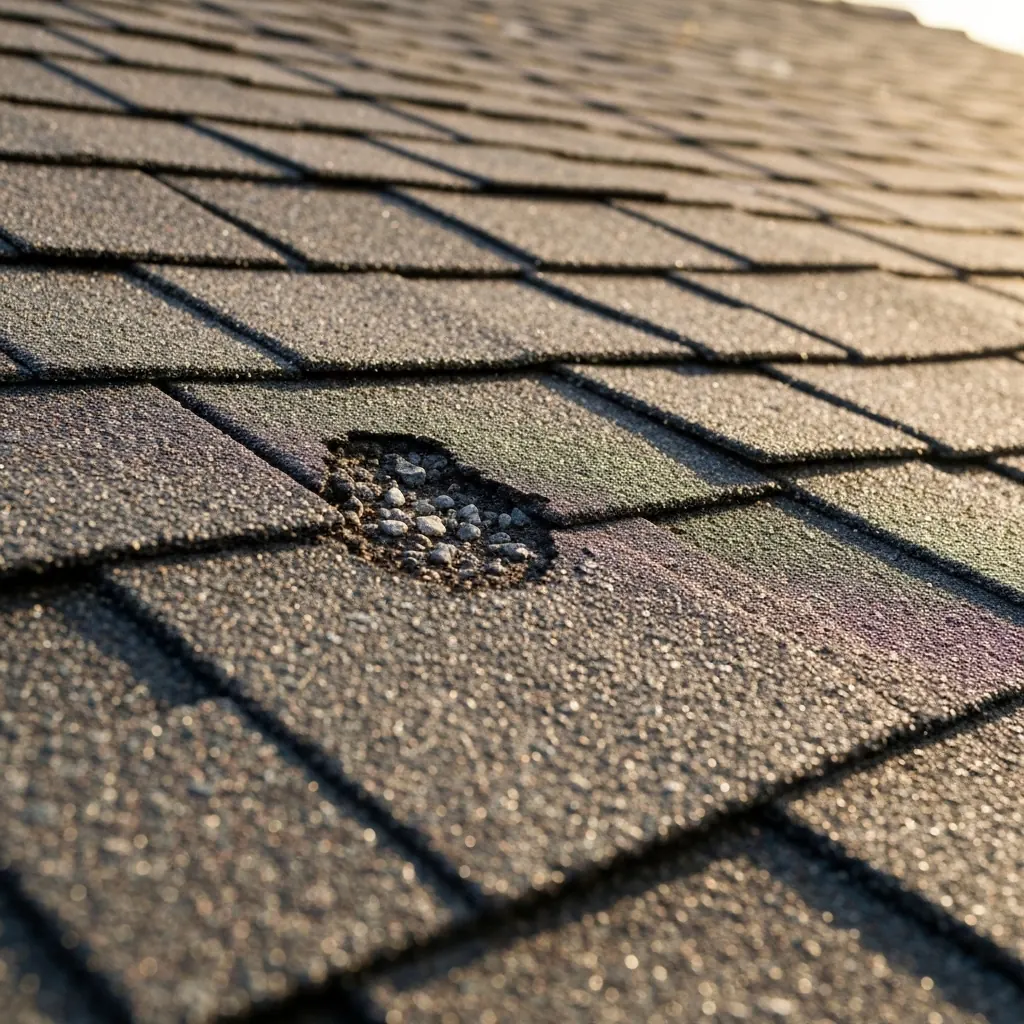
Age matters most, because it tells you how much life a repair actually buys. InterNACHI puts 3-tab asphalt shingles at about 20 years and thicker architectural shingles at about 30. In the first half of that span, fix almost any isolated problem. Past about two-thirds, weigh every repair dollar against a new roof.
Consider the same leak at a plumbing vent on two houses. On an eight-year-old architectural roof, a $400 boot replacement fixes it and leaves two decades of life. On a 22-year-old 3-tab roof, the same fix stops this leak, but the surrounding shingles are brittle, the sealant strips have released, and the next storm will find another weak spot.
The shingles themselves confirm the age. Widespread granule loss, curling or cupping tabs, and shingles that crack when lifted mean the roof is close to finished; the full list of signs you need a new roof covers each one. The practical test is simple. If a roofer cannot lift the shingle next to the damaged one without it snapping, a clean repair is no longer possible.
Replace when more than 30 percent of the roof is damaged
If more than 30 percent of the roof shows wear or damage, replacing usually beats repairing on cost. A fallen limb or one local leak is worth patching. Leaks in three different places, or wind stripping shingles from several faces of the roof, mean the labor for all those separate fixes starts approaching the price of a full tear-off.
Large patches also leave a checkerboard look. New shingles rarely match old ones because of weathering and dye lots, which hurts curb appeal and resale. A roof with 30 percent new shingles also still sits on 70 percent old underlayment, the backup water barrier. If that layer is failing across the roof, new shingles on top will not keep water off the wood.
Roof repair vs replacement cost
Roofers price by the square, a 10-by-10-foot area of 100 square feet. A typical 2,000-square-foot house has about 20 to 30 squares of roof once pitch and overhangs are included. The roofing calculator gives a closer count for your house, and every figure below scales with it.
| Job | Typical cost |
|---|---|
| Small repair (a few shingles, plumbing vent leak) | $300 to $800 |
| Chimney or valley flashing repair | $1,500 to $3,500 |
| Asphalt shingle replacement | $450 to $750 per square ($11,250 to $18,750 for a 2,500-square-foot roof) |
| Metal roof replacement | About $600 per square (corrugated) to $1,600 (standing seam), roughly $15,000 to $40,000 |
Repair prices cover labor, a minimum service fee and a little material. Replacement costs more up front but often less per year. A $15,000 roof that lasts 25 years costs $600 a year, while three $1,200 repairs over five years cost $720 a year and still leave you with an old roof.
Many contractors apply a second test. If the roof is past the midpoint of its life and a single repair quote exceeds about a quarter to a third of the cost of a new roof, the repair rarely makes sense. Most of that money is labor on a roof you will replace soon anyway, while a new roof resets the clock.
Rotted decking usually forces a replacement
Rotted decking usually forces a replacement. The deck sits under the shingles and underlayment and is usually 1/2-inch or 5/8-inch plywood or oriented strand board (OSB), and a leak that went unnoticed for months may have rotted it.
- On the roof. The deck feels spongy underfoot or sags between rafters.
- In the attic. Look for dark stains, mold or daylight showing through.
Nails will not hold in rotted wood, so a shingle patch is not enough. The shingles come off, the damaged wood is cut out and new sheathing goes in. If more than a few sheets are affected, costs climb quickly and replacement becomes the better choice. New shingles over soft decking are a safety hazard and will fail early.
Most leaks start at flashing, not shingles
Most leaks start where the roof meets something vertical, such as a wall, chimney or skylight, rather than in the middle of the shingles. Those joints are sealed with flashing, usually galvanized steel, aluminum or copper.
Walls get step flashing, separate L-shaped pieces woven in with each shingle course. Chimneys get step flashing plus counter-flashing set into the mortar joints. Flashing that is rusty, pitted or pulling away from the wall needs replacing.
If the shingles are in good shape, a flashing repair often solves the problem. The roofer removes the shingles around the chimney or wall, installs new metal and ice-and-water shield, then weaves in new shingles, for about $750 to $2,000. If the shingles are brittle, the new flashing cannot be worked in properly, and a full replacement is needed to make the roof watertight.
The roofing material sets the timeline
The roofing material sets the timeline. For asphalt, the 20- and 30-year marks above apply, and most decisions happen in the last third of that span. Other materials last much longer and change what a repair involves.
- Metal. Standing seam in particular can last 50 years or more. Repairs are rare and usually minor, such as tightening fasteners or replacing worn neoprene washers on exposed-fastener panels. A metal roof that is rusted throughout and leaking has to be replaced.
- Tile and slate. These last longest, often 75 to 100 years or more. The tiles rarely fail, but the underlayment beneath them does after 30 to 40 years. Roofers then do a tile lift and reset, removing the tiles, replacing underlayment and flashing, and reinstalling the same tiles. It is labor-intensive and can cost a large share of a new roof, but it keeps the historic look and the expensive material.
Poor attic ventilation makes roofs fail early
A roof that is failing early often has poor attic ventilation. Without enough airflow, heat and moisture build up, and in summer the attic can get far hotter than the outdoors, baking the shingles from below. The asphalt loses its oils and turns brittle years ahead of schedule.
In winter the result is ice dams. Warm air leaking from the house melts snow on the roof, the water refreezes at the cold eaves, and the dam pushes water back under the shingles and into the house.
A roof failing at 12 or 15 years needs more than a repair. Check for intake vents at the soffits and exhaust vents at the ridge or gables. A replacement lets the roofer cut a new ridge vent and balance intake with exhaust so the new roof reaches its full rated life.
Will insurance pay to repair or replace a roof?
Most policies cover sudden, accidental damage such as wind or hail. If a storm tears off a few shingles or a limb punches through, insurance usually pays for the repair.
Widespread damage brings in matching rules. Some states have laws or regulations requiring insurers to restore a reasonably uniform appearance. If your shingles are discontinued and a patch would clash, the insurer may have to pay for the whole slope or the whole roof.
The policy type matters as much as the damage. Actual Cash Value (ACV) pays the depreciated value, so the check on a 20-year-old roof is small. Replacement Cost Value (RCV) pays today's replacement cost regardless of age. Read your policy, and have a roofer present for the adjuster's visit to point out subtle damage such as hail bruises, which can become leaks years after the storm.
Most experts advise against roof overlays
An overlay, or re-roof, is a second layer of shingles nailed over the old ones, and it typically saves $1,000 to $3,000 on an average house by skipping tear-off labor and dump fees.
Most experts advise against it, and the International Residential Code does not allow a recover at all when the roof already has two or more layers or is water soaked or deteriorated. The guide on shingling over shingles covers the rules in detail.
- Weight. A second layer can add 5,000 to 7,000 pounds to a standard house, which may exceed what the rafters were designed to carry.
- Hidden deck. Nobody sees the deck, so rot or mold keeps spreading underneath.
- Poor sealing and heat. Shingles over an uneven surface seal less well and lift more easily in wind, and heat trapped between layers shortens the new shingles' life.
- Warranty limits. Some manufacturer warranties limit coverage on overlays, and many enhanced system warranties require a full tear-off.
- Resale. A home inspector will flag the double layer, and the buyer may ask for a credit toward a new roof.
Questions to ask the roofer
When the evidence is mixed, the contractor's quality decides the outcome. Avoid anyone who offers a one-page estimate with only a total; a real proposal names the shingle brand, the underlayment (synthetic is better than felt) and exactly where the flashing goes.
- Will you install new drip edge? Drip edge is the metal flange at the eaves and rakes that directs water into the gutters and away from the fascia. Some crews reuse old, bent drip edge to save time, so insist on new.
- What nailing pattern will you use? High-wind warranties often require six nails per shingle instead of the standard four.
- How will you protect the yard? A tear-off drops thousands of pounds of debris. Good companies use dump trailers such as the Equipter or heavy tarps over shrubs and windows.
- What labor warranty do you offer? Shingle manufacturers warranty the material, not leaks from poor installation. Five to ten years of labor warranty is standard on a replacement, while repairs usually get a year or two on the patched area only.
Low-slope roofs are harder to repair
Low-slope roofs, with a pitch between 2:12 and 4:12, leak more easily because water moves slowly across them. Repairs on them often fail as water wicks sideways under the shingles, and these roofs often need ice-and-water shield over the entire surface instead of only along the eaves.
Roofs with many valleys, dormers and mixed pitches are also harder to repair. Every valley collects water, and fixing a valley leak means stripping shingles back several feet on both sides, so a careful patch can cost a large share of redoing that whole face. On a roof with many features that is over 15 years old, the likelihood of the next leak at another transition makes replacement the safer choice.
Book a replacement outside the busy fall season
Late summer and fall are the busiest roofing months almost everywhere, so prices run higher and waits run longer.
Do not delay a repair. A $500 leak in spring can cause $5,000 of drywall and insulation damage by fall. For a replacement, late spring or early summer is often ideal. Asphalt shingles need warmth to activate the seal strip that bonds them together, and shingles installed in freezing weather may not seal until the following spring, leaving them exposed to winter wind. Some crews hand-seal in cold weather with a dab of roofing cement on every shingle, which adds labor.
Does a new roof add resale value?
A new roof rarely returns its full cost at resale, but it recovers a good share and makes the house easier to sell. If the roof is near the end of its life and you plan to sell in three to five years, replacing it now is often the better choice, because buyers are less likely to hesitate.
A ten-year-old roof with minor damage should be repaired. The goal is to get full use from the original roof without reaching the point of diminishing returns, where keeping an old roof going costs more per year than a new one. Watch for granule loss, check the attic after heavy rain and apply the 30 percent rule, and the answer is usually clear.
Roof replacement vs repair questions
When should a roof be replaced instead of repaired?
Replace it when it is near the end of its expected life, when wear or damage covers roughly 30 percent or more of it, or when leaks keep appearing in new places. Soft or rotted decking and brittle shingles that snap when lifted also point to replacement. Isolated damage on a younger roof is usually worth repairing.
Is it cheaper to repair or replace a roof?
A single repair is always cheaper up front, usually $300 to $3,500. Several repairs on an aging roof, though, can cost more per year than a new roof spread over its life. Compare the yearly cost before deciding on the next repair.
Can you replace just part of a roof?
Yes. A roofer can redo one slope or section, which is common after storm damage on a newer roof. The new shingles may not match the weathered ones exactly, and on an older roof a partial replacement mostly delays the full job.
How long does a roof repair last?
On a sound roof, a good repair can last as long as the rest of the roof. On old, brittle shingles it tends to fail sooner, because the material around the patch is deteriorating. Most roofers warranty repairs for a year or two.
Can you put new shingles over old ones instead of replacing the roof?
Usually once. Code generally allows one overlay, but not over two or more existing layers or over a roof that is water soaked or deteriorated. An overlay hides the decking, adds weight and can shorten the new shingles' life, so a tear-off is usually the better long-term choice.
Prices are 2026 US national averages and building codes vary by town. Materials, warranties and code adoptions change, so confirm prices with local contractors and code rules with your building department before you sign anything.
Estimate Your Roof Cost
Use our free roofing calculator. No sign-up required.