 RoofingCalculator.io
How to Choose a Roofing Contractor
By RoofingCalculator.io. Updated October 14, 2026. Prices, ratings and code references link to their sources.
Pricing your own roof? Get squares, materials and a 2026 cost range in about two minutes. Free, no sign-up.
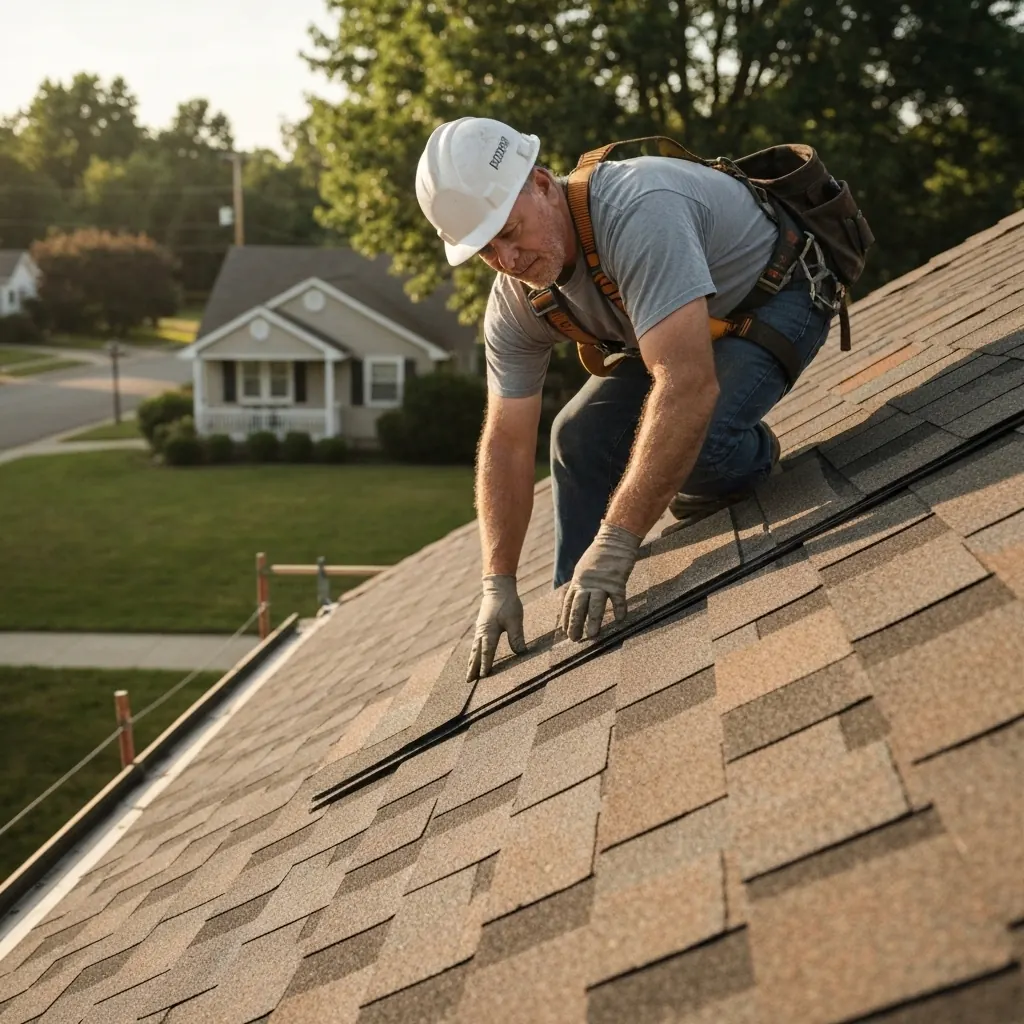
To choose a roofing contractor, verify the license and insurance first, then compare at least three detailed written bids and pick the established local company with the clearest scope, not the lowest price. The National Roofing Contractors Association tells homeowners to "ask for copies of the contractor's liability insurance coverage and workers' compensation certificates" before anything else. That single request eliminates a surprising number of bidders.
The process comes down to five steps.
- Verify license and insurance. Get certificates for general liability and workers' comp sent directly from the contractor's insurance agent.
- Check the company's track record. Look for a permanent local address, years under the same name and recent roofs you can see.
- Compare three itemized bids. Architectural shingles should cost about $450 to $750 a square installed in 2026.
- Avoid high-pressure and storm-chasing tactics. Keep the deposit to 10% to 33% and never pay in full up front.
- Close out the job properly. Inspect the work, confirm the permit is closed and get a lien waiver with the final payment.
What insurance should a roofing contractor have?
A roofing contractor needs three credentials: a state or local contractor license where one is required, general liability insurance and workers' compensation. Do not accept a photocopy from a truck. Ask the contractor's insurance agent to email the certificates directly to you, so you know the coverage is current.
General liability covers damage to your property, such as a bundle of shingles falling through a skylight or a torch scorching the fascia. A $1 million limit is a common baseline for residential roofers. Workers' comp covers the crew, and roofing is one of the most dangerous trades. If an uninsured worker falls from your roof, the medical bills can end up directed at you and your homeowners policy.
Licensing rules vary widely. Some states license roofers statewide, some leave it to counties or cities, and a few have no roofing license at all. Look the company up on your state or city licensing portal, confirm the name matches the contract and check that the license is active. Some manufacturer warranties also require a qualified installer, so an unlicensed crew could cost you coverage later.
How do you check a roofer's track record?
Check how long the company has operated and where it is based. NRCA advises homeowners to check for a permanent place of business, along with a phone number, tax ID and business license. Ten or fifteen years under the same name in your area means the company has a reputation to protect and will likely still exist when you need a warranty repair.
Read reviews on more than one site, and look for patterns rather than the star average. A few complaints are normal. What matters is how the company responded and whether the same problem keeps appearing, such as leaks after installation or unreturned calls. Ask for three recent addresses with the roof type you are getting and drive by them. Straight lines, neat edges and no loose shingles a few years after installation tell you more than a brochure.
Manufacturer certifications are also worth checking. GAF, CertainTeed and Owens Corning all run tiered contractor programs, and the top tiers require training, insurance and a track record. A certified roofer can usually offer an extended system warranty that a non-certified crew cannot. Confirm the certification on the manufacturer's own website, since anyone can put a logo on a truck.
Know what a new roof should cost before bids arrive
Roofers price by the square, which is 100 square feet of roof. In 2026, typical installed prices are:
- 3-tab asphalt: about $380 to $550 a square.
- Architectural asphalt: about $450 to $750 a square.
- Standing seam metal: roughly $1,000 to $1,600 a square.
- Tear-off: around $100 to $150 a square for each existing layer.
A typical 2,000-square-foot two-story house with a 6/12 roof often measures 25 to 30 squares once pitch and overhangs are counted. Thirty squares of architectural shingles cost between $13,500 and $22,500 before tear-off. Steep slopes, extra layers, rotted decking and many valleys or dormers all raise the price.
Set your own baseline before the bids arrive. The roofing calculator converts your footprint and pitch into squares and a price range by material, so you can see quickly whether a quote is reasonable. For a bid far below the others, NRCA's advice applies: "If it sounds too good to be true, it probably is."
A door knocker after a storm is the biggest red flag
The biggest red flag is a stranger at your door the day after hail or high wind. Storm chasers follow weather maps from state to state, sign as many contracts as they can and then disappear. The Federal Trade Commission warns that scammers "pressure you for an immediate decision" and often claim to be working in the area.
Other warning signs include:
- A discount that expires today. Legitimate prices do not depend on signing immediately.
- A contingency agreement before any estimate. It commits you to that company if the insurer approves the claim.
- An offer to waive or absorb your deductible. In many states this is insurance fraud, and it involves you.
- Cash-only terms or full payment before materials arrive. Either is reason to end the conversation.
A deposit of 10% to 33% at signing or on delivery is normal. Fifty percent or more up front can signal cash flow problems, and the FTC's advice is "Don't pay the full amount for the project up front." Hold the final payment until the job is finished, the yard is clean and the permit has passed final inspection.
What the estimate should include
A roofing estimate should list every component:
- Shingle brand and product line (a bare "30-year shingle" is not enough).
- Underlayment type and how many courses of ice and water shield.
- Drip edge, flashing and ventilation.
- How many layers will be removed.
- A per-sheet price for replacing rotted decking, since the deck's condition is unknown until the old roof is off.
Ask the most questions about flashing. Find out whether the step flashing along walls and the chimney flashing will be replaced or only sealed with caulk. Reusing rusty flashing saves the crew perhaps an hour and often causes the first leak within a few years.
Drip edge and ice barrier are code requirements, not upgrades. The International Residential Code requires drip edge at the eaves and rakes of shingle roofs, and in cold areas with a history of ice damming, an ice barrier from the eave to at least 24 inches inside the exterior wall line. A low bid that leaves them out is not a better deal. For a full walkthrough, see how to read a roofing estimate.
Ventilation should be included too. Most shingle manufacturers expect balanced airflow, with intake at the soffits and exhaust at or near the ridge, commonly sized at 1 square foot of net free vent area per 150 square feet of attic floor. A roofer who never looks in your attic cannot size it correctly.
Workmanship warranties cover the most common failures
A new roof comes with two warranties. The manufacturer warranty covers defects in the shingles and is often prorated, so it is worth less each year. The contractor's workmanship warranty covers installation mistakes, which cause far more leaks than defective shingles.
Workmanship warranties usually run two to ten years, and a few contractors offer longer terms. The warranty is only as reliable as the company, and it ends if the roofer goes out of business. For that reason, ask about manufacturer-backed system warranties sold through certified contractors, which can cover materials and labor for decades even if the installer closes. Read the fine print in our roof warranty guide before paying extra for one.
Subcontracted crews blur accountability
Many roofing companies sell the job and pass it to a subcontracted crew. Some of those crews are excellent, but accountability becomes unclear: if the roof leaks, the sales company may blame the crew, and the crew may be in another state.
Ask whether the crew are employees or subcontractors. If they are subcontractors, confirm the liability and workers' comp certificates cover them, and find out who supervises. You want a named foreman or project manager on site every day who can answer nailing and flashing questions on the roof, not just an office phone number.
Nailing is where unsupervised crews cut corners. Most architectural shingles need four nails in the manufacturer's nailing zone, or six in high-wind areas. Nails placed above that zone, or driven too deep by an overpowered nail gun, let shingles slide or blow off in the first major storm.
Ask how the crew will protect your property
A typical tear-off produces two to four tons of debris, so ask how the crew will protect your plants, windows and driveway. Tarps around the house, plywood over the windows and boards under the dumpster wheels are signs of a careful company. If there is no plan, ask again before work starts.
Nails are the main hazard afterward. The crew should run a magnetic sweeper over the lawn, beds and driveway at the end of each day and again when the job is done. A crew lead should walk the roof with you and point out problems such as rotted decking before they are covered, and should provide photos of any replaced decking so extra charges are documented.
Inspect the roof before the final payment
Inspect the finished roof before making the final payment. Look for straight shingle lines, neat flashing at walls and chimneys, clean gutters and no stray nails in the grass. If your area requires a permit, confirm the building department has closed it.
Get a lien waiver with the final payment. It confirms the contractor has paid its suppliers and subcontractors. Without one, an unpaid supplier can file a lien on your house even though you paid the roofer in full. Keep the lien waiver with the signed contract, the manufacturer warranty registration and the written workmanship warranty, since a future buyer or insurer will ask for all of them.
How to choose a roofing contractor questions
How many roofing quotes should I get?
Get at least three quotes for a full replacement. Three is enough to see the real local price range and spot any high or low outlier. Compare them on shingle line, underlayment, flashing and tear-off, not only the total.
How much deposit should a roofer ask for?
A deposit of about 10% to 33% is normal, paid at signing or when materials arrive. Be cautious about paying half or more before work starts. Never pay the full amount up front, and hold the final payment until the roof passes inspection and you have a lien waiver.
What questions should I ask a roofing contractor?
Start by asking for proof of liability and workers' comp insurance, the license number, and the exact shingle brand and line. Then ask who will work on the roof, who supervises, whether the flashing will be replaced, and how long the workmanship warranty lasts.
Is it better to use a local roofer or a big company?
An established local roofer is usually the better choice, since it will still be around if a leak appears in year three. Track record matters more than size. Look for a permanent address, years in business under the same name, and a written workmanship warranty.
What is a red flag when hiring a roofer?
The main red flags are a knock on the door right after a storm, pressure to sign the same day, an offer to cover your insurance deductible and a demand for a large cash deposit. A vague one-line estimate with no brand or materials listed is another warning sign.
Prices are 2026 US national averages and building codes vary by town. Materials, warranties and code adoptions change, so confirm prices with local contractors and code rules with your building department before you sign anything.
Estimate Your Roof Cost
Use our free roofing calculator. No sign-up required.