 RoofingCalculator.io
What Is a Thatch Roof?
By RoofingCalculator.io. Updated October 14, 2026. Prices, ratings and code references link to their sources.
Pricing your own roof? Get squares, materials and a 2026 cost range in about two minutes. Free, no sign-up.
A thatch roof is made of tightly packed dried plants, usually water reed, combed wheat reed or long straw, laid 10 to 15 inches deep on a steep roof so rain runs down the outer tips and drips off. In the US, a natural thatch roof typically costs $15 to $30 a square foot installed, largely because so few people do the work.
Before choosing thatch, weigh four things.
- The material sets the lifespan. Water reed lasts 40 years or more, combed wheat reed 25 to 35 and long straw 15 to 25.
- The roof must be steep. Thatch needs a pitch of at least 45 degrees, and 50 degrees is the trade standard.
- The ridge needs regular replacement. Expect a new ridge every 10 to 15 years at about $3,000 to $7,000.
- Fire risk shapes how you heat the house. Chimney sparks are a leading cause of thatch fires, and insurers often set conditions.
Thatch sheds rain through depth and angle alone
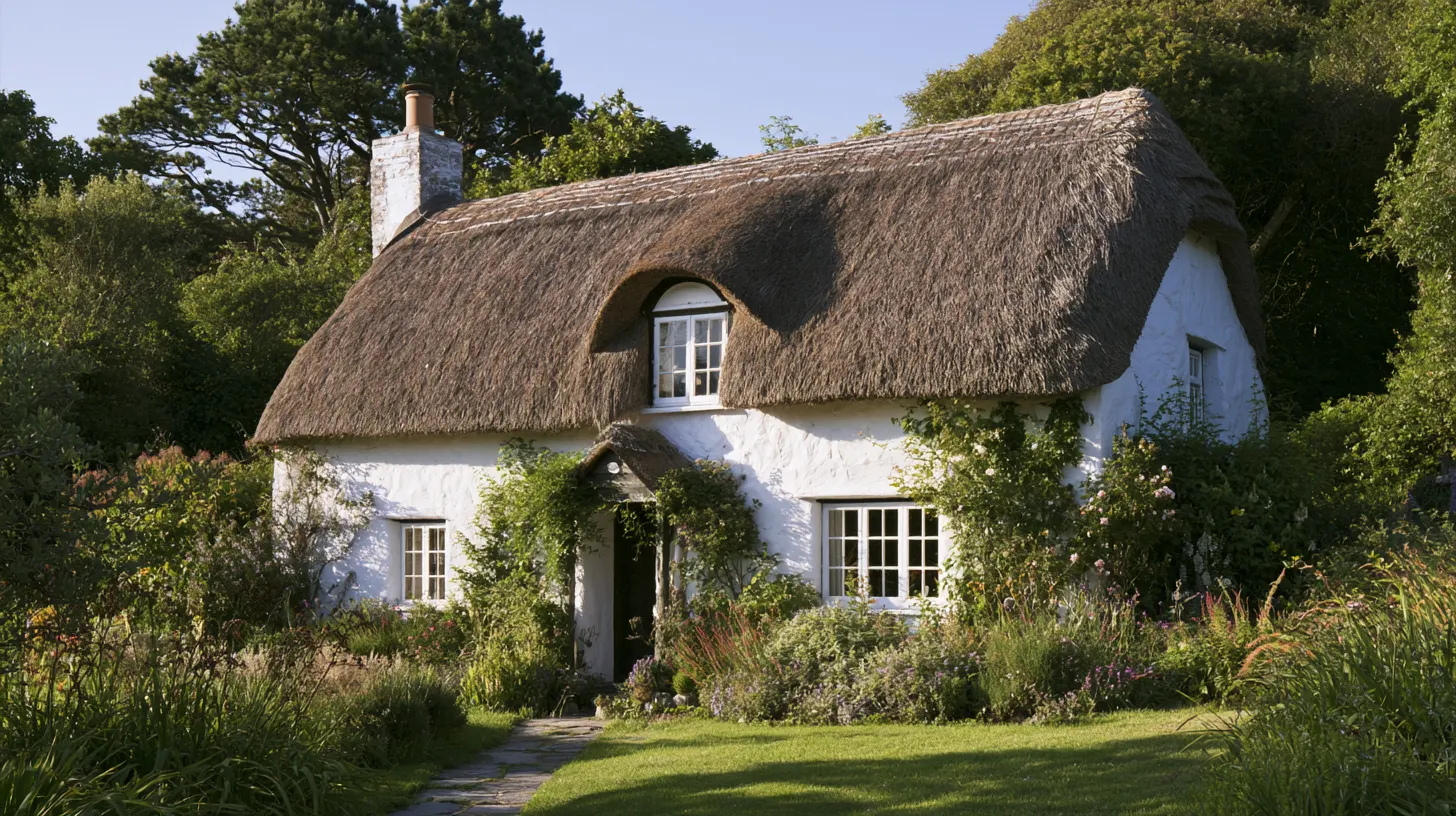
Thatch keeps rain out through depth and angle alone, with no overlapping shingles or metal. Rain runs down the outer tips of the reed or straw and falls off the building before it penetrates more than an inch or two. With 10 to 15 inches of material, the roof also serves as its own insulation, without fiberglass or foam.
The stems are hollow, and the air trapped inside them keeps the house cool in summer and warm in winter. The layer also breathes. Moist indoor air passes out through the roof instead of condensing, as it can in a tightly sealed modern house, so the wood framing underneath stays drier.
Three materials are used for most thatch today:
- Water reed is the toughest and the usual choice for new roofs. It is a stiff, woody grass harvested from wetlands.
- Combed wheat reed is not actually reed. It is wheat straw processed to resemble water reed.
- Long straw is the most traditional. It is soft and shaggy and gives a roof a rounded look.
Water reed outlasts every other natural thatch
Water reed (Phragmites australis) lasts longer than any other natural thatch, often quoted at 40 years or more in a mild climate, and some roofs go well beyond that. Its stems are rich in silica, which resists rot and wear. It is laid butt ends out, giving the eaves and gables a crisp edge.
Combed wheat reed lasts 25 to 35 years. It is laid the same way as water reed but is softer, more attractive to birds and slower to dry. The wheat is grown specifically for thatching, using older varieties with long, strong stalks that modern breeding has shortened. It is cut with a reaper-binder to keep the stalks whole, then threshed to remove the grain without crushing the straw.
Long straw is the most traditional material and lasts 15 to 25 years. Both the ears and butts show on the surface, which gives it a rough, rustic texture. It needs more maintenance and tends to sag. In many regions, local codes or preservation rules require the traditional style, so the choice may already be made.
How a thatch roof is built
Thatch starts with steep timber rafters. Forty-five degrees is the minimum and 50 degrees is the trade standard. On a shallower pitch, water lingers in the hollow stems and soaks in, and the roof rots quickly.
The thatcher works from the eave up to the ridge, one course at a time. Each bundle is tied to the battens with steel wire or traditional hazel sways, long wooden rods held down by U-shaped staples called spars or spickles. As the work progresses, the thatcher dresses the surface with a legget, a flat paddle with a ridged face, tapping the reed ends into a tight, even slope.
The ridge is the weak point. Reed snaps when bent over the peak, so the top is capped with a more flexible material, usually sedge or soft straw. That cap is sacrificial: it takes the worst weather so the main roof does not. The main thatch may last 50 years while the ridge is replaced every 10 to 15. If the ridge is neglected, water rots the thatch from the top down.
A US thatch roof costs $15 to $30 a square foot
A thatch roof in the US costs about $15 to $30 a square foot, or roughly $30,000 to $60,000 for a standard 2,000-square-foot roof. That is much more than in Europe, because skilled thatchers are scarce and the material is usually imported. At 45 to 50 degrees the roof surface is much larger than the house footprint, and the roofing calculator shows how much larger, which is the area a thatcher prices. Those figures do not include the special timber framing needed to carry the weight at that pitch.
Labor makes up about 60 percent of the bill, since thatch is laid entirely by hand. A master thatcher and a helper may spend four to six weeks on a medium-sized house. Material cost depends on the source: good water reed is often shipped from Eastern Europe or Asia, and long straw prices move with the previous year's grain harvest.
Maintenance adds ongoing costs:
- Ridge replacement costs about $3,000 to $7,000, depending on the roofline's complexity and the ridge style (a flush ridge or a wrap-over ridge with decorative cross-patterns).
- Brushing and cleaning every few years removes moss and debris that hold water, at about $500 to $1,500 each time.
Synthetic thatch skips the maintenance and fire concerns
Synthetic thatch offers the look of thatch without the maintenance or fire concerns. It is made of high-density polyethylene (HDPE) or a similar plastic molded to resemble reeds or palm fronds, and it usually installs as shingles or panels over a standard plywood deck and waterproof underlayment.
Materials alone cost about $12 to $20 a square foot, so the upfront price is close to natural thatch, but the long-term cost is lower. It does not rot or mold, and birds and rodents ignore it. Many products test to Class A fire ratings, which can make insurance easier. Good synthetic thatch lasts 20 to 50 years with no sacrificial ridge to replace.
The trade-off is that synthetic thatch does not breathe. It is a decorative rainscreen rather than a thick insulating layer, so the house still needs standard attic ventilation and insulation. Historic restorations often prohibit it because it does not look or weather like natural reed and straw.
Is thatch roofing eco-friendly?
Thatch is one of the most sustainable roofing materials. Reed and wheat are renewable, often harvested by hand or with light machinery, and absorb carbon dioxide as they grow. Old thatch decomposes and can be composted or used as mulch, while asphalt shingles send millions of tons to landfills every year.
Harvesting water reed also benefits wetlands, because regular cutting keeps the reed from crowding out other plants. Shipping reed across an ocean offsets some of that benefit, and local sourcing is not always possible in North America, where commercial reed beds are rare.
A thick thatch roof's high R-value reduces heating and cooling energy for decades. And because it is plant material, it releases no volatile organic compounds (VOCs) or the petroleum-based chemicals found in synthetic membranes and shingles.
Fire is the biggest concern with a thatch roof
Fire is the biggest concern with a thatch roof. Thatch is designed to shed water, so once it ignites, hoses cannot reach the fire burning inside the layers. Chimneys are usually the cause. Fire tests funded by Historic England showed that thatch can be ignited by high-energy sparks and embers ejected from the chimney and by hot flue gases leaking through cracks in the stack, not by heat passing through the masonry as was long assumed.
Two modern measures help. Fire-retardant sprays leave a film on the outside that slows flames. A fire barrier of special aluminum foil or fiberglass cloth between the rafters and the thatch keeps a roof fire from reaching the house's wood frame.
The chimney still matters most. Based on that research, Historic England recommends against wood-burning and multi-fuel stoves in thatched buildings. If you keep one, the guidance calls for:
- Frequent sweeping of the chimney.
- A mesh bird guard so nothing nests in the flue.
- A twin-walled insulated stainless steel liner.
- Ample clearance between the chimney pot and the thatch.
Spark arrestors on the flue top did little or nothing in those tests, so they are not a substitute for the other steps. Insurers often make these measures a condition of coverage.
Birds, moss and damp wear thatch out early
Birds such as sparrows and starlings pull straws from thatch for nesting, which opens paths for water. Many thatchers cover the whole roof, or at least the eaves and ridge, with fine galvanized wire mesh. It is barely visible from the ground and keeps animals out.
Moss and algae grow on north slopes and under trees. A little moss is harmless, but heavy growth holds water against the thatch, and fungus then breaks down the fibers. The best fix is to cut back overhanging branches so sun and wind can dry the roof.
In humid climates, thatch can rot from underneath if it never dries between rains, so it performs best with distinct wet and dry seasons or steady wind. Nitrogen-rich air, common near large industrial farms, can speed decay by feeding the bacteria that break down lignin and cellulose.
Questions to ask a thatcher
Many places do not regulate thatching, so a thatcher's portfolio and reputation are your main guides. Ask these questions:
- Can I see roofs you finished ten or more years ago? A master thatcher should provide addresses you can visit.
- Where does the material come from? For water reed, confirm it is long-lasting Phragmites and not a cheaper, weaker substitute.
- How thick will the thatch be at the eaves and the ridge? Less than 10 inches usually means corners are being cut.
- What is the ridge plan? Get the material and expected replacement interval in writing.
- How will you handle fire protection? Ask whether they use a barrier or a spray, and for a spray, get the manufacturer's spec sheet and reapplication schedule.
- Do you offer a labor warranty? No one can guarantee how long plant material lasts, but a thatcher can stand behind the fixings and workmanship.
A thatch roof needs a new ridge every 10 to 15 years
In the first five years, a thatch roof settles slightly under its own weight and the weather, and its bright gold color fades to gray or silver. That is oxidation, not rot, and the surface becomes tighter and tougher.
Around years 10 to 15, the ridge shows wear: the liggers (horizontal wooden strips on the ridge) break and the sedge cap thins. Replacing the ridge at that point protects the main roof, and with the main thatch kept dry, 40 years or more is realistic.
Around 40 to 50 years, a water reed roof develops deep erosion channels where water always runs. If the thatch feels soft or crumbly when probed, it is at the end of its life. A thin new coat of straw over the old surface can buy time; Historic England notes that a thin rick-coat might last only about 3 years, while a thicker coat can last up to about 10. Most experts prefer to strip the roof to the rafters, inspect the timbers and start over.
Can you convert a house to a thatch roof?
Yes, but converting a house to thatch is a major project. Thatch is heavy, especially when wet, and a soaked roof can weigh 7 to 10 pounds a square foot. A structural engineer needs to confirm the rafters can carry that dead load without sagging.
The thickness also changes the house. Dormers and chimneys may need to be raised or reworked to fit a 12-inch layer. Eaves project farther than with shingles, which protects the siding, and gutters are rethought or, more often, omitted in favor of a gravel drip trench around the house.
Leaving off gutters is deliberate. Loose straw clogs gutters, they overflow and the fascia rots. A wide overhang with drainage at ground level is the traditional approach and often the better way to handle runoff from a steep thatch roof.
Thatch is finding a place in modern design
Thatch is finding a place in high-end modern design. Its soft lines appeal to architects, and it can cover curved, complex roof shapes that rigid materials cannot. Eco-homes use it as a sustainable, high-performance insulating shell.
At tropical resorts, palm fronds and local grasses remain standard. Those roofs are replaced more often, about every 7 to 10 years, but materials are cheap and labor is easy to find. In temperate climates, owners favor European-style water reed for its long life and insulation.
Thatch is not a roof you install and forget. It suits owners who value the craft and accept the upkeep of a roof made of plants, and in return it offers character, strong insulation and a connection to the landscape that factory-made roofing cannot match.
Thatch roof questions
How long does a thatch roof last?
It depends on the material and climate. Water reed lasts longest, often quoted at 40 years or more, combed wheat reed about 25 to 35 years and long straw 15 to 25. The ridge wears out first and usually needs replacing every 10 to 15 years.
Do thatched roofs leak?
Not when they are built correctly. Rain runs down the outer tips of the stems and never gets deep into the layer. Leaks come from a pitch that is too shallow, a worn ridge, or holes opened by birds and moss.
Are thatched roofs a fire risk?
Yes, and thatch fires are hard to put out because they burn inside the layer. Research funded by Historic England found that sparks and embers from wood-burning stoves are a major cause. Sweep the chimney often, fit a bird guard and line the flue, or avoid a wood stove altogether.
How much does a thatch roof cost in the US?
Usually $15 to $30 a square foot installed, or about $30,000 to $60,000 on a 2,000-square-foot roof. The price is high because very few thatchers work in North America and good water reed is often imported.
Can you get a thatch look without real thatch?
Yes. Synthetic thatch made of polyethylene or similar plastics imitates reed or palm and installs over a standard deck and underlayment. It does not rot or attract birds, and many products are fire-tested, but it does not insulate or breathe like natural thatch.
Prices are 2026 US national averages and building codes vary by town. Materials, warranties and code adoptions change, so confirm prices with local contractors and code rules with your building department before you sign anything.
Estimate Your Roof Cost
Use our free roofing calculator. No sign-up required.