 RoofingCalculator.io
Storm Damage Roof Repair
By RoofingCalculator.io. Updated October 14, 2026. Prices, ratings and code references link to their sources.
Pricing your own roof? Get squares, materials and a 2026 cost range in about two minutes. Free, no sign-up.
After a storm, inspect the roof from the ground, photograph all damage, have any opening tarped within a day or two, and open an insurance claim before signing with a contractor. A small wind repair usually costs $500 to $1,500. Replacing a typical 20-square architectural shingle roof costs about $11,000 to $18,000 with tear-off.
The process follows five steps.
- Stay safe and document everything. Stay off the roof, start a written log and photograph every side of the house.
- Inspect in three passes. Check the yard, the roof through binoculars and the attic.
- Tarp any openings within 24 to 48 hours. Most policies require you to prevent further damage.
- File the claim and meet the adjuster. Have your roofer present to point out damage the adjuster might miss.
- Hire a local, insured contractor. Avoid storm chasers who pressure you to sign or offer to waive your deductible.
Check for hazards before you check the roof
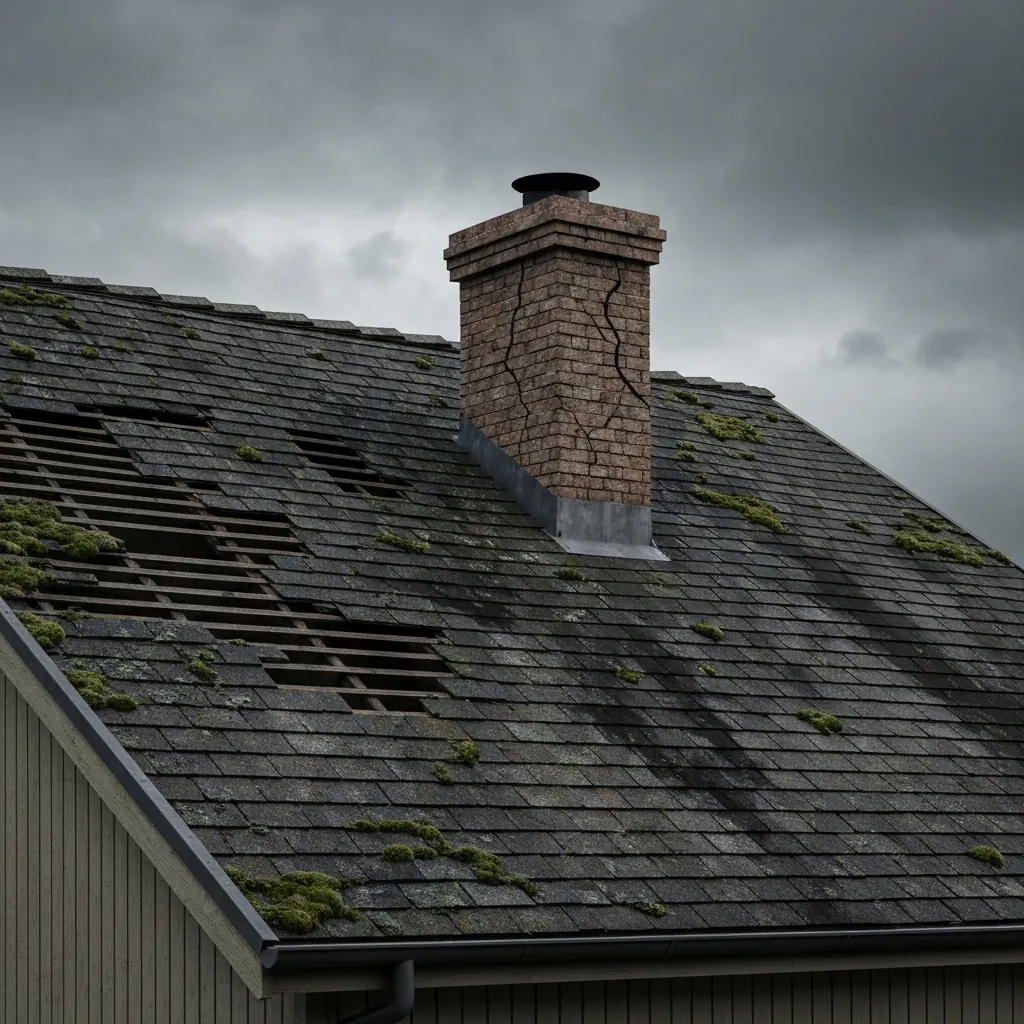
Wait until the storm has fully passed, then walk around outside and check above and below you. Downed power lines, cracked limbs that could fall hours later and puddles near live wires are more dangerous than the roof. Wear thick-soled boots, keep metal ladders away from overhead lines, and do not climb onto a roof that is wet, covered in debris or missing sheathing.
The National Roofing Contractors Association encourages homeowners to "assess roof damage from ground level" and leave closer inspection and repairs to a professional roofing contractor. That protects your claim as well as your safety. If you fall or tear up shingles attempting a quick patch, a covered loss can become a dispute over who caused the damage.
Start a log the same day. Record the date and time of the storm, the wind and hail you observed and when you first noticed a leak. Insurers compare that timeline with weather records, so an accurate log makes approval easier. Take wide photos of every side of the house and close-ups of anything broken, and keep the files with their original dates.
Storm damage inspection checklist
Inspect in three passes: the yard, the roof through binoculars and the attic. Each pass catches damage the others miss.
- Walk the perimeter. Look for shingle pieces, ridge cap fragments or torn flashing on the lawn, and heavy granule piles where the downspouts empty. Dented gutters, cracked vinyl siding, shredded window screens and pitted patio furniture show where hail hit and how hard. If you find hailstones, photograph one next to a coin or ruler before it melts.
- Scan the roof with binoculars. Focus on ridges, hips, eaves and rakes, where wind pressure is highest. Look for missing shingles, tabs sitting higher than their neighbors, a horizontal crease near the top of an exposed tab, exposed nail heads and flashing pulled away from a wall or chimney. Check the soft metal as well: box vents, pipe flashing and valley metal dent more easily than shingles, so dents there strongly suggest the shingles were hit too.
- Check the attic. Use a strong flashlight, ideally during or right after rain, and trace the underside of the deck. Look for dark wet spots, drips on nail tips, daylight around pipes and damp, matted insulation. Water often runs along a rafter before dropping, so a ceiling stain may be several feet from the actual hole. Extreme wind can also drive rain through ridge or gable vents, so note a damp patch under a vent, but it does not always mean the roof covering failed.
- Inspect gutters and downspouts. Note sagging runs, brackets pulled from the fascia and downspouts that no longer carry water away from the foundation, and include them in the claim photos.
A professional roof inspection typically costs $150 to $400 and includes a written report with photos, which adjusters take more seriously than a homeowner's notes.
How can you tell hail damage from wind damage?
Hail damage is scattered and roughly circular, while wind damage shows up as missing, lifted or creased shingles concentrated along edges and ridges. Knowing which you have helps when you describe it to the adjuster, and the hail damage roof guide covers hail in more detail.
| Hail size | Typical effect on asphalt shingles |
|---|---|
| Under about 1 inch | Rarely functional damage on a newer roof; can knock granules off an older, brittle one |
| 1 to 1.5 inches | Often bruises, where the mat cracks under the granules |
| Golf ball, about 1.75 inches | Can crack shingles, split wood shakes and dent metal panels |
A bruise can look like a small dark circle and feels slightly soft when pressed. Wherever hail knocks granules off asphalt, the sun degrades the exposed spot, so it can crack and leak months later.
Wind works differently. As it blows over the ridge, it creates upward suction on the downwind slope, lifting shingles and breaking the adhesive seal between rows. A shingle that was lifted and folded back usually shows a straight crease across the tab with a line of missing granules. An unsealed shingle can look fine now and blow off in the next ordinary storm. Wind damage concentrates at eaves, rakes and corners, where wind gets underneath.
Insurers also distinguish functional damage from cosmetic damage. Functional damage shortens the roof's life or lets water in, such as a punctured shingle, a torn metal seam or a shake split through. Cosmetic damage does neither, such as small dents in metal panels. Some policies exclude cosmetic damage entirely, so read yours before assuming every dent will be paid.
How soon should you tarp a damaged roof?
Get a tarp on within 24 to 48 hours. Most homeowners policies require reasonable steps to prevent further damage after a storm, known as loss mitigation. If shingles are missing or a limb has punctured the deck, water will quickly damage insulation, drywall and wiring, and damage you could have prevented may not be covered.
Professional emergency tarping usually costs $400 to $1,200, depending on pitch and the size of the opening. A proper job uses a heavy polyethylene tarp pulled over the ridge and secured with wood battens screwed or nailed through it, never rocks or bricks, which blow off. Inside, move belongings away from leaks, place buckets under drips and run fans or a dehumidifier to prevent mold, since many policies cap mold coverage at a small amount.
Keep every receipt for tarping, drying equipment and temporary repairs, because these are normally reimbursed in the claim. Photograph the damage before the tarp goes on so the adjuster can see what is underneath.
Small storm repairs often cost less than you expect
Small repairs often cost less than homeowners expect, and full replacement is where the cost rises.
| Repair | Typical cost |
|---|---|
| A few wind-damaged shingles (with matching shingles and underlayment) | $500 to $1,500 |
| Flashing at a chimney, wall or dormer | $800 to $2,500 |
| Pipe boot or vent cap | $200 to $400 |
| 20-square architectural shingle replacement | $11,000 to $18,000 |
| 20-square standing seam metal | $22,000 to $35,000 |
| 20-square concrete tile | $20,000 to $35,000 |
Flashing repairs cost more because the surrounding shingles all have to be removed. If damage covers the whole roof, the insurer may approve a full replacement. Roofers price by the square (100 square feet of roof): architectural shingles cost about $450 to $750 per square installed, plus about $100 to $150 per square for each layer torn off. Storm-chaser quotes often round the square count up, so run your own numbers through the roofing calculator to check whether a quote is padded.
Labor is often about half the bill, and permits usually add $100 to $500. Ask for an itemized estimate that lists tear-off, decking, underlayment, shingles, flashing and disposal separately. A lump sum is hard to compare with the adjuster's line-item estimate, and that comparison is how you catch omissions.
Call the insurer as soon as you have photos
Once you have photos, call the insurer, get a claim number and ask when the adjuster will visit. Many policies allow up to a year to file, but some set shorter windows and almost all require prompt notice. The guide on getting insurance to pay for a roof replacement covers the process step by step.
Try to have your roofer present during the adjuster's inspection. A contractor can point out damage an adjuster might miss, such as dented soft metal, creased shingles on the back slope or loosening chimney flashing. Know your deductible as well. For wind and hail it may be a flat amount or a percentage of the home's insured value, which can amount to several thousand dollars.
How you are paid depends on the policy.
- Actual cash value. Pays the depreciated value of the roof, so an older roof gets a much smaller check.
- Replacement cost. Usually pays in two parts: the depreciated amount up front, then the withheld depreciation once you prove the work is complete. Keep the final invoice and photos for that second payment.
Two rules can expand the job. Some states require insurers to pay for a uniform appearance when new shingles will not match the old ones, which can turn a patch into a full slope or a whole roof. Codes may also require upgrades, such as tearing off to the deck when two layers already exist or adding ice barrier at the eaves. Ordinance or law coverage pays for those upgrades; without it, the difference is your responsibility.
If the crew finds rotten decking or other hidden damage after tear-off, the contractor files a supplement with photos and an explanation, and the insurer issues a revised estimate. You should not pay for approved supplements out of pocket. Before the final payment, get a lien waiver showing the contractor paid its suppliers and subcontractors.
Be wary of storm chasers who knock on your door
After major hail or wind, out-of-town crews often go door to door promising free roofs. Some are legitimate, but many do rushed work and are gone by the time warranty problems appear. Watch for these warning signs:
- Out-of-state plates and no local office.
- Pressure to sign the same day.
- A contingency agreement before your claim is approved.
- A request for the full insurance check up front.
- An offer to waive your deductible. That is insurance fraud in many states.
FEMA advises homeowners to "Get two or three written estimates" and to work only with contractors who are licensed, registered and insured. Ask for general liability and workers' compensation certificates and call the issuing agent to confirm them, since an uninsured worker injured on your property can become your problem. Ask for local references from jobs at least two years old.
Then ask about the work itself.
- Will you use six nails per shingle in this high-wind area?
- Will you install new drip edge, starter strip and pipe boots, or reuse the old ones?
- Does the quote include rotted decking at a stated price per sheet, a dumpster and a magnetic nail sweep?
- How long is the workmanship warranty? The manufacturer covers defective shingles, not a poorly built valley, so look for at least five years on labor.
A deposit toward materials is normal, but hold the final payment until the job is complete and inspected. After a regional storm, good contractors can be booked three to six months out. Once materials arrive, a crew can usually strip and reroof a typical house in one to two days, weather permitting, and minor repairs take a few hours.
Three upgrades help a roof survive the next storm
Many storm failures are actually installation failures, so make sure a replacement quote addresses all three of these:
- High-nailing. Shingles nailed above the manufacturer's nail line can tear over the nail heads in a strong gust.
- Missing starter strip. Without it, wind gets under the first row and peels the roof back.
- Missing or loose drip edge. Wind-driven rain then reaches the fascia and deck.
In hail country, consider impact-resistant shingles rated Class 4 under UL 2218, the highest level of a test that drops steel balls up to 2 inches in diameter on the shingle. Many insurers offer a premium discount for them. Class 4 products do not all perform equally. IBHS tests shingles with lab-made hailstones and publishes ratings that allow "side-by-side comparisons of products" across brands. For wind, choose shingles rated ASTM D3161 Class F or ASTM D7158 Class H, and require six nails per shingle.
Synthetic underlayment tears less than felt and can stay exposed for a while if the job is interrupted. Self-adhering ice and water shield at the eaves and valleys stops wind-driven rain as well as ice dams. Standing seam metal with concealed fasteners has high wind uplift ratings and can last decades, which helps justify its higher price where damaging storms occur every few years.
When the work is finished, walk the job with the contractor and check the attic again after the next heavy rain. Keep the invoice, photos, warranty and inspection report together for a future claim or sale.
Storm damage roof repair questions
What should I do first after storm damage to my roof?
Stay off the roof. Take photos from the ground, record the storm date, and have an emergency tarp installed if water is getting in. Then call your insurer to open a claim, and keep every receipt.
How do I check my roof for storm damage?
Start from the ground with binoculars, looking for missing, lifted or creased shingles, bent flashing and dents in vents and gutters. Walk the yard for shingle pieces and granule piles near the downspouts. Then check the attic for wet insulation, fresh stains or daylight, and leave any climbing to a professional.
Does homeowners insurance cover storm damage to a roof?
Usually, for sudden damage from wind, hail or a falling tree, minus the deductible. The wind and hail deductible is often a percentage of the home's insured value. Wear, age and neglect are not covered, and actual cash value policies also subtract depreciation for the roof's age.
How long do I have to file a roof claim after a storm?
Many policies allow up to a year, but some allow less, and nearly all require prompt notice. Check your policy, report damage when you find it, and take dated photos before any temporary repair goes on.
Is it illegal for a roofer to waive my deductible?
In many states, yes. Waiving the deductible misrepresents the cost of the job to the insurer, which can be treated as insurance fraud. A contractor who absorbs your deductible usually recovers it elsewhere, often through cheaper materials or rushed labor.
Prices are 2026 US national averages and building codes vary by town. Materials, warranties and code adoptions change, so confirm prices with local contractors and code rules with your building department before you sign anything.
Estimate Your Roof Cost
Use our free roofing calculator. No sign-up required.