 RoofingCalculator.io
Open Valley vs Closed Valley
By RoofingCalculator.io. Updated October 14, 2026. Prices, ratings and code references link to their sources.
Pricing your own roof? Get squares, materials and a 2026 cost range in about two minutes. Free, no sign-up.
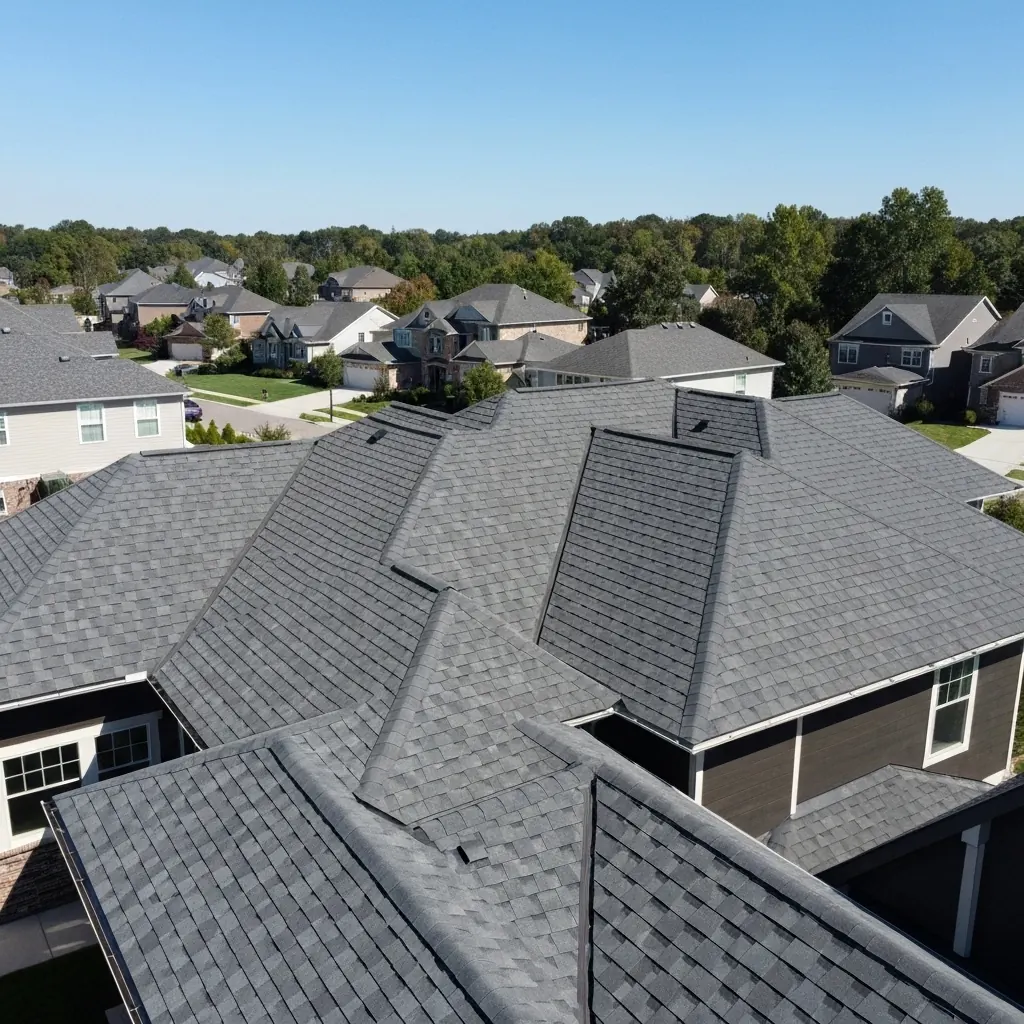
A roof valley is the V where two roof slopes meet. An open valley shows a strip of bare metal down the center, while a closed valley is covered by shingles. Open metal drains faster, sheds leaves and ice more easily and usually outlasts the shingles beside it, but it adds roughly $300 to $600 per valley.
The choice usually comes down to four factors.
- Drainage favors open valleys. Smooth metal moves water quickly, while gritty shingles slow it and hold debris.
- Upfront cost favors closed valleys. Closed-cut valleys are usually included in the base shingle price.
- Climate often decides it. Snow, ice and heavy tree cover all point to open metal.
- Long-term cost favors open valleys. Closed valleys often wear out before the rest of the roof, and repairs are expensive.
Valleys drain two roof planes through one channel
A valley is the inside corner where two sloped planes meet, and it works as the roof's main gutter. In heavy rain, both planes empty into that one channel, which is why valleys leak more than any other part of a roof. With asphalt shingles, you have to choose an open or closed valley.
In an open valley, a metal lining carries the water, and the shingles are cut back on both sides so a strip of metal shows. In a closed valley, shingles cover the whole valley, overlapping from one or both sides and hiding the flashing beneath. Both direct water to the gutters, but they differ in cost, lifespan and how they handle heavy rain.
Runoff from two planes concentrates far more water in the valley than any single area of open slope sees, and that volume builds hydrostatic pressure. If the valley cannot carry it, water backs up under the shingles. Water moves quickly over smooth metal but slows over gritty shingle granules, where leaves and grit catch and hold moisture. That difference drives most of the comparison below.
Open valleys use a W-shaped metal liner
Most professionals use pre-formed W-shaped metal for open valleys. The raised rib down the center acts as a diverter, so water rushing off one plane hits the rib instead of shooting across and under the shingles on the other side. That cross-wash causes many leaks on steep roofs.
The metal is usually 26-gauge galvanized steel or aluminum, and premium jobs use 16-ounce copper. The International Residential Code requires metal open-valley linings to be at least 24 inches wide, giving about 12 inches of coverage on each side of center. The metal is held with clips, never nails through the center, because metal expands and contracts with temperature and a center nail soon becomes a leak.
High-temperature ice and water shield, a self-adhering membrane at least 36 inches wide, goes under the metal as a backup if water ever gets behind it. The shingles lap over the metal's edges, and the roofer snaps a chalk line and cuts them straight, usually 2 to 3 inches off center, leaving a 4- to 6-inch strip of metal exposed.
Closed valleys install faster and use less material
Closed valleys install faster and use less material. They come in two kinds, woven and closed-cut. In a woven valley, shingles from both sides interlace across the V into one continuous layer. NRCA's Professional Roofing magazine notes that NRCA does not recommend woven valleys because they are prone to debris, ice buildup and bridging. A woven valley looks even, but underneath it is a thick, uneven buildup of asphalt that does not lie flat.
Closed-cut is now the most common method. The roofer shingles one side across the valley and at least 12 inches onto the next plane, runs the second side across on top, and cuts it in a straight line 2 inches from center. It is neater than weaving, but in both types the shingles do the work of a gutter.
Friction is the weakness of closed valleys. Shingle granules slow the water, which lets pine needles, leaves and silt settle, and that buildup holds moisture against the shingles. Constant wetness causes early granule loss and rot. In cold climates the trapped moisture also feeds ice dams, so the valley is part of any plan for ice dam prevention.
Which valley metal to use
An open valley is only as durable as its metal:
- Galvanized steel is the everyday choice. It is inexpensive and often lasts 15 to 20 years, but it rusts once the zinc coating wears off, and the coating wears faster near salt air or heavy industrial pollution.
- Aluminum does not rust. It is softer than steel, so it bends easily and dents from hail or falling branches.
- Galvalume is a good middle option. Steel coated with an aluminum and zinc alloy resists rust better than galvanized and can last 40 years or more.
- Copper is the premium choice. It resists corrosion, forms a protective patina and can last 70 years or more. Nails and flashing must also be copper to avoid galvanic corrosion. It costs more up front but needs almost no maintenance.
Do open valleys cost more than closed valleys?
A closed valley is the cheaper option up front. Most roofers include closed-cut valleys in their base labor rate, and the only added material is the ice and water shield. On a typical 2,500-square-foot roof with four valleys, you pay essentially the regular per-square shingle price. The roofing calculator gives that base figure in squares, and valley metal is priced by the foot on top of it.
An open valley adds metal and labor. A 10-foot length of 26-gauge W-profile valley costs about $25 to $45, depending on finish, and the labor is more exacting, with chalk lines snapped and every shingle cut by hand. Most contractors charge $300 to $600 more per valley, so four valleys add $1,200 to $2,400.
Over the life of the roof, the comparison reverses. Closed valleys often wear out before the rest of the roof; if the valley shingles fail at 15 years on a 30-year roof, repairing one valley means opening two planes at once, which often costs $1,500 or more. Open valleys usually last as long as the shingles or longer.
Open valleys are the clear choice in snow country
In areas with heavy snow and freeze-thaw cycles, open valleys are the clear choice. Metal sheds snow and ice much faster than shingles: sun warms the bare metal, the base of the ice melts and the block slides off. A closed valley holds ice, and meltwater can be pushed up under the shingles.
The same applies under heavy tree cover. Leaves and needles slide down metal into the gutter, while closed valleys trap them between the gritty surface and the bridge of overlapping shingles, where the buildup can divert water sideways under the laps. In wildfire areas, metal also resists embers that land and smolder in the valley.
Closed valleys perform best in dry, clear climates with no ice and little debris, and some homeowners prefer their smooth, unbroken look. Even in ideal conditions, though, water running over shingles wears them faster than water running over metal.
What causes roof valley leaks?
Closed valleys usually fail from bridging, where the shingles do not sit tight to the valley floor and leave a hollow gap. The shingles crack when someone steps on them, and water pools in the gap. Poor nailing is the other common fault: a nail within 6 inches of the center will eventually leak.
Open valleys tend to fail at the cut line. The top corner of each shingle should be clipped diagonally ("dog-eared") to direct water back into the valley; without that clip, capillary action draws water sideways under the shingle course.
Expansion causes the third common problem. Metal moves at a different rate than the wood deck, and if it is nailed too tightly or the sections are not lapped correctly, it buckles, and the uneven surface holds water. Sections should overlap by at least 6 to 8 inches with a good sealant between the laps.
Inspect both valley types once a year
Inspect both valley types once a year. Closed valleys mainly need debris cleared. Treat moss or algae early, because moss holds water and can rot the shingle's asphalt mat within a few seasons. Never pressure wash a valley, which strips granules immediately.
Open valleys need cleaning less often, but check the metal for rust or shifting. Sand rust spots on galvanized metal and coat them with rust-inhibiting metal paint. Check the sealant at the laps as well, since it can dry out and crack after ten or fifteen years.
The point where the valley meets the gutter is a trouble spot for both types. Debris collects there and water backs up into the valley, then into the soffit or behind the fascia board. Clean gutters matter as much as valley design.
Questions to ask the roofer
Ask about valleys specifically when you collect bids. A roofer who says closed valleys are just as good may be saving on labor. Useful questions:
- What gauge metal for open valleys? 26-gauge is the standard, and 29-gauge is too thin and crinkles.
- What goes under the valley? The answer should be self-adhering ice and water shield for both open and closed valleys. Standard felt or synthetic underlayment alone does not meet modern performance standards.
- How will shingles be nailed near the valley? There should be no nails within 6 to 8 inches of center.
- W-rib or flat flashing for an open valley? W-rib handles cross-wash better.
- How does the valley end at the gutter? The metal should extend slightly past the roof edge so water drops straight into the gutter.
Closed valleys look seamless, open valleys look functional
Appearance is a matter of taste. Closed valleys give a seamless look that many people like with architectural shingles, and they are a common choice on traditional and colonial homes where the roof is highly visible.
Open valleys look more functional, even industrial, but copper or colored aluminum turns the valley into a design detail. Copper on slate or high-end synthetic shake adds curb appeal and signals quality construction to buyers. In higher-priced markets, open metal often reads as premium, while closed valleys can come across as standard or builder-grade.
Performance should still outweigh appearance, since an attractive roof that leaks at ten years has little value. Weigh the look against your climate and how much maintenance you will realistically do.
Open valleys handle both steep and low pitches better
Pitch changes how water behaves in a valley. On a steep roof, water moves fast enough to cause cross-wash, jumping the center and running under the shingles on the opposite side, and an open valley with a center rib handles that much better.
On a low slope, water moves slowly, pools and drops debris. Open valleys are still preferred for their smooth surface, but the installation must be tighter, with larger metal overlaps and ice and water shield underneath, because water stays in the valley longer.
When two planes with different pitches feed one valley, the flow is unequal. The steep side delivers water faster than the shallow side can drain it, creating turbulence in the V. Open valleys handle this much better, while a closed valley can be overwhelmed and leak at the shingle laps.
An open valley is the better choice for most houses
An open valley is the better choice for almost every house. It drains faster, sheds debris better, lasts longer and gives the wettest part of the roof a durable metal channel. In snowy climates or under heavy tree cover, it is the safer choice against leaks and ice dams.
A closed valley is a reasonable budget option on a moderate pitch in a mild climate, with a lower upfront cost and a uniform look. Expect the valley to need repair or replacement before the rest of the roof, since those shingles age faster from constant water, heat and debris.
On a quote, an open metal valley is a good sign that the contractor is building for longevity rather than speed. The $15 to $25 per foot for metal is a noticeable cost during a full replacement, but it is small next to repairing a failed valley halfway through the roof's life.
Open valley vs closed valley questions
Which is better, an open or closed roof valley?
An open metal valley is better in most cases. It drains faster, sheds leaves and ice more easily, and usually outlasts the shingles around it. Closed-cut costs less, looks seamless and works on moderate slopes in mild climates, but in snow country or under heavy tree cover, choose metal.
What is a closed-cut valley?
It is a valley where one side is shingled straight through the valley and at least 12 inches onto the other plane. The second side's shingles are then laid over the top and trimmed in a straight line a couple of inches off center. It is faster than weaving and keeps the lining hidden.
Are woven valleys bad?
They are not recommended. Weaving builds thick layers of shingle in the center that can bridge and crack, and the valley holds debris and ice. NRCA does not recommend woven valleys.
How wide should open valley metal be?
At least 24 inches, according to the International Residential Code. That gives about 12 inches of metal under the shingles on each side of center. A self-adhering ice barrier usually goes underneath it.
How much does an open metal valley cost?
Roughly $300 to $600 extra per valley, or about $15 to $25 per foot, for the metal and the extra cutting. Copper costs considerably more. A roof with four valleys adds about $1,200 to $2,400.
Prices are 2026 US national averages and building codes vary by town. Materials, warranties and code adoptions change, so confirm prices with local contractors and code rules with your building department before you sign anything.
Estimate Your Roof Cost
Use our free roofing calculator. No sign-up required.