 RoofingCalculator.io
How Long Does a Roof Replacement Take?
By RoofingCalculator.io. Updated October 14, 2026. Prices, ratings and code references link to their sources.
Pricing your own roof? Get squares, materials and a 2026 cost range in about two minutes. Free, no sign-up.
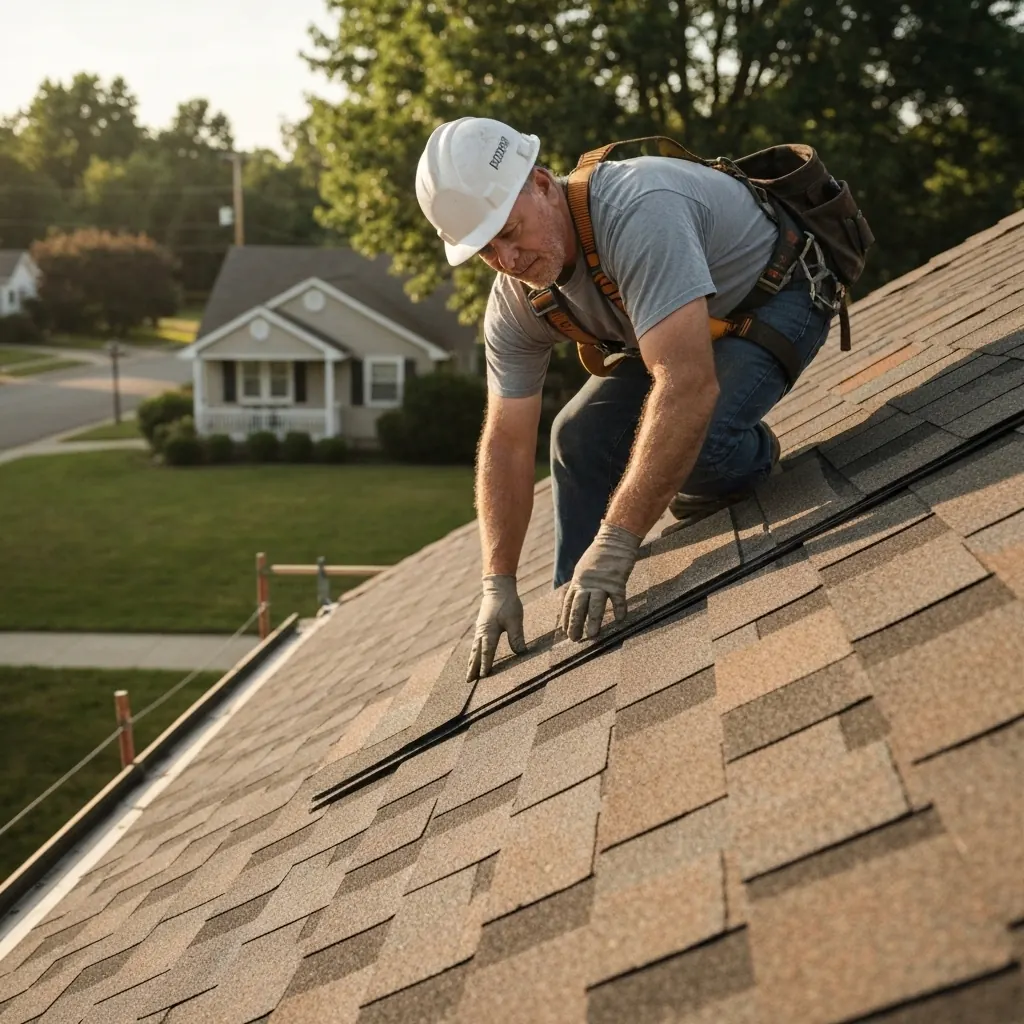
A roof replacement takes one to three days on most houses, and an experienced crew of six can often finish a simple 2,000-square-foot asphalt ranch in one day. Steep roofs with several dormers take three to five days. Slate, clay tile and standing seam metal take a week, two weeks or sometimes longer.
Four factors decide where your job falls.
- Material sets the pace. Asphalt goes on fastest, standing seam metal takes three to six days, and slate can take 12 to 20.
- Size, pitch and complexity add hours. More squares, steeper slopes, valleys, chimneys and dormers all slow the crew.
- The deck underneath can add a day or two. Extra layers and rotten plywood show up only after tear-off.
- Weather and permits are outside the crew's control. Rain, wind, heat and inspection schedules cause most delays.
| Roof type | Typical install time |
|---|---|
| Simple asphalt shingle roof | 1 to 3 days |
| Steep asphalt roof with dormers | 3 to 5 days |
| Standing seam metal (2,000 sq ft) | 3 to 6 days |
| Natural slate (2,500 sq ft) | 12 to 20 days |
The basic roof replacement timeline
A roof replacement starts the day before the crew arrives, when a truck delivers materials and a dumpster is parked in the driveway. Tear-off comes first, and five to eight people can strip a standard roof in four to six hours. Dry-in follows immediately: underlayment goes down so rain cannot get in. The new shingles take the rest of the time. When a job runs long, the cause is usually rot under the old roof or the weather.
Which roofing material installs fastest?
Asphalt is the fastest material to install. Bundles are stacked on the roof, nail guns do most of the work, and an experienced roofer covers one square (100 square feet) in 60 to 90 minutes. A 30-square roof takes around 30 to 45 man-hours of shingling, not counting flashing and ridge caps. Architectural shingles go slower than three-tab because the bundles are heavier and the layered pattern must line up.
Standing seam metal takes three to six days for a 2,000-square-foot reroof. The panels run from ridge to eave in one piece and must be perfectly square, with fasteners hidden under the seams and crimped by hand or with special tools. A crew with a portable roll-former in the driveway works faster than one waiting on pre-cut factory panels. Metal shingles and stone-coated steel take longer still, with more fasteners and more detailed cuts at hips and valleys.
Clay tile and natural slate take the longest. Expect 12 to 20 days for a 2,500-square-foot slate roof. At 800 to 1,500 pounds a square, slate often requires reinforced framing first, and every piece is nailed by hand with care, since a cracked slate has to be replaced. Concrete and clay tile usually hang on battens, a grid of wood strips, and building that grid can take several days on its own.
Bigger, steeper roofs take longer
Roofers measure in squares of 100 square feet, and a roof is larger than the floor plan. A 2,500-square-foot house might have a 32- or 35-square roof once slope and overhangs are added. The roofing calculator gives your real square count, which is a good first indication of how many days the job will take. Valleys add more time, because each one needs careful flashing and cutting, about an hour or two apiece.
Pitch is the next factor. Below 4:12, the roof is walkable and materials can be set down anywhere. Above 7:12, crews need roof jacks, toe boards and harnesses, and work slows. On very steep roofs, tools and shingles must be secured, and installation can take twice as long as on a walkable roof. On two- and three-story houses, every bundle going up and every load of debris coming down travels by ladder, power hoist or telehandler.
Each extra layer slows the tear-off
One layer of asphalt comes off quickly, but many older houses have two or three layers. The International Residential Code (IRC) generally limits roofs to two. A third layer doubles tear-off time, with heavier debris, more dumpster swaps and more trips down the ladder.
Once the old roofing is off, the crew inspects the bare deck, and this is where schedules most often change. Soft, rotten or stained decking must be replaced. Swapping a few 4x8 sheets of plywood or OSB (oriented strand board) takes an hour or two, while a deck damaged by years of leaks or poor ventilation can add a day or two before underlayment goes down. Budget about $75 to $120 for each replaced sheet.
Labor is about half the cost of a roof
Labor makes up roughly half the cost of a standard asphalt roof. Architectural shingles cost about $450 to $750 a square installed, plus $100 to $150 a square for tear-off, so a typical 20- to 25-square roof costs around $11,000 to $22,000. Standing seam at $1,000 to $1,600 a square comes to about $20,000 to $40,000.
Longer jobs mean higher labor costs. A three-day quote on a simple roof suggests either high labor pricing or a very small crew. A one-day "blow-and-go" contractor may be cheaper but may also skip the chimney flashing or ridge vent.
Specialty roofs cost more per day as well. Slate and tile installers are skilled craftsmen and charge accordingly. A crane for heavy tile or a lift for a three-story house adds a few hundred dollars for each extra day of rental. A long, messy job can also fill two or three 30-yard dumpsters at $500 to $700 a haul.
Weather causes most schedule changes
Weather is the biggest cause of schedule changes. Crews do not roof in the rain, and a 30% chance of rain can be enough for a contractor to postpone tear-off rather than leave the house exposed. Wind above about 20 miles per hour is also a problem, because shingles catch it like sails. In hot weather, asphalt softens and scuffs underfoot, so many crews work from 6:00 AM to noon, which can turn a one-day job into two.
Season affects daylight and temperature. In northern states, late fall and winter jobs move slowly, and shingles' thermal sealing strips need warm sun to bond, so in freezing weather they may not seal until spring. The Asphalt Roofing Manufacturers Association says that in very cold weather, shingles "can be hand-sealed with an approved asphalt roofing cement" for better wind protection, which is slow work. In spring and summer the weather is ideal but calendars are full, and you may wait six to eight weeks for a job that takes 48 hours.
Every penetration slows the finish work
Every penetration slows the finish work. Plumbing vents, attic fans, skylights and chimneys each need shingles cut to fit and their own flashing.
- Chimneys take the most time. A chimney wider than 30 inches needs a cricket, a small peaked structure on the uphill side that diverts water, plus step flashing and counter-flashing. One chimney can take three to five hours of the lead installer's day.
- Skylights take about two hours each. Replacing one while the roof is open means removing the old unit, checking the framing for rot and setting the new unit with its own flashing kit.
- Dormers can add a full day. Dormers are mostly wall-to-roof joints, and every course of shingles along them needs its own piece of flashing. Four or five dormers add about a day compared with a plain gable of the same size.
A roofing crew's day
Crews usually arrive between 7:00 and 8:00 AM and spend the first hour on setup: safety gear on the roof, tarps or "Catch-All" systems over the flower beds, and tools organized. Tear-off starts at the end farthest from the dumpster and works toward it, with one person following to sweep the deck, pull stray nails and check the wood. Around midday the crew dries in, installing drip edge along the eaves, ice and water shield in the valleys and along the bottom edges, and synthetic underlayment over the rest.
Shingles go on in the afternoon from the bottom up, with one person feeding bundles to the installers. The last couple of hours are spent finishing, installing ridge vents and sealing every penetration. Cleanup takes an hour or more each day, with magnetic rakes run over the grass for nails. On a two-day job, the roof must be fully watertight at the end of the first day, whether or not it is fully shingled.
An open driveway saves hours
An open driveway saves hours. With enough room, the supplier's boom truck can "roof-load," lifting pallets of shingles directly onto the roof. With a tight driveway or low power lines, the supplier does a "ground-drop" instead, stacking materials on the lawn for the crew to carry up by hand or on a power ladder, which slows the crew as the day goes on.
Dumpster placement also matters. When it sits right against the house, the crew can drop debris straight in. When deep flower beds or delicate plantings are in the way, the crew needs scaffolding or chutes, and tear-off slows. Move your cars and patio furniture and keep pets inside, since every detour around an obstacle adds time.
Do you need a permit to replace a roof?
Most towns require a building permit for a full replacement, and the roofing permits guide explains how that works. Some also send an inspector partway through for a "mid-roof" inspection of the decking and underlayment before shingles go on. If the inspector runs late, the crew waits, sometimes for a few hours and sometimes for the whole day.
The final inspection comes later. You can live under the roof in the meantime, but the job is not legally complete until the permit closes. High-wind areas such as Florida and coastal Texas are stricter and sometimes require the nailing pattern to be photographed or observed in person. Ask whether your town requires stop-work inspections, and if it does, allow extra time in the schedule.
Questions to ask about the schedule
Start and finish dates belong on the estimate. The National Roofing Contractors Association tells homeowners to insist on a written proposal with full descriptions of the work, "as well as start and completion dates." A vague estimate usually comes with a vague timeline, and these questions help clarify it.
- How many people are on the crew? Three people take about twice as long as six. That is normal for high-end specialty work, but on asphalt a very small crew often means a small company that can stall when the decking is bad.
- Will a project manager be on site? Someone needs to keep materials arriving and make decisions about rot or missing flashing, or work stops.
- What happens if a storm arrives mid-job? Good contractors carry large, heavy tarps and can seal the house in under 20 minutes. Ask how they do it.
- Will the same crew stay until the job is done? Some companies tear off and dry in, then move the crew to another job for a day while your roof sits half-finished.
- Is cleanup daily or at the end? On a three-day job with children or pets at home, daily cleanup of nails and debris is the only safe answer.
Choose materials early to avoid delays
You can shorten the job by choosing colors and materials weeks in advance. A last-minute change of shingle type or color may not be in stock, which leaves the crew waiting. A few days before the start, confirm that everything is available, down to the ridge vents and flashing colors.
Stay in regular contact during the job. A good contractor checks in daily and reports problems as soon as they appear. If the decking is bad, you should receive photos and a change order on the spot, so the crew keeps working instead of waiting on a long discussion about price.
Cleanup takes a few more hours
Final cleanup takes roughly two to four more hours. The crew clears granules and debris from the gutters and runs large magnets over the lawn and driveway for nails, and the dumpster is usually removed 24 to 48 hours later. Walk around the house yourself to check for dented siding or crushed shrubs. Final payment is usually not due until the final inspection passes and you are satisfied with the yard, so even when the roof is finished in 48 hours, the remaining details can take until the end of the week.
Roof replacement timeline questions
Can a roof be replaced in one day?
Yes, many are. A simple one-story asphalt roof with an experienced crew of five to eight can be finished by evening. Steep, large or complicated roofs take longer, as does any job where the decking turns out to be rotten.
How long does a metal roof take to install?
Standing seam on a typical house takes about three to six days. Crews that roll-form panels on site in the driveway work faster. Metal shingles and stone-coated steel take a little longer because they need more fasteners and cuts.
Can I stay home during a roof replacement?
Yes, most people do. Expect loud noise all day and vibration through the walls. Keep children and pets away from the work area, and take pictures and frames off the upstairs walls beforehand.
What delays a roof replacement?
Weather causes most delays. Other causes include rot under the old shingles, an unexpected second or third layer, a late inspector or a supplier shortage. In spring and summer, you may also wait weeks for a spot on the calendar.
Prices are 2026 US national averages and building codes vary by town. Materials, warranties and code adoptions change, so confirm prices with local contractors and code rules with your building department before you sign anything.
Estimate Your Roof Cost
Use our free roofing calculator. No sign-up required.