 RoofingCalculator.io
DIY Roofing vs Hiring a Pro
By RoofingCalculator.io. Updated October 14, 2026. Prices, ratings and code references link to their sources.
Pricing your own roof? Get squares, materials and a 2026 cost range in about two minutes. Free, no sign-up.
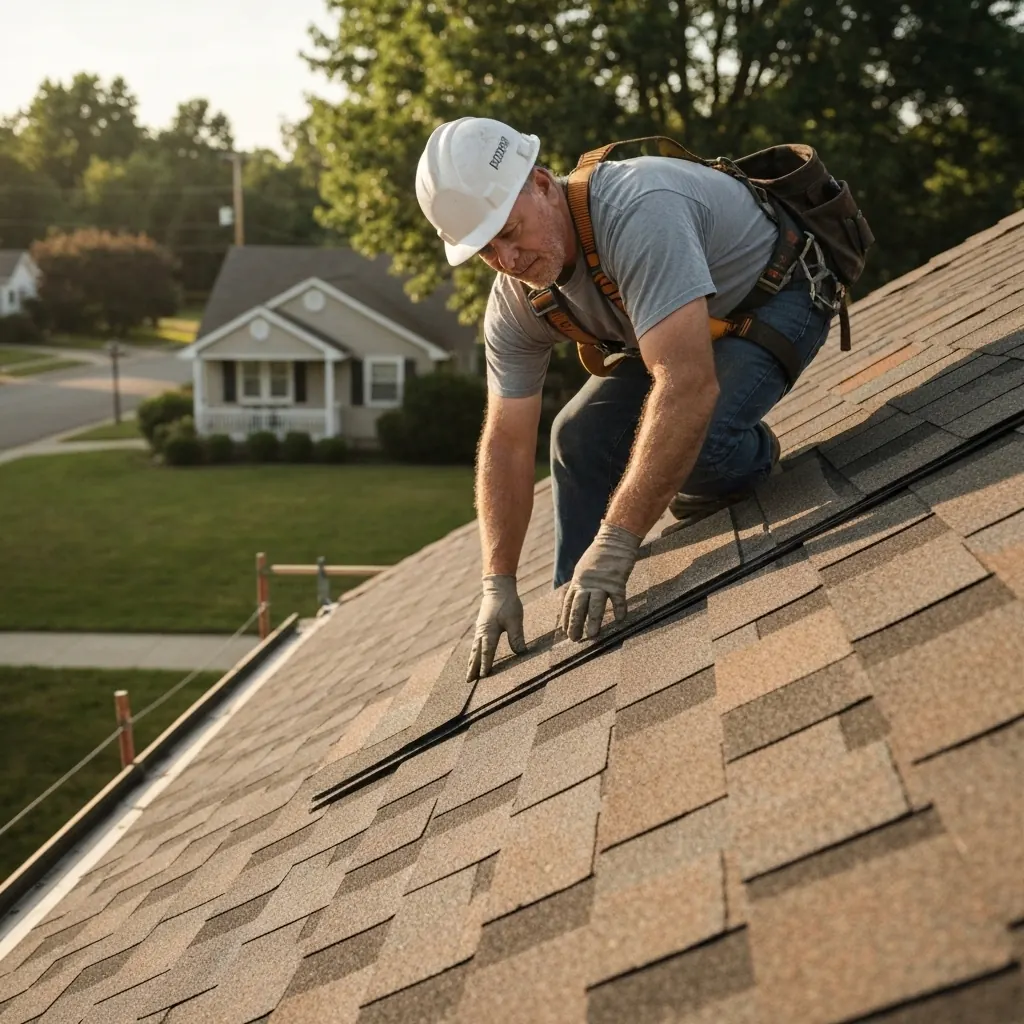
For a full roof replacement, hiring a professional is usually the better choice; DIY makes sense for sheds, small repairs and simple low-slope roofs. A professional reroof of a 20-square roof (2,000 square feet) in architectural shingles costs about $11,000 to $18,000 with tear-off. Doing it yourself saves the labor share, roughly $6,000 to $10,000, before tools, disposal and mistakes reduce it.
The decision rests on four factors.
- The real savings are smaller than they look. Tools, safety gear, a dumpster and retail shingle prices take a large share of the labor savings.
- The risk is serious. Roofing ranks among the most dangerous occupations, mainly because of falls.
- The difficult details cause leaks. Valleys, flashing and ventilation are where most DIY roofs fail.
- Warranties and permits favor professionals. A DIY roof has no workmanship warranty and can complicate a sale.
Tools, dumpsters and retail prices eat into DIY savings
Materials make up 40 to 50 percent of a roofing bill, and the rest is labor, which is the share a DIYer hopes to keep. Several costs come out of that share before the first shingle goes on.
| Item | Typical cost |
|---|---|
| Pneumatic roofing nailer | $200 to $400 |
| Air compressor | $150 to $300 |
| Safety gear (full-body harness, roof anchors, two heavy-duty ladders) | $400 to $600 |
| 20-yard roll-off dumpster | $450 to $700 |
Dumpster prices depend on location and debris weight, and roofing debris is heavy. One square of shingles covers 100 square feet and weighs 200 to 250 pounds, so a 20-square roof produces about 4,000 to 5,000 pounds or more of old asphalt that you have to carry, slide or shovel off the roof yourself.
Shingles also cost homeowners more than contractors. Contractors buy in bulk with wholesale discounts of 10 to 20 percent, which big-box retail prices don't include. Ruining two or three bundles with bad cuts or crooked courses reduces the savings further. Get your bundle count from the roofing calculator before buying at retail, so you order close to the right amount the first time.
Roofing is one of the most dangerous trades
Roofing is genuinely dangerous work. Bureau of Labor Statistics figures consistently place it among the ten most hazardous occupations, and falls are the leading cause of injury. A one-story roof is about 10 to 12 feet off the ground, and a bad fall from that height can cause permanent disability or death. Professionals use fall protection, but they also have thousands of hours of experience keeping their balance on a slope.
The physical demands are also significant. A typical reroof means carrying dozens of bundles up a ladder, each weighing 60 to 80 pounds, often in summer, on a dark asphalt surface that runs 20 to 30 degrees hotter than the surrounding air. Heat exhaustion sets in quickly for people who aren't used to working in full sun on a surface that radiates heat back at them.
The deck can also give way. Removing old shingles may expose rotted plywood. An experienced roofer can spot soft areas by their color, sag or the way a board flexes, while a first-timer may discover them by stepping through the roof, which adds an injury to a larger repair.
Leaks start where the roof changes direction
Straight rows of shingles are the easy part of a roof. The difficult parts are every place where the roof changes direction or meets something else.
- Valleys. Where two roof planes meet is the most common place for leaks. A valley needs ice and water shield underneath plus proper metal flashing or a specific shingle weave, and skipping the waterproofing can cause a leak in the first heavy storm.
- Chimneys, skylights and plumbing vents. These are moving joints. The house expands and contracts through the year, and the flashing has to move with it and stay watertight.
- Step flashing. Small metal pieces are layered with each shingle course in an exact order. If the order is wrong, water is channeled into the wall.
- Starter strip and ridge cap. The starter strip keeps the first row from lifting in high wind. The ridge cap seals the peak and must work with the ventilation system; a badly installed ridge vent traps moisture in the attic, leading to mold and shingles that overheat from below and wear out early.
A DIY reroof takes five to seven days
A professional crew of four to six people usually strips and reroofs a standard house in a day or two. A homeowner with one helper needs five to seven full days, sometimes more.
The difference matters because a stripped roof is open to the weather. Synthetic underlayment offers some protection but isn't designed to be the main waterproof layer for long. A sudden thunderstorm partway through can soak ceilings, insulation and drywall, causing thousands of dollars of damage in an afternoon. Crews have enough workers to dry in quickly, covering the whole deck with underlayment within hours of tear-off.
DIY roofs are usually done in sections: strip an area, shingle it and move on. Each stopping point leaves a seam that is hard to seal properly, and the project stretches across many weekends. If you get tired, injured or discouraged, the house may sit under a blue tarp, which is unsightly and a liability, until you return to the work.
Mixing brands can void the shingle warranty
Most shingle manufacturers offer limited lifetime warranties, but the terms often require their own accessories, including underlayment, starter shingles and hip and ridge pieces. Mixing brands to save money can void the warranty.
Manufacturers also require exact installation, down to the nails. Most asphalt shingles need four to six nails placed within a marked nail zone. Nails placed too high let the shingle slide out, and nails placed too low leave exposed heads that leak. Setting the nail gun pressure too high overdrives the nails through the shingle and destroys its wind resistance. These small mistakes show up later.
A contractor usually provides a labor warranty in addition to the material warranty, which pays for repairs if a leak traces back to poor installation. A DIY roof has no such coverage, so a leak three years later, including the ceiling damage, is your expense. It also affects resale: a professionally installed roof with a transferable warranty is a selling point, while a DIY roof can raise concerns at the home inspection and lead a buyer to ask you to pay for a full replacement.
DIY makes sense on small, low-risk roofs
DIY roofing makes sense on small, low-risk roofs. A garden shed, a playhouse or a small lean-to over the lawnmower is a good place to learn, since it is close to the ground and has no finished drywall inside to damage.
Many homeowners can also handle small repairs. Replacing one blown-off shingle or resealing the flashing around a vent pipe needs only a flat bar, a utility knife and a caulk gun.
Roof pitch changes the picture. A 4:12 roof, which rises 4 inches for every 12 inches of horizontal run, is fairly walkable; a 12:12 roof is not. Above about 6:12, you need roof brackets and planks just to stand, and the job becomes much more complicated. Steep roofs and roofs with multiple dormers and intersecting rooflines should be left to a professional.
Get at least three written estimates
If you hire, vetting the contractor is the most important step, and the guide on how to choose a roofing contractor covers it in detail. Get at least three written estimates. Good estimates name the shingle brand and line, the underlayment type, the ice and water shield brand and the ventilation to be installed. Vague bids are a warning sign.
Check insurance on every bid. The National Roofing Contractors Association tells homeowners to "ask for copies of the contractor's liability insurance coverage and workers' compensation certificates." General liability covers your house if the crew damages it. Workers' compensation matters even more, because if an uninsured worker is injured on your property, the medical bills can fall to you. Ask for the certificate directly from the contractor's insurance agent rather than accepting a photocopy.
Ask for local references. A reputable roofer can give you the addresses of several houses completed in the past year. Drive by to check the lines from the street, and if the owners are outside, ask whether the crew arrived on time and cleaned up afterward.
Ask specific questions about the work.
- Will you tear off to the wood deck? A "nail-over" on top of the old shingles is usually a poor choice, since it adds weight and hides any rot underneath.
- How will you protect the landscaping? Good crews lay heavy tarps or use a debris-catching machine such as an Equipter, so shingles and nails don't fall into flower beds.
Do you need a permit to reroof a house?
Usually, yes: most jurisdictions require a building permit for a reroof, so an inspector can check the work against local safety standards. Coastal areas are especially strict, with specific nailing patterns and metal flashing rules designed for high wind.
Contractors pull permits as part of the job and know what local inspectors look for. Skipping the permit on a DIY roof can bring a fine, and in some cases the city can require you to remove the new roof so an inspector can see the underlayment and flashing.
Code also limits the number of layers, usually to two layers of shingles. A legal second layer still traps heat and can keep the new shingles from sealing properly. Most professionals recommend a full tear-off, since it is the only way to inspect the decking and get a long-lasting roof.
Roofers bring tools most homeowners don't own
Roofing crews bring equipment few homeowners can justify buying. Besides compressors and nail guns, they use a shingle shovel, also called a tear-off bar, which lifts old shingles and pulls nails in one motion. Stripping a whole roof with a hammer and pry bar instead is slow and hard on your back.
Ladders matter more than most people expect. A roof job can require several sizes of ladder, stabilizers that keep the ladder from crushing the gutter, and roof hooks. Crews also wear high-grip boots designed for walking on asphalt and loose granules.
The dumpster takes planning as well. A loaded container can crack a driveway, so professionals set wood blocks under the wheels and load debris evenly to use the full volume. Loaded carelessly, a 20-yard dumpster fills much faster than expected.
Is DIY roofing worth it?
For most homeowners it isn't, and the choice mainly depends on the value of your time and the risk you are willing to take. A typical DIY reroof trades about $7,000 in savings for around 80 hours of hard labor, the chance of a fall and the possibility of a leak that causes $10,000 of interior damage.
A simple low-pitch ranch roof and a homeowner with real construction experience can make a worthwhile DIY project. For most people, a professional's skill, speed and warranty are worth more than the labor savings. The savings count only if the roof stays watertight for its full life, which the InterNACHI life expectancy chart puts at about 30 years for architectural shingles.
When comparing bids, value transparency over price. The lowest bid may mean the contractor is skipping ice and water shield in the valleys or reusing old, rusted flashing, neither of which you can see from the driveway.
Before work begins, sign a clear contract with a start date, an estimated finish date and a payment schedule. Never pay the full amount up front. The usual arrangement is a deposit for materials, then the labor payment after the job is finished, the yard is clean and you have inspected the work. A magnetic sweep across the lawn at the end is a good sign, since it collects stray nails in minutes that a DIYer might keep finding for weeks.
DIY roofing questions
Is it cheaper to replace a roof yourself?
On paper, yes, since labor is roughly half the bill. Once you buy tools, rent a dumpster, pay retail for shingles and fix a mistake or two, the real savings on a typical 20-square roof often shrink to a few thousand dollars.
Can a homeowner legally replace their own roof?
In most of the US, yes, on your own primary residence, provided you pull the permit and the work passes inspection. Rules vary from town to town, so call the local building department before removing anything.
How long does it take one person to shingle a roof?
Much longer than a crew. A professional crew usually tears off and reroofs an average house in a day or two, while a homeowner with one helper needs five to seven full days or several weekends, with the house exposed to the weather throughout.
Does a DIY roof void the shingle warranty?
It can. Manufacturers require their installation specifications to be followed exactly, and extended system warranties are available only through certified contractors. A DIY roof also has no workmanship warranty.
What roofing jobs can a homeowner do safely?
Mainly sheds and small outbuildings. Simple repairs, such as replacing a few blown-off shingles or a cracked pipe boot on a low-slope roof, are also reasonable. Steep, tall or complex roofs should be left to professionals.
Prices are 2026 US national averages and building codes vary by town. Materials, warranties and code adoptions change, so confirm prices with local contractors and code rules with your building department before you sign anything.
Estimate Your Roof Cost
Use our free roofing calculator. No sign-up required.