 RoofingCalculator.io
Are Skylights Worth It?
By RoofingCalculator.io. Updated October 14, 2026. Prices, ratings and code references link to their sources.
Pricing your own roof? Get squares, materials and a 2026 cost range in about two minutes. Free, no sign-up.
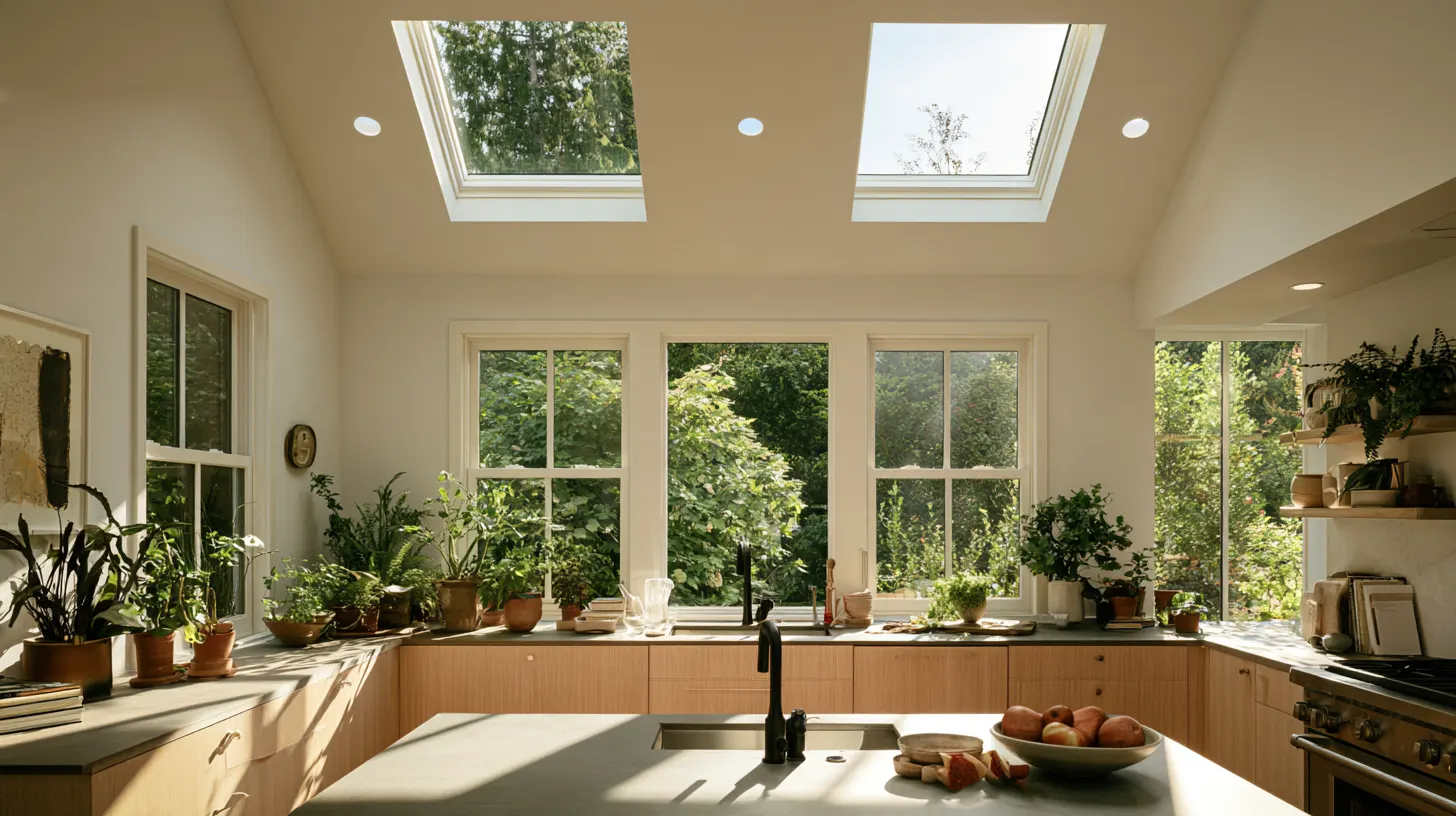
A skylight is worth it in a room that would otherwise need electric light at noon, such as an interior bathroom, a stairwell or a long central hallway. In a room that already has large windows, it mostly adds heat. One unit costs about $1,500 to $3,500 installed, and the installs that work well almost always use a quality unit with factory flashing, put in by a roofer.
Whether a skylight pays off depends on four things.
- The room needs daylight. Windowless and dark rooms benefit most; bright rooms gain little.
- The flashing is done right. Most skylight leaks come from flashing, not from the glass or frame.
- The type fits the space. Fixed units suit high ceilings, vented units suit kitchens and baths, and sun tunnels suit closets and halls.
- The timing is right. Adding a skylight during a reroof costs less than cutting into a finished roof later.
How much does a skylight cost?
Most single installs cost between $1,500 and $3,500. That covers the unit and a substantial amount of labor: cutting the roof, framing the opening and finishing the ceiling inside. Premium features such as solar power, automatic venting and built-in blinds can push the price past $5,000.
You will rarely recover the full cost when you sell. The return comes from living with real daylight in the room every day instead of a ceiling fixture, and whether that is worth the price is a personal judgment.
Fixed, vented and tubular skylights
There are three main types, and each suits a different kind of room.
- Fixed skylights don't open. They provide light and a view of the sky, and because they are sealed at the factory there is little to break. They work well on tall vaulted ceilings you couldn't reach anyway.
- Vented skylights open for airflow. They suit kitchens and bathrooms, where steam and heat build up. Manual models use a pole or hand crank, while electric and solar models run from a remote or phone app. Solar units are popular because they need no wiring through the ceiling, and they include rain sensors that close the window when rain starts.
- Tubular skylights, or sun tunnels, carry light only. A small weatherproof dome on the roof feeds a reflective metal tube that directs light to a round diffuser in the ceiling. There is no view and no rafter cutting, and they cost about $600 to $1,000 installed. They fit closets, pantries and windowless halls.
Framing is where low skylight quotes fall short
Framing is where low skylight quotes are often too optimistic. Most house roofs have rafters or trusses 16 to 24 inches apart, and a standard skylight is often wider than that gap. The installer then has to cut rafters and add headers to carry the load around the opening. Poor framing shows up later as a sag in the roofline or cracks across the drywall.
If there is an attic between the roof and the ceiling, you also need a light shaft: a framed tunnel from the roof opening down to the ceiling opening. It needs insulation, drywall, tape, mud and paint. Straight shafts are simplest, while flared shafts (wider at the bottom) spread light better but need more careful carpentry. Finishing the shaft alone can add $1,000 to $1,500, a cost many homeowners don't expect.
A skylight is a gap in your roof insulation
A skylight is a gap in your roof insulation. Even good triple-pane glass can't match the R-value of an insulated roof. Summer sun comes straight through and makes the air conditioner work harder, and in winter warm air rises to the glass and escapes.
Two numbers on the label matter: U-factor, where lower keeps winter heat in, and SHGC (Solar Heat Gain Coefficient), where lower keeps summer sun out. Most modern units have a Low-E coating, a thin metallic film that reflects infrared heat while letting visible light through, and many add argon gas between the panes for extra insulation. When buying a unit, ENERGY STAR advises looking for its label for your climate zone alongside the NFRC label on the glass.
Blinds help considerably. They can be sealed between the panes at the factory or mounted on the inside frame, in blackout versions for bedrooms or light-filtering versions for living areas. Solar-powered blinds need no wiring and can be programmed to open and close on a schedule or by room temperature.
Why do skylights leak?
Most skylight leaks come from bad roof flashing, not from the unit itself. Flashing is the set of metal pieces that direct water around the edges of the skylight and back onto the shingles.
Skylights mount in one of two ways. Deck-mounted units attach directly to the roof deck, sit lower and tend to be more energy efficient. Curb-mounted units sit on a raised wood box (the curb) built on the deck; they are common on flat roofs and in heavy snow regions, because the curb lifts the glass above standing water and slush.
Either way, the flashing has to be layered into the underlayment and shingles in the correct order: ice and water shield membrane, step flashing up the sides, and head flashing at the top. If one layer is out of sequence, water will eventually find the gap. Cold climates add ice dams: heat escaping through the glass melts snow above it, the meltwater refreezes at the cold eaves, and the backed-up water works under the shingles and the skylight flashing.
Winter drips are often condensation, not a leak
Drips on a cold winter morning after a week without rain are most likely condensation. Warm, humid air rises to the skylight, the highest point in the room, and condenses on the cold glass. The water runs down the shaft and drips, which looks exactly like a roof leak.
Bathrooms and kitchens are the most affected, and the fix is usually indoors. Running the exhaust fan longer or opening a vented skylight to release moist air stops most of the dripping. Better units with thermal breaks in the frame also help, because the inside of the frame stays warmer and collects less moisture.
Skylights often wear out before the roof around them
The InterNACHI life expectancy chart puts skylights at about 10 to 20 years, often shorter than the asphalt shingle roof around them. The seals between the panes fail, causing fogging or loss of the insulating gas. On vented units, gaskets and weatherstripping dry out and crack and need replacing to stay watertight.
Dirt also reduces the light. Pollen, dust, leaves and bird droppings all build up on the glass. Some manufacturers offer self-cleaning glass with a titanium dioxide coating that reacts with UV light to break down organic grime so rain can rinse it away. It works well in rainy climates, but in dry areas or under trees where birds perch, someone will still need to clean the glass by ladder or you will pay a window cleaner every year.
Skylights help a house sell more than they raise its value
A skylight rarely raises a home's value by what it cost, and an appraiser may not assign it any value at all. It can, however, make a house easier to sell, because buyers are put off by dark, windowless rooms.
The best return comes from a skylight that solves a real problem. In a row house or townhome, the middle rooms often can't have side windows, so a skylight is their only source of daylight. Adding three skylights to a room that already has a wall of windows, by contrast, brings more heat and very little extra light.
The federal skylight tax credit has ended
The federal tax credit for new skylights has ended. ENERGY STAR's federal tax credit page notes that the homeowner credits for efficient upgrades, which covered qualifying skylights, were available "through December 31, 2025." Skylights installed in 2026 don't qualify. The 30 percent credit that many articles still quote for solar-powered units has also ended.
A premium solar, rain-sensing vented unit now has to justify its price on comfort alone. In a steamy bathroom or hot kitchen where you will actually open it, it is still worth the money. On a high ceiling where you only want light, a fixed unit gives the same daylight for less. Some state energy offices and utilities still offer local rebates for efficient windows and skylights, so check with yours.
What to ask the roofer
A skylight's performance depends on the installer. A general contractor can frame the opening, but the waterproofing belongs to a roofing specialist. Ask these questions before you sign.
- Which flashing system will you use? Good manufacturers sell flashing kits made for their own units. An installer who plans to make flashing from scrap metal is a serious red flag.
- Will you use ice and water shield? The whole perimeter should be wrapped in self-adhering waterproof membrane before any flashing goes on.
- Who finishes the inside? Many roofers install the unit and never touch the drywall, leaving you to find a carpenter and painter. The quote should state whether interior finishing is included.
- What warranty covers the installation? Some large manufacturers offer a 10-year installation warranty when a certified installer does the work, separate from the warranty on the glass and frame.
Are skylights worth it?
A skylight is worth it if you want a lasting change in a room that runs on overhead lights all day. It is also a good time if a reroof is already scheduled, since the shingles are off and the crew and equipment are on site, which lowers the cost. The roofing calculator gives you squares and bundles for the whole job, so the skylight can be priced into the same bid.
Skip it if the roof is old and close to replacement, because the unit will have to be removed and reset when the new roof goes on, and the flashing can be damaged in the process. Skip it in a home theater or any room that needs full darkness, unless good blackout blinds are in the budget. Skip it, too, if a tight budget would mean a bargain unit and a bargain installer, since a poorly installed skylight can cause thousands of dollars in water damage.
Skylight direction sets the light and heat you get
North-facing skylights give steady, cool light all day with little heat gain, which suits art studios and offices where glare is a problem. South-facing skylights bring the strongest light and the most winter solar heat, but they can overheat the room in summer.
East-facing skylights catch morning light and warmth, which suits kitchens and breakfast nooks. West-facing skylights get harsh, hot afternoon sun and the most glare. Watch how the sun crosses your roof for a few days before choosing a spot, and check for overhanging trees, since a skylight under a large oak stays dirty and is at risk from falling branches.
A skylight is worth it when three conditions line up: a quality unit, correct flashing and a room that is dark today. If any of the three is compromised, the likely result is a slow leak and recurring repairs.
Are skylights worth it questions
Do skylights add value to a home?
Not dollar for dollar. Appraisers rarely assign a skylight a specific value. A brighter room can still help a house sell faster, especially when the skylight lights a space with no windows.
Do all skylights eventually leak?
No. Most leaks start at flashing that was installed out of order or improvised on site, not at the unit itself. A factory flashing kit, a curb wrapped in self-adhering membrane and a careful installer prevent most problems.
How long does a skylight last?
About 10 to 20 years, according to InterNACHI's life expectancy chart. The seals between the panes usually fail first, which shows up as fogging, and on venting units the gaskets dry out and crack.
Is a sun tunnel better than a skylight?
It is cheaper, but it does less. A tubular skylight costs roughly $600 to $1,000 installed and requires no rafter cutting. It provides light only, with no view or ventilation, so it suits closets, hallways and small bathrooms better than living rooms.
Should I replace my skylight when I replace my roof?
Usually yes, if the skylight is more than 10 to 15 years old. The shingles and flashing are already off, so new flashing can be installed cleanly. Replacing it later means opening up a brand-new roof to reach it.
Prices are 2026 US national averages and building codes vary by town. Materials, warranties and code adoptions change, so confirm prices with local contractors and code rules with your building department before you sign anything.
Estimate Your Roof Cost
Use our free roofing calculator. No sign-up required.